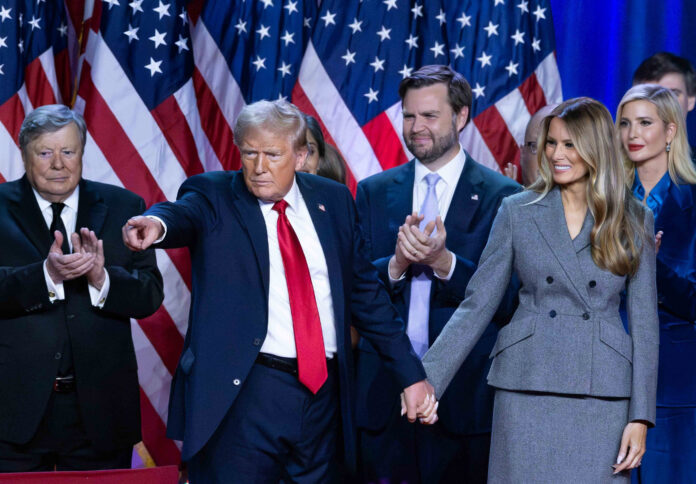
As the U.S. House of Representatives prepares to consider the legislation, lawmakers released a revised version of the Protect College Sports Act on Friday. Supporters say the bill would rein in college athletics spending, establish national rules for athlete compensation and help protect women’s and Olympic sports. President Donald Trump voiced his support for the measure during comments to reporters Friday, adding momentum to the effort.
The new text changes the restrictions on conference expansion. The Senate version set a 20-school limit for certain Power Four conference expansion transactions, while the House version raises that number to 22. The adjustment follows objections from several ACC schools and lawmakers representing states in the conference. The revised provision gives those leagues more flexibility while retaining restrictions intended to prevent major conferences from expanding unchecked.
President Wants to Stop the Free-For-All
The President made his stance clear when he spoke about the lack of rules in college athletics. “What’s happening is they have no [salary] cap, they have no anything,” Trump said. He argued that the current system leaves schools and athletes without protection. “They have no antitrust protection. … If you took the NFL without a cap or if you took any of it, basketball, they wouldn’t have a league,” he added.
Trump also highlighted what he sees as a threat to women’s athletics, claiming that “every women’s sport is being abandoned” under the current system. The bill would provide the NCAA with a limited antitrust exemption to enforce certain rules involving eligibility, transfers, and athlete compensation. Supporters argue that establishing national spending rules would help preserve women’s and Olympic sports on college campuses. The NCAA, however, has said the number of women’s teams and roster spots has increased since athletes began receiving direct compensation.
Money Limits Rise but Loopholes Close
The current system operates with a soft cap that limits each school to approximately $21 million in direct player payments this year. However, schools have found ways to provide additional compensation through third-party endorsement deals. The revised legislation would attempt to close those loopholes while allowing additional spending through a retention fund of up to $22.5 million and another $5 million for non-revenue-generating sports, including women’s and Olympic programs. Together, those provisions could bring the available compensation framework close to $50 million. The bill does not generally attempt to limit spending on coaching salaries or other major athletic department expenses.
Sen. Maria Cantwell, who co-authored the legislation with Sen. Ted Cruz, said earlier this year that one goal was preventing the Big Ten and SEC from “dictat[ing] to the rest of America what’s going to happen to 500,000 athletes.” Those two conferences withheld their public support until August, when senators agreed to provisions that more than doubled the amount schools could provide to athletes.
A Tight Window for Approval
House Majority Leader Steve Scalise, alongside Reps. Brett Guthrie and Tim Walberg, said earlier this week that the House planned to bring a revised version of the legislation to the floor in early December. If the House passes the amended bill, it must return to the Senate for approval. Both chambers must agree on the legislation by Jan. 3 to avoid restarting the process when the new Congress convenes.
According to ESPN, the House could consider the bill during the first week of December. The NCAA has also urged its member institutions to contact lawmakers quickly, with consideration potentially beginning as soon as Nov. 30.