


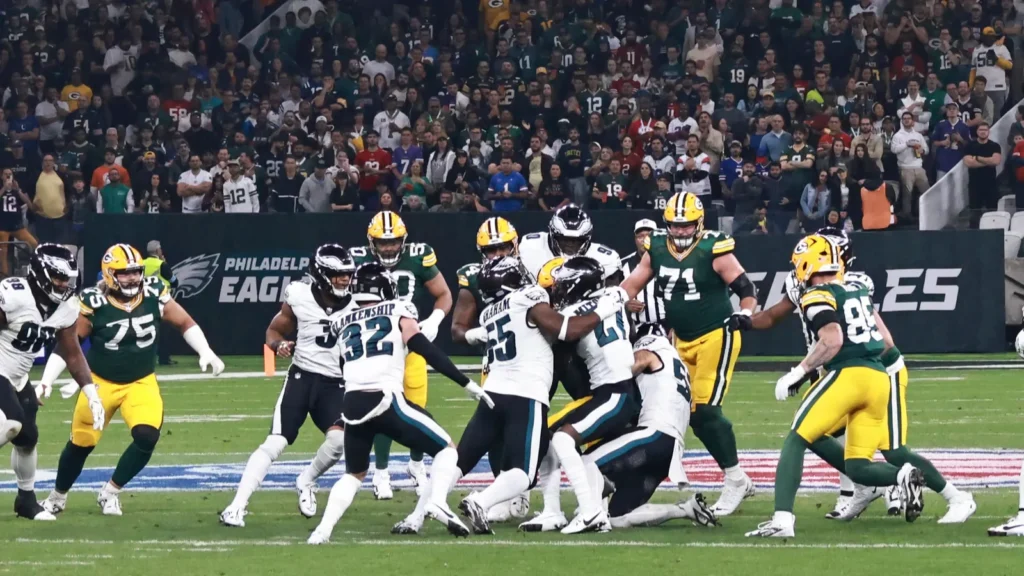
Week 5 NFL games face scrutiny over officiating and clock management
The NFL’s Week 5 games featured dramatic finishes, disputed officiating decisions, and costly clock-management mistakes. The Washington Commanders and New York Giants finished in a 27–27 tie after Washington failed to attempt a game-winning field goal in overtime.
Meanwhile, the Philadelphia Eagles fell to the Jacksonville Jaguars after a late kickoff return set up the winning kick, while the Buffalo Bills defeated the Los Angeles Rams in another overtime thriller. These moments have raised questions about coaching decisions, game-clock management, and the consistency of officiating across the league.

Washington runs out of time in overtime
The Commanders gained an opportunity to win after Giants running back Cam Skattebo fumbled late in overtime. Washington quarterback Jayden Daniels and the offense moved into field-goal range against New York.
With no timeouts remaining, Washington ran another play to improve its field-goal position. Daniels then scrambled for no gain, leaving the team unable to spike the ball before time expired and preventing kicker Drew Stevens from attempting the potential game-winning kick.

Dan Quinn accepts responsibility for the mistake
Commanders head coach Dan Quinn accepted responsibility for the team’s failure to attempt a game-winning kick. The final sequence unfolded after Washington recovered possession and advanced into a position suitable for a field-goal attempt.
Quinn acknowledged that the team needed better communication and execution in the closing seconds. His comments placed the focus on Washington’s clock management rather than an officially reported referee timing error.

Jayden Daniels faces a critical clock-management moment
Daniels returned to action against the Giants after missing two games with a dislocated left elbow. He helped Washington recover from a difficult second half and move into potential game-winning field-goal range during overtime.
The final offensive play left the Commanders without enough time to set up a kick. Quinn said the responsibility for the sequence rested with him, while the incident renewed attention to quarterback awareness and end-game communication.
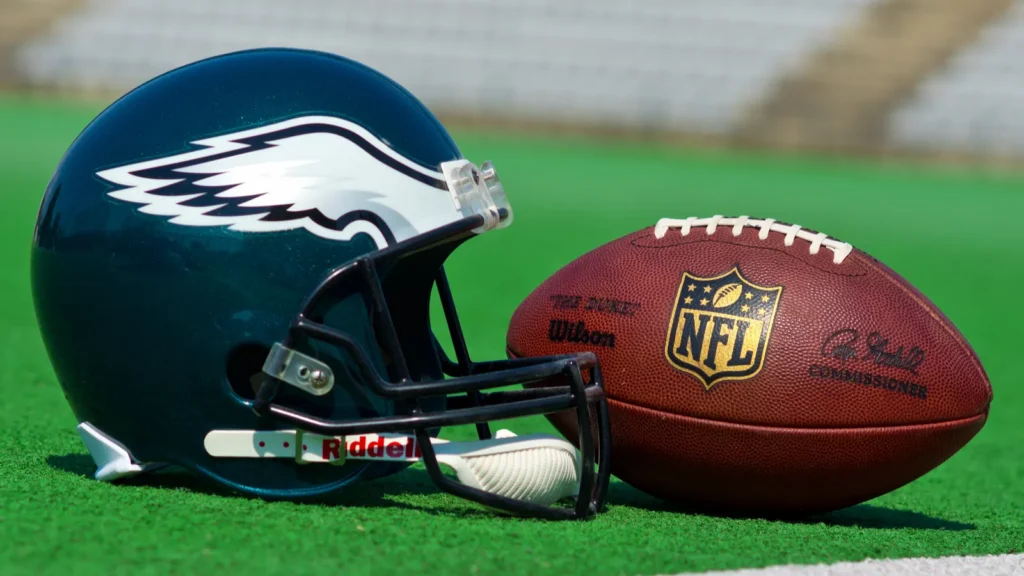
Philadelphia loses after a late kickoff return
The Philadelphia Eagles lost 19–17 to the Jacksonville Jaguars in London on October 11, 2026. Jake Elliott gave Philadelphia a 17–16 lead with a 48-yard field goal with 8 seconds remaining.
Eagles coach Nick Sirianni chose a kickoff that Jacksonville could return rather than sending the ball deep into the end zone. Ameer Abdullah returned the kick 53 yards to Philadelphia’s 39-yard line, setting up Cam Little’s game-winning 57-yard field goal with 1 second remaining.
Nick Sirianni takes blame for the kickoff decision
Sirianni accepted responsibility for choosing a returnable kickoff against Jacksonville. The decision gave the Jaguars an opportunity to advance the ball with very little time remaining.
Jacksonville capitalized on the return to set up a 57-yard field-goal attempt by Cam Little. Little converted the kick, completing a comeback victory that left Philadelphia with another late-game setback.

Jacksonville’s final field goal decides the game
Jacksonville’s final scoring opportunity began with Abdullah’s kickoff return into Philadelphia territory. The return gave the Jaguars enough field position to attempt a long kick with one second remaining.
Little connected from 57 yards to secure the Jaguars’ 19–17 victory. The finish demonstrated how special-teams decisions can influence a result even when an offense has almost no time left.


Officials eject two players after the opening kickoff
The Eagles-Jaguars game also featured an officiating decision immediately after the opening kickoff. Philadelphia linebacker Jeremiah Trotter Jr. and Jacksonville defensive end Bryan Thomas Jr. were ejected following a confrontation.
Referee Ron Torbert explained that both players were disqualified for continued non-football actions after the play ended. He said he did not see punches thrown, and the league office confirmed the officials’ decision.
Interesting fact: The Washington Commanders have won three Super Bowl titles.
A kickoff touchdown is erased by penalties
Jacksonville appeared to score a touchdown on the opening kickoff against Philadelphia, but the return was called back because of offsetting penalties. The ruling prevented the apparent touchdown from counting on the scoreboard.
The sequence added another unusual moment to a game that later ended with a last-second field goal. It also showed why kickoff plays must be assessed alongside penalties committed by both teams.
Interesting fact: The NFL has a history of controversial clock errors. In 2015, the league acknowledged that a clock operator error cost 18 seconds during a Pittsburgh Steelers–San Diego Chargers game.

Joe Burrow’s late hit raises officiating questions
Cincinnati defeated Miami 31–24 in Week 5, but a late hit on Bengals quarterback Joe Burrow attracted criticism after the game. Reports described two defenders making contact after Burrow released a pass, without a roughing-the-passer penalty being called.
The play prompted renewed discussion about consistent enforcement of quarterback-protection rules. However, criticism of a missed call should be distinguished from an official league finding that the referees made an error.
Buffalo and the Rams encounter an overtime clock controversy
The Buffalo Bills defeated the Los Angeles Rams 37–34 in overtime on October 12, 2026. Peyton and Eli Manning questioned a stoppage before Rams kicker Harrison Mevis attempted a 48-yard field goal.
On ESPN’s main broadcast, Joe Buck and Troy Aikman explained that officials had re-spotted the ball and Rams coach Sean McVay requested a play-clock reset. Buffalo’s Greg Rousseau blocked Mevis’ attempt, and Tyler Bass later made a 45-yard field goal with 1:55 remaining in overtime to win the game.

The NFL’s timing rules remain important in close games
The NFL rulebook includes provisions governing game-clock administration, replay reviews, and officials’ responsibilities. These rules help determine when the clock starts or stops and how certain timing situations are handled.
Not every late-game clock problem is an officiating mistake. Washington’s failure to attempt a kick against New York resulted from its own play sequence, while the Rams-Bills controversy concerned a stoppage that drew public questions.
Patrick Mahomes continues to shape expectations for Kansas City as the team pursues success in a competitive NFL landscape. Find out what Patrick Mahomes’ latest ranking reveals, and why the Chiefs remain a serious threat.
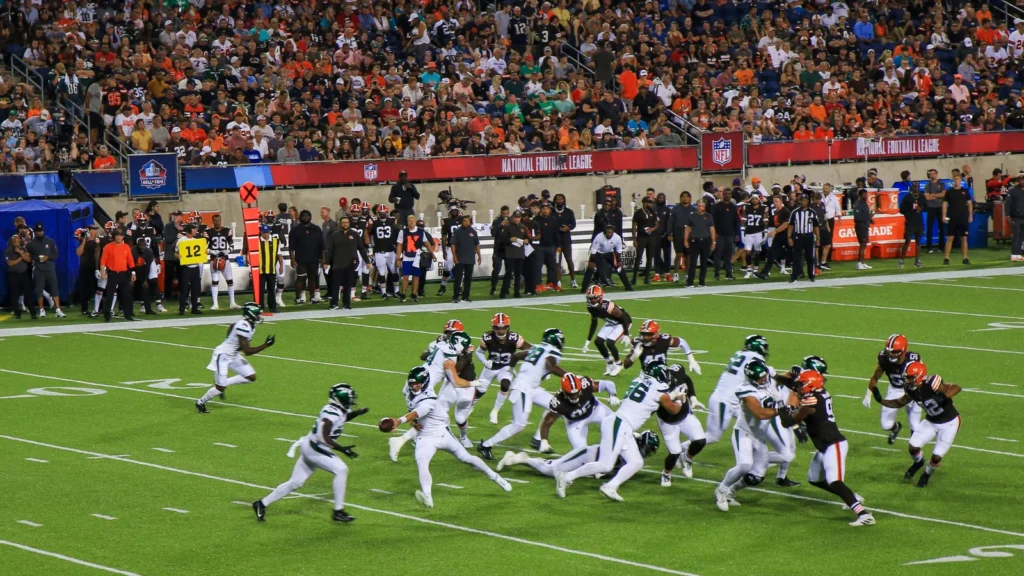
Week 5 puts late-game decisions under scrutiny
Week 5 featured several finishes shaped by clock management, special teams, and officiating decisions. Washington missed its chance to win in overtime, Philadelphia lost after a late kickoff return, and Buffalo defeated the Rams in an overtime game that raised questions about timing.
These incidents involved different circumstances and should not be treated as evidence of a single officiating failure. Together, however, they show why accurate timing, clear communication, and consistent rule enforcement matter during the NFL’s most consequential moments.
Tensions can rise quickly during a difficult game, especially when emotions run high on the sideline. Explore what the Steelers figures said about their interaction as Aaron Rodgers and Mike McCarthy address a heated sideline exchange during the Steelers’ loss.
Which Week 5 moment do you think had the biggest impact on the outcome? Like this post and share your thoughts in the comments!
This slideshow was made with AI assistance and human editing.
Read More From This Brand: