


Lionel Messi is at the center of a growing controversy ahead of Argentina’s World Cup final against Spain. Critics on social media have accused FIFA and tournament officials of giving the defending champions favorable treatment during their run to the title match.
The allegations have focused largely on disputed refereeing decisions against Egypt and Switzerland, as well as broader criticism of FIFA President Gianni Infantino. FIFA has firmly denied that its referees favor Argentina or can be influenced by senior officials.
The Egypt match ignites the debate
Argentina recovered from a 2-0 deficit to defeat Egypt 3-2 in the round of 16. Lionel Messi helped launch the comeback before Enzo Fernández scored the winning goal in second-half stoppage time.
Egypt strongly criticized the officiating after Mostafa Zico’s goal was disallowed following a VAR review. The Egyptian Football Association also questioned why contact involving Mohamed Salah was not penalized shortly before Argentina’s winning goal.
FIFA refereeing chief Pierluigi Collina defended both decisions. He said VAR correctly identified a foul before Zico’s disallowed goal and that the contact involving Salah was judged to be normal football contact.
Social-media theories spread rapidly
Viral posts on TikTok, X and other platforms have accused FIFA of helping Messi and Argentina, but the posts have not provided evidence of bribery or a coordinated effort to influence the tournament.
Some memes portrayed Messi as FIFA’s preferred star and used manipulated or AI-generated images featuring FIFA President Gianni Infantino. Other widely viewed posts alleged that Argentina’s path to the final had been deliberately protected.
The online attention shows how quickly disputed referee calls can develop into broader conspiracy theories. FIFA has rejected allegations that its match officials are influenced by senior executives or favor a particular team.

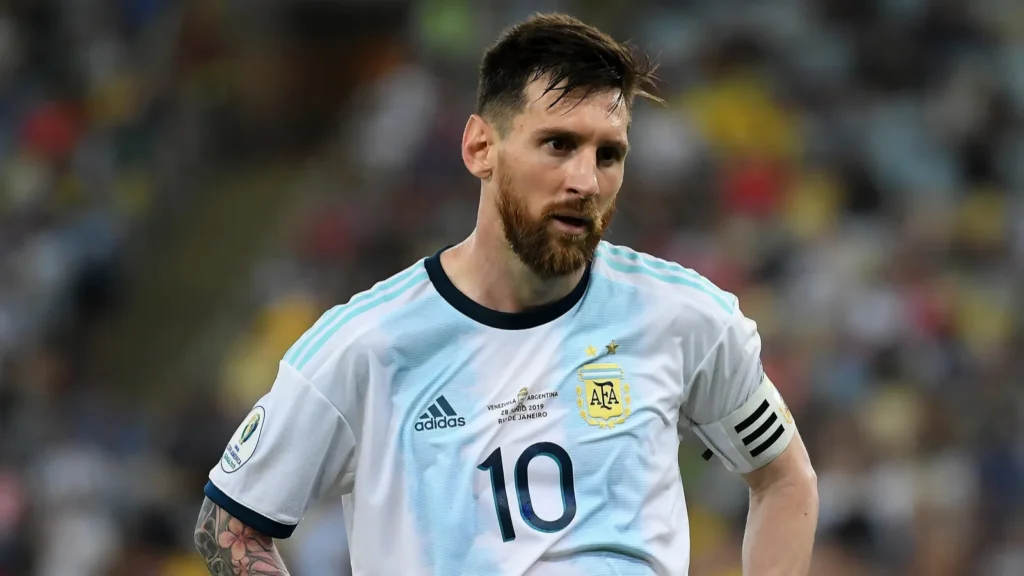
FIFA officials strongly deny favoritism claims
Pierluigi Collina, FIFA’s chief refereeing officer, addressed the accusations directly. He said an honest discussion about calls is normal in football. He insisted that baseless allegations have no place in the sport.
Collina also stated that no one can influence FIFA refereeing decisions. He specifically noted that not even the FIFA president holds that power. His statement aimed to calm growing public suspicion.
Match officials, Collina added, always try to make honest calls. He compared referees to players and coaches doing their best under pressure. Still, many fans remained unconvinced by his defense.
A Swiss controversy adds more fuel
Argentina’s quarterfinal against Switzerland produced another major refereeing dispute. Referee João Pinheiro initially booked an Argentina player, but a VAR review determined that Switzerland forward Breel Embolo had simulated contact.
Embolo received a second yellow card and was sent off, leaving Switzerland with 10 players. Swiss coach Murat Yakin called the expanded VAR intervention unacceptable, while former FIFA referee Christina Unkel questioned whether the protocol had allowed officials to re-referee the original incident too broadly.
Argentina defeated Switzerland in extra time to reach the semifinals. The decision intensified online accusations of favoritism, although it did not establish that FIFA or the officials deliberately assisted Argentina.
Fun fact: Messi is now the outright top scorer in World Cup history, with 20 career goals.
Infantino’s relationship with Trump draws scrutiny
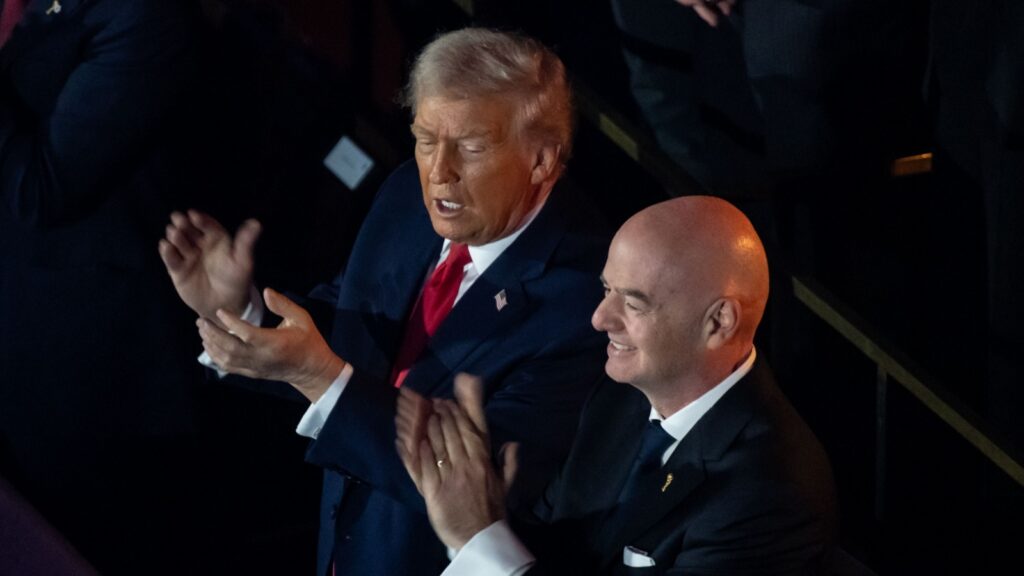
Critics have also focused on FIFA President Gianni Infantino’s relationship with President Donald Trump during a World Cup co-hosted by the United States, Canada, and Mexico.
Trump said he contacted Infantino after U.S. striker Folarin Balogun received a red card. FIFA later suspended enforcement of Balogun’s 1-match ban for 1 year, allowing him to play against Belgium. FIFA maintained that its disciplinary decision was independent.
Irish member of the European Parliament Barry Andrews described FIFA as “profoundly corrupt” following the controversy. Former FIFA President Sepp Blatter has separately characterized Infantino’s leadership as a dictatorship and accused him of being submissive toward Trump.
Online petition demands Argentina’s removal
A fan-led online petition called for Argentina’s removal from the World Cup, alleging that FIFA and match officials had favored Messi and the defending champions.
The campaign argued that disputed decisions had damaged confidence in the competition and called for more consistent rules and transparent officiating. Argentina coach Lionel Scaloni rejected the allegations and said modern VAR technology made deliberate favoritism extremely difficult.
The petition website displayed more than 10 million signatures before Argentina’s semifinal against England. FIFA did not announce any action in response, and the petition itself carried no authority over the tournament’s disciplinary or competition process.
U.S. financial investigation draws separate attention
U.S. federal authorities are reportedly conducting a preliminary investigation into financial transactions connected to the Argentine Football Association and its overseas commercial arrangements.
The inquiry is examining at least $260 million that reportedly moved through the U.S. banking system, along with approximately $57 million in transfers whose purpose was questioned in the underlying reports. Investigators have also examined the relationship between the association and a company that handled international commercial agreements.
The investigation began before Argentina’s current World Cup run and is separate from the national team’s results or refereeing controversies. No one had been formally charged in connection with the reported U.S. inquiry.
What the accusations mean for FIFA
FIFA enters the World Cup final facing renewed scrutiny over transparency in refereeing and the independence of its decision-making. Complaints involving Argentina have been amplified by FIFA’s history of governance and corruption controversies.
Argentina will face Spain at New York-New Jersey Stadium on July 19. The performance of the match officials will receive close attention after disputes involving Argentina’s victories over Egypt and Switzerland.
The allegations circulating online do not prove that FIFA deliberately favored Argentina. However, the controversy shows how disputed calls and inconsistent public confidence can shape perceptions of a tournament even when officials defend their decisions.
Little-known fact: Dino Zoff, 40, remains the oldest man to play in a World Cup final.

TL;DR
- Argentina’s comeback win over Egypt sparked early accusations of referee bias.
- Viral social media posts, some using AI, mocked Messi and FIFA president Gianni Infantino.
- FIFA’s Pierluigi Collina firmly denied that referees favor any team or player.
- A controversial VAR call against Switzerland renewed public suspicion of bias.
- A petition demanding Argentina’s removal gathered more than 10 million signatures.
If you liked this story, don’t forget to follow us for more exclusive content.
This article was made with AI assistance and human editing.
If you liked this, you might also like: