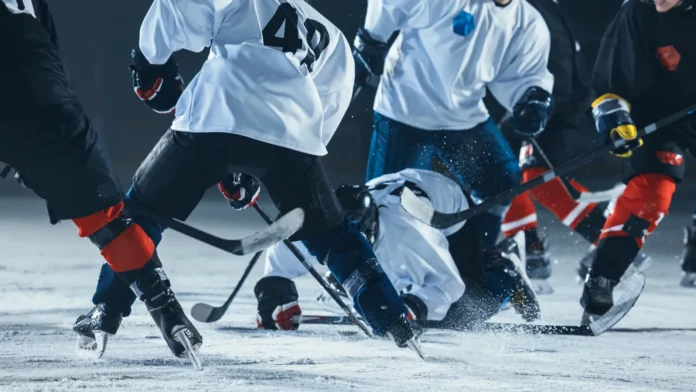
In hockey, the players change, but the hatred does not. Stars retire, trades scatter rosters, and franchises rebuild from scratch. Yet somehow, the fire between certain NHL teams keeps burning just as hot. Fans fill the same arenas, wearing the same colors, carrying the same grudges that their parents passed down.
These rivalries live on a plane that no trade deadline can touch. Understanding why takes more than scoresheets and standings. It means looking at geography, culture, on-ice incidents, and the deep psychology of what it means to be a hockey fan in North America.
If you love the sport and want to understand what truly drives it, keep reading.
Geography builds the foundation
NHL rivalries almost always trace back to geography. Cities placed close together breed more frequent matchups and daily fan tension. Geographic proximity, familiarity, and cultural pride are the primary rivalry drivers. When two cities sit near each other, the rivalry stops being a game-night emotion and becomes a way of life.
Edmonton and Calgary sit approximately 185 miles apart along the Queen Elizabeth II Highway in Alberta. In contrast, the distance between Madison Square Garden (Rangers) and UBS Arena (Islanders) is roughly 17 miles. The rivalry bleeds into workplaces and family dinners in ways that matchups between distant cities simply cannot produce, as losing fans must face their neighbors and colleagues the very next morning.
Fan identity takes over when players leave
When fans pick a team, they are not just choosing a sports franchise. Team allegiance becomes a core part of how people define themselves. Fans feel pride in wins and pain in losses. That ownership transfers across decades since fans never change identity alongside a roster.
The Penguins and Flyers have shared the same division for 52 of their 59 seasons since entering the NHL in 1967, with their only separation occurring during a seven-season stretch from 1974 to 1981.
Divisional structure keeps enemies colliding
Divisional alignment is one of the NHL’s most powerful rivalry engines. Teams sharing a division play each other several times per regular season and often clash in the playoffs, too. That repetition stops grudges from fading naturally. Every time it cools, the schedule returns those same two logos to center ice.
The Penguins and Flyers began in the same West Division in 1967–68 but have not remained in the same division continuously. They’ve been reunited as Metropolitan Division rivals in the modern alignment. Philadelphia leads Pittsburgh in the all-time regular-season record at 168-106-30-14 (per NHL Records). That number exists only because the schedule forces these teams together every season. No offseason is long enough to let Pennsylvania hockey hatred rest.
Fun fact: From February 1974 to February 1989, the Pittsburgh Penguins went 15 years without winning a single road game in Philadelphia, going 0-39-3 at the Spectrum.
Defining incidents become franchise folklore
In Game 6 of the 1996 Western Conference Finals, Claude Lemieux checked Kris Draper from behind into the boards. After the hit, Draper required surgery for a fractured jaw and suffered major facial injuries (reports cite jaw/cheekbone and orbital-area damage), including extensive facial stitches. The hit ignited one of sports’ most infamous feuds.
Revenge came on March 26, 1997, when Darren McCarty pummeled Lemieux at Joe Louis Arena in a brawl with 39 penalties and 148 penalty minutes. Both goalies also fought at center ice. Players who joined either team inherited that story immediately. They walked into a rage no roster move could neutralize.

Playoff history writes the chapters fans never forget
Regular-season hatred is one thing. Playoff hatred is permanent. Boston and Montreal have met in the postseason 34 times more than any two teams in NHL history. By 2014, Bruins–Canadiens Game 7s had occurred nine times. Vivid and painful, those memories add weight to every future meeting between these clubs.
Crosby and Ovechkin transformed a historic rivalry into one defined by absolute playoff stakes, where the road to the Cup always went through the other. Their teams met multiple times in the postseason during the 2010s, and each series produced iconic moments. When both superstars eventually retire, the framework of hatred they built will remain.
Fun fact: From 1946 to 1987, Montreal dominated Boston in the playoffs, winning 18 straight playoff series against the Bruins. Boston finally broke through by beating Montreal in the 1988 Adams Division final, and the rivalry has been much more balanced since.
Contrasting team identities give fans a story to root for
The best NHL rivalries are about clashing identities as much as competition on the ice. The Oilers are seen as skilled and flashy, while the Flames are known for toughness and defensive grit. The Canadiens carry elegance while the Bruins bring blue-collar physicality. Those contrasts survive every roster change made.
When a franchise builds a clear identity, new players are expected to fit it. Gritty teams recruit gritty players. Skilled teams pursue skilled players. That organizational philosophy keeps the contrast alive even as faces change. Fans are not just watching players compete. They are watching two hockey philosophies collide, repeatedly.
Family transmission keeps rivalries alive across generations
Hockey fandom is handed down like a family heirloom, especially across Canada. A child in a Bruins household absorbs that team’s story before being old enough to understand icing. Fans pass down emotions about rivals across generations. The rivalry gets taught and inherited rather than independently discovered. That makes it durable.
This generational transfer means a rivalry does not need active players from its most heated era to stay alive. Younger fans feel the weight of history without watching the 1997 Detroit brawl live. They carry the emotion because someone in their family passed it down. That inheritance outlasts any trade.
The NHL playoff format keeps creating new rivalry chapters
The NHL playoff format frequently pairs geographic rivals in early rounds. That structure virtually guarantees storied rivals keep meeting when the stakes are highest. Every postseason collision adds fresh material to the rivalry. New heroes and new villains emerge. Future fans receive heartbreaking moments to carry forward. The cycle keeps going.
The Oilers and Flames have faced off 274 times since 1980, making the Battle of Alberta the top modern NHL rivalry by fan passion and intensity. Both rosters have turned over completely multiple times since the Gretzky era. Each new generation of players steps into a warm and waiting rivalry.
TL;DR
- Geography roots NHL rivalries in civic identity that outlasts any player’s career.
- Fan psychology means allegiance and hatred are inherited and not chosen fresh each season.
- Divisional structure forces rivals to keep colliding multiple times every year.
- Landmark incidents like the 1996 Lemieux hit on Draper become founding myths that new players inherit.
- Cultural and linguistic divides make certain rivalries bigger than the sport itself.
This article was made with AI assistance and human editing.
If you liked this, you might also like: