Belgium entered the 2026 World Cup with several members of its celebrated golden generation still in place, including Kevin De Bruyne, Romelu Lukaku, and Thibaut Courtois. The Red Devils were still ranked among the tournament’s stronger teams, but 2 opening draws raised doubts about whether the aging core could make another deep run.
Belgium then found its form, defeating New Zealand 5-1 to win its group before producing a controversial comeback against Senegal and routing the United States 4-1. Its politically charged celebrations after eliminating the co-hosts helped turn the team into one of the tournament’s most polarizing storylines.
Where the Red Devils’ nickname began
Belgium’s Red Devils nickname dates to 1906. After Belgium defeated the Netherlands 5-0 in Antwerp on April 29, journalist Pierre Walckiers referred to the players as “little Red Devils” in La Vie Sportive, the Belgian football association’s publication.
Historical accounts also connect the nickname to Belgium’s series of victories over France and the Netherlands, as well as to the players’ red shirts. The name endured and is now used for the national team in Belgium’s Dutch-, French-, and German-speaking communities.
The symbols behind the Red Devils’ name
Belgium uses versions of the nickname in all 3 of its official languages: De Rode Duivels in Dutch, Les Diables Rouges in French, and Die Roten Teufel in German.
The team’s current branding often uses a red trident, directly linking its visual identity to the Red Devils nickname. The official 1895 Belgian Fan Club takes its name from the year the Royal Belgian Football Association was founded.
Belgian supporters commonly display the country’s black, yellow, and red colors at national-team matches, while the official mascot, known as Red, continues the devil theme.
Pierre Walckiers coined the nickname
Journalist Pierre Walckiers used the phrase petits diables rouges, or “little Red Devils,” after Belgium’s 5-0 victory over the Netherlands in 1906. The players’ red shirts and energetic performance clearly influenced the description.
A widely repeated account also links the phrase to Belgian racing driver Camille Jenatzy, who was nicknamed the Red Devil because of his red beard and daring reputation. On April 29, 1899, Jenatzy became the first person to exceed 100 km/h in a car, reaching 105.88 km/h in the electric La Jamais Contente.
The Jenatzy connection is a commonly cited explanation for the nickname, although the surviving evidence does not establish with certainty how directly Walckiers drew on the racing driver.
Highs and lows since
Belgium enjoyed a golden run of success not long ago, reaching third place at the 2018 World Cup finals. Stars like Kevin De Bruyne carried huge expectations across the globe, and fans believed a major trophy was finally within reach at last. That hope faded quickly once the star-studded squad began aging, and Qatar 2022 ended in early elimination and quiet, painful disappointment.
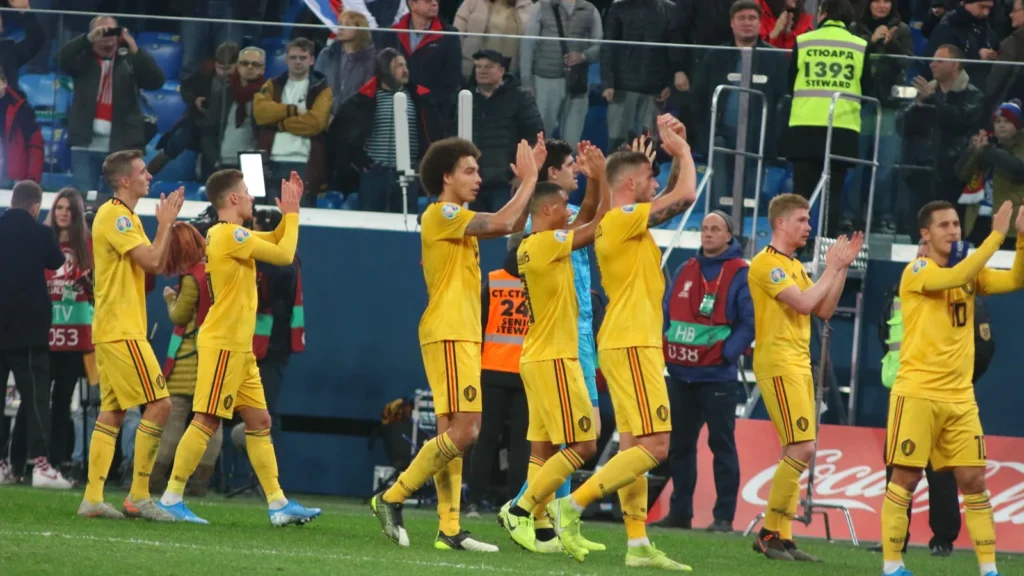
Many assumed the Red Devils’ era of glory was over for good, since the players once called a golden generation looked visibly slower. Draws against Egypt and Iran did little to inspire much confidence, and critics wrote off Belgium before the knockout rounds even began this summer. Then something shifted once the pressure of group play finally ended, and the team found new energy at exactly the right time.
Fun fact: Belgium won Olympic football gold in 1920, its first major international title.
Belgium turns into a villain
Belgium’s run through the knockout rounds surprised almost everyone watching, as the team stopped playing like an aging side in decline. Instead, they played with confidence bordering on outright swagger, and opponents found themselves rattled by more than just the scoreline. Belgium seemed to enjoy needling rivals after big moments, too, and that attitude is exactly what earned them the villain tag this summer.
A population of fewer than 12 million was not expected to matter, yet Belgium kept advancing while larger nations went home early. Every win came with a side of controversy or celebration, and American fans in particular found little to like about them. The Red Devils leaned into that role rather than avoiding it, proving that, it turns out, villains can still be very good.
The Trump dance jab
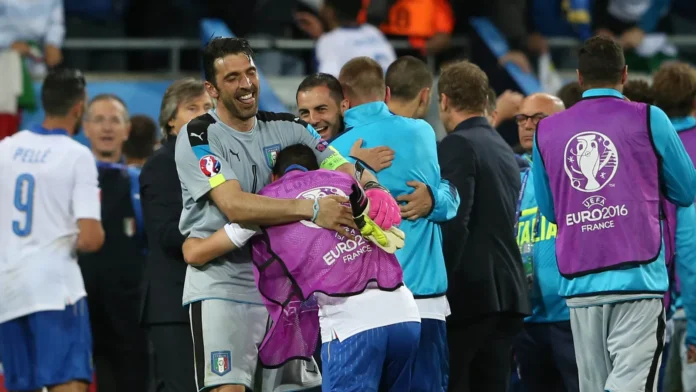
Belgium’s biggest statement came during a rout of the United States, when the players broke into a dance after scoring a fourth goal. It was the arm-pumping move known as the Trump Dance, and the timing felt pointed given the match’s political backdrop.
President Trump had pushed to lift a suspension on an American player, and Belgium’s players seemed determined to answer that directly. The celebration did not stop once the final whistle blew, since players repeated the dance to YMCA in the locker room.
That song is a frequent feature at Trump campaign rallies, and social media posts from the team kept the jab going further. Some fans found it funny while others called it disrespectful, but either way, the moment defined Belgium’s villain reputation instantly.
The Balogun ruling fuels controversy
Folarin Balogun received a red card during the United States’ round-of-32 victory over Bosnia and Herzegovina. The card normally carried an automatic 1-match suspension, but FIFA suspended enforcement of that ban for a 1-year probationary period, allowing Balogun to face Belgium.
The Royal Belgian Football Association said it was astonished by the ruling, while coach Rudi Garcia compared the timing to an April Fools’ joke. Belgium’s legal challenge was dismissed before the match on procedural grounds.
Belgium then defeated the United States 4-1. Although Balogun was permitted to play, the controversy continued after the final whistle as Belgian officials and European football figures questioned FIFA’s decision-making and political neutrality.
Belgium’s World Cup run ends against Spain
Belgium’s tournament ended in the quarterfinals on July 10, when Spain secured a 2-1 victory through Mikel Merino’s late goal. Charles De Ketelaere had equalized for Belgium after Fabián Ruiz opened the scoring.
The Red Devils’ campaign combined a difficult group stage with a dramatic comeback against Senegal and a commanding victory over the United States. Their celebrations and disputes with FIFA made Belgium one of the tournament’s most polarizing teams, even though the run ended before the semifinals.
More than a century after Pierre Walckiers introduced the Red Devils nickname, Belgium’s 2026 campaign showed how strongly that identity continues to shape public perceptions of the national team.
TL;DR
- Belgium’s Red Devils nickname dates to 1906, when journalist Pierre Walckiers described the national team as “little Red Devils” after a victory over the Netherlands.
- The name reflected Belgium’s red shirts. It is also commonly associated with Belgian racing driver Camille Jenatzy, known as the Red Devil, who became the first person to exceed 100 km/h in a car.
- Belgium uses versions of the nickname in Dutch, French, and German, while the team’s current branding features red trident imagery.
- After drawing its first 2 group matches, Belgium defeated New Zealand, Senegal, and the United States before losing 2-1 to Spain in the quarterfinals.
- Belgium’s Trump Dance celebration and its criticism of FIFA’s decision involving Folarin Balogun helped make the team one of the 2026 World Cup’s most polarizing storylines.
If you liked this story, don’t forget to follow us for more exclusive content.
This article was made with AI assistance and human editing.
If you liked this, you might also like: