


The 2026 FIFA World Cup is attracting record U.S. audiences comparable to those of major NFL playoff broadcasts. Mexico’s round-of-16 match against England drew approximately 44.8 million viewers across Fox, Telemundo, and Peacock, while the United States’ match against Belgium attracted about 42 million.
The NFL remains the dominant force in American sports television, but the World Cup has shown that major soccer matches can reach postseason football territory. North American hosting, U.S.-friendly kickoff times, and broad television and streaming access have helped expand the tournament’s reach.
The latest ratings tell a remarkable story
The United States’ round-of-32 victory over Bosnia and Herzegovina drew more than 33 million viewers across Fox and Telemundo, while its round-of-16 loss to Belgium attracted approximately 42 million across Fox, Telemundo, and Peacock.
Those audiences fall within the range of major NFL playoff broadcasts. The 2026 NFL divisional round averaged 39.2 million viewers, although the Super Bowl remained far ahead at approximately 125 million.
The World Cup totals also exceeded the audiences for individual recent NBA Finals and World Series games, underscoring the exceptional drawing power of major tournament matches.
Why this tournament feels different
Hosting the tournament across the United States, Canada, and Mexico has created ideal viewing conditions for American audiences. Unlike previous World Cups played in distant time zones, most matches have aired during afternoon or prime-time television windows.


That scheduling advantage has been paired with stronger domestic interest. Soccer participation has continued to rise across youth levels, streaming access has expanded, and major European leagues have become easier for American fans to follow every weekend. Those long-term trends are now showing up in national television ratings.
More than just the United States is attracting viewers
More than U.S. matches are attracting viewers
Record audiences have not been limited to the United States men’s national team. Mexico’s group-stage match against South Korea drew 14 million viewers across Telemundo and Peacock, setting a U.S. Spanish-language soccer record at the time.
Mexico’s round-of-16 match against England later attracted approximately 44.8 million viewers across English- and Spanish-language coverage, making it one of the tournament’s largest U.S. audiences.
Fun fact: The 2026 tournament is the first men’s World Cup featuring 48 national teams, expanding the competition from the previous 32-team format and creating even more matches for fans to follow.
Soccer is earning a bigger place in the U.S. sports calendar
For decades, the NFL has been considered the gold standard for television audiences in America. Regular-season football routinely dominates weekly ratings, while playoff games attract enormous national attention.
The World Cup isn’t replacing football, but it is proving that soccer can command similar attention during its biggest moments. Industry observers have noted that some World Cup broadcasts now resemble the audience levels typically seen in NFL postseason games rather than traditional soccer telecasts.
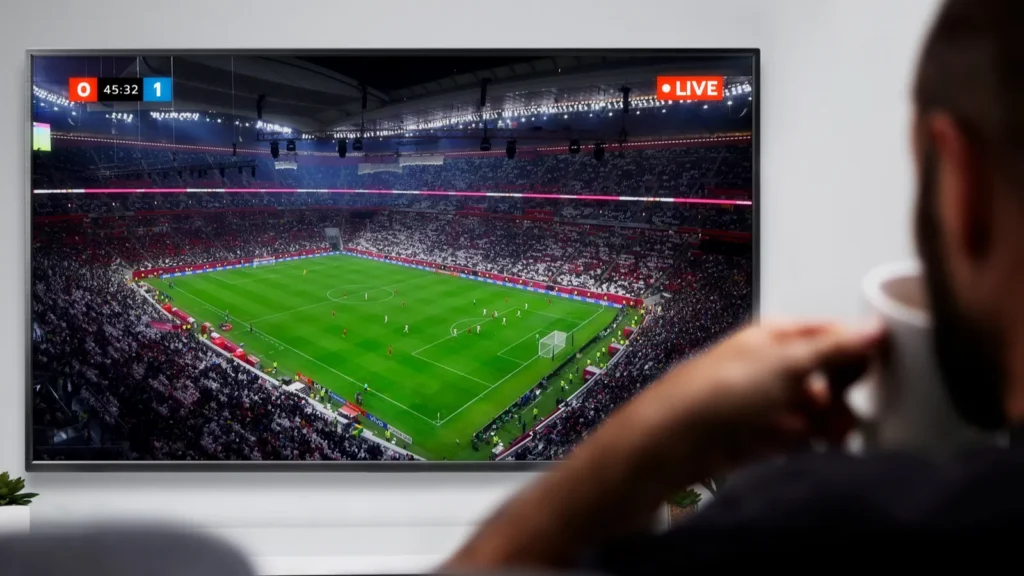
Fox executives have even described the tournament as comparable to another NFL season from a television perspective, given its reach and advertising demand. That speaks to the event’s growing commercial importance and expanding fan base.
Streaming has become part of the success story
Television remains the primary viewing platform, but streaming has played a significant role in this year’s record-setting audiences. Fans have watched matches across services, including Tubi and Peacock, alongside traditional broadcasts.
Modern audience measurement also captures more out-of-home viewing than in previous tournaments. Fans gathering at restaurants, sports bars, offices, and public watch parties now contribute more accurately to overall ratings, helping paint a fuller picture of the tournament’s popularity.
That broader measurement doesn’t tell the whole story, but it does reflect how people increasingly consume live sports across multiple platforms.
The momentum has been building for years
This surge didn’t happen overnight. The 2022 World Cup in Qatar produced record American audiences despite challenging kickoff times during the workday.
Since then, domestic interest has continued to grow. Major international stars play in matches more accessible to U.S. viewers, while the popularity of European club soccer has introduced millions of American fans to the sport outside World Cup cycles.

The arrival of global stars in North America has also generated additional attention around soccer. Combined with expanded media coverage and improved accessibility, those factors have helped transform the sport from an occasional event into a year-round conversation.
Fun fact: The previous U.S. television record for a men’s soccer match has been broken multiple times during the 2026 World Cup, highlighting just how rapidly audiences have grown.
What these numbers could mean going forward
Television ratings alone don’t determine a sport’s future, but they remain one of the strongest indicators of public interest. Broadcasters, advertisers, sponsors, and leagues all pay close attention when audiences reach historic levels.
The current World Cup demonstrates that soccer has become a much larger part of the American sports conversation than it was even a decade ago. Fans aren’t simply tuning in for the championship match anymore—they’re following group-stage contests, knockout rounds, and storylines throughout the tournament.
Whether these audiences become the new normal remains to be seen. What is already clear is that the World Cup has established itself as one of the rare sporting events capable of drawing television audiences usually associated with America’s biggest football games.
TL;DR
- The 2026 FIFA World Cup has drawn U.S. television audiences comparable to those of many NFL playoff games.
- Combined English- and Spanish-language broadcasts have surpassed 30 million viewers for major U.S. matches.
- North American hosting and favorable kickoff times have significantly boosted viewership.
- Streaming platforms and improved audience measurement have contributed to record totals.
- The tournament highlights soccer’s continued rise within the American sports landscape.
If you liked this story, don’t forget to follow us for more exclusive content.
This article was made with AI assistance and human editing.
If you liked this, you might also like: