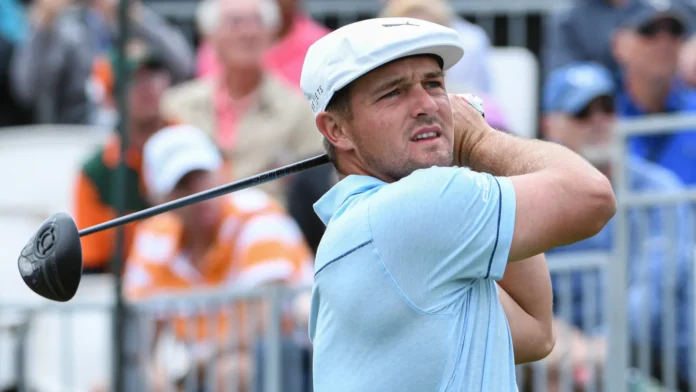
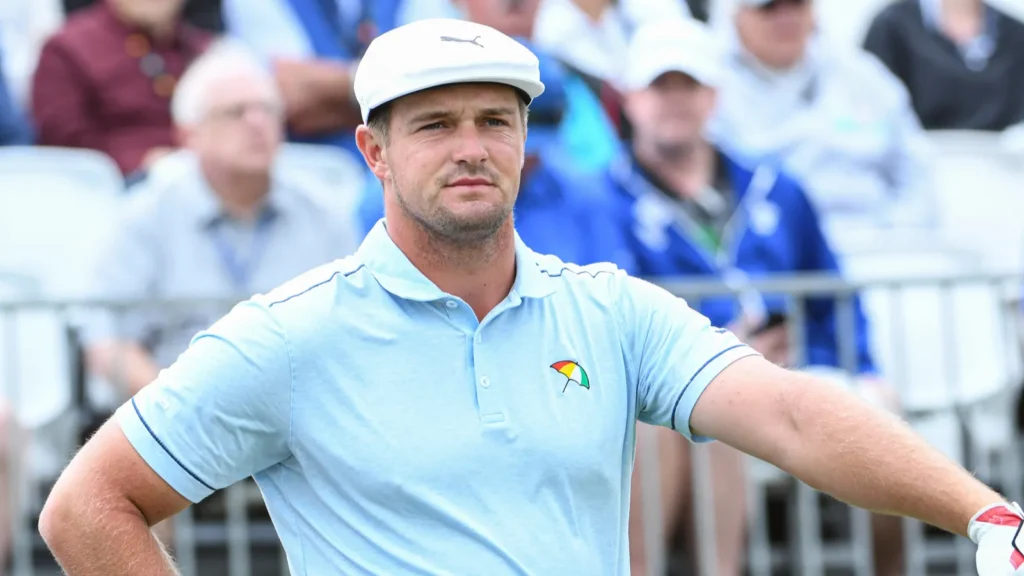
The questions started before the first tee shot at Trump National Golf Club in Virginia. With LIV Golf’s long-term outlook suddenly a headline topic again, Bryson DeChambeau found himself doing what the league’s biggest names often do now, answering for the sport’s fractured future.
DeChambeau said he was stunned when he first heard reports about potential changes to LIV’s funding picture, and he has openly mused about going all-in on YouTube if the league ever folded. Now he is also putting clear conditions on any possible path back to the PGA Tour, starting with a simple premise: it is not just about executives, it is about whether fellow players would welcome him.
Uncertainty shadows LIV Virginia
LIV Golf is backed by Saudi Arabia’s Public Investment Fund, and the league’s business model depends heavily on that support as it builds teams, purses, and a global schedule. In Virginia, the swirl of questions turned routine media availability into something closer to a referendum on what comes next.
For LIV players, the stakes are not abstract because contracts, schedules, and competitive pathways are tied to the league’s stability. The league has positioned itself as a long-term alternative to the PGA Tour, with team franchises and event presentations that differ from traditional tour golf. If funding tightened, the ripple effects could reach everything from player acquisition to media strategy, which is exactly why reporters pressed DeChambeau early and often.
DeChambeau signals openness
In an interview with GOLF’s Alan Bastable, DeChambeau described being caught off guard when the funding reports first surfaced. He said he believed there was a plan stretching years into the future, and the news felt like a sudden reversal rather than a gradual pivot. “There’s no way,” he recalled thinking, adding that it felt like “a flip of the switch.”
He also acknowledged to other outlets that if LIV ever ended, he could imagine devoting himself to his YouTube channel full-time. That matters because DeChambeau has built a public identity that extends beyond leaderboards, with content designed for younger audiences and casual fans. In other words, his leverage is not only in how he plays, but in how many people he can reach.
Players must want him
In an interview with Skratch Golf’s Garrett Johnston, DeChambeau laid out the first requirement for a PGA Tour return: the current membership would need to want him back. He framed it as a player-driven decision more than an executive one, suggesting that sentiment inside locker rooms is the real gatekeeper. “It’s really about whether the membership wants me back,” he said, adding that if they did not, “then I understand that.”
That comment underscores how personal the PGA Tour and LIV split has become since LIV began signing stars in 2022. Players who left for LIV were suspended from PGA Tour events, and the public rhetoric on both sides hardened quickly. Even if broader negotiations someday create a route for reunification, DeChambeau is acknowledging that the human layer, trust, grudges, and alliances, could be the hardest part to unwind.
Fun fact: For the 2026 season, LIV Golf has updated its format to 72 holes (four rounds of 18) for all regular-season events, departing from its original 54-hole structure.
YouTube plans complicate return
DeChambeau’s second major hurdle is about content, and he has been blunt that it is central to his future. He told Skratch he views filming as additive marketing that can increase interest in a tournament, not siphon from it. “Me being able to create content on that golf course that week at that event should only bring value,” he argued, tying it to entertainment and fan growth.
That stance runs into a reality of modern sports business, live events are valuable largely because of controlled media rights, sponsor categories, and broadcast windows. Tours and tournaments often treat on-site video as a regulated asset, not just a personal project, because it affects partners who pay for exclusivity.
DeChambeau is effectively saying his personal media brand should travel with him, even inside tournament ropes, and that is a negotiation, not a given.
What the policy allows
DeChambeau also suggested that filming during practice rounds and pro-ams could violate PGA Tour policy, based on his past experience. The PGA Tour, however, told Skratch that under its current Social Media Policy, players may create content at events before tournament rounds. That clarification matters because it turns the dispute into a narrower question of permissions, timing, and commercial use, rather than an outright ban.
The remaining friction is likely in the details that fans rarely see, like where cameras can go, who needs credentials, and how sponsor logos and broadcast elements are handled. A player can be “allowed” to film in principle while still facing constraints that make high-quality production difficult in practice.
If DeChambeau ever tries to return, a workable compromise would probably look like explicit creator guidelines that protect partners while giving players room to build audiences.
Little-known fact: DeChambeau is the third person in history to win the “triple crown” of amateur and professional golf: the NCAA Individual title, the U.S. Amateur, and the U.S. Open. Only Jack Nicklaus and Tiger Woods had accomplished this before him.
A narrow path forward
DeChambeau’s leverage in this moment is that his future is more flexible than some LIV peers, at least relative to players tied up in longer contracts. If LIV’s financial outlook changed, his options could expand quickly because he would not be trying to untangle the same long-term obligations as everyone else. That is one reason his comments land differently than similar speculation about players whose deals appear to run much deeper.
Competitive access is also part of the equation, even for a U.S. Open champion with major exemptions. LIV events have not awarded Official World Golf Ranking points, which can complicate qualifying for majors over time for players without recent wins or high standing elsewhere.
With pro golf still split and high-level negotiations between the PGA Tour and PIF unresolved since the 2023 framework agreement, DeChambeau’s two demands read like a preview of the next fight: not just where stars play, but on what terms.
TL;DR
- Bryson DeChambeau said he was surprised by reports raising new questions about LIV Golf’s long-term funding outlook.
- He told Skratch Golf he would consider a PGA Tour return only if current Tour players actually want him back.
- His second sticking point is content creation, especially filming that supports his YouTube and sponsor-driven media work.
- DeChambeau suggested Tour rules restrict filming at events, but the PGA Tour told Skratch that pre-round content is allowed under the current policy.
- Any return would likely involve membership sentiment, reinstatement logistics, and negotiated media guidelines at tournaments.
- DeChambeau’s personal brand and audience reach have become a meaningful factor in how he evaluates his next move.
If you liked this story, don’t forget to follow us for more exclusive content.
This article was made with AI assistance and human editing.
If you liked this, you might also like: