FIFA outlines $10 billion proposal
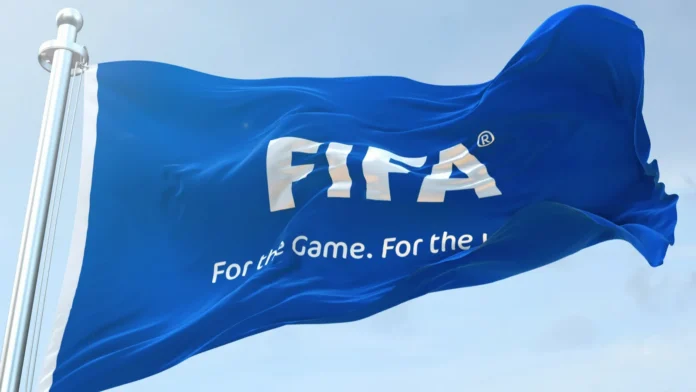
Fédération Internationale de Football Association, known as FIFA, proposed more than $10 billion in development funding for its 211 member associations, subject to approval through the organization’s established governance process.
The plan would create FIFA Forward Enterprise, a FIFA-controlled commercial subsidiary involving minority private investment. Proposed funding could support stadiums, training centers, grassroots programs, competitions, coaching, national teams, and women’s soccer.

FIFA values new business at $20 billion
FIFA said the proposed subsidiary would carry an implied initial valuation of $20 billion. FIFA Forward Enterprise would seek up to $4.2 billion from minority investors during an initial capital raise in 2026.
Thrive Capital was identified as a prospective investor, while J.P. Morgan advised FIFA. Outside investors would receive noncontrolling interests and no authority over competitions, regulations, match calendars, or sporting decisions worldwide.
FIFA offers up to $40 million
Each member association could access up to $20 million through the optional FIFA Fast Forward Program. Associations would also remain eligible for $20 million through the regular FIFA Forward program from 2027 through 2030.
FIFA currently budgets $8 million per association for that cycle. The proposal would raise regular Forward funding to $22 million from 2031 through 2034 and $24 million from 2035 through 2038.

FIFA sets September 19 deadline
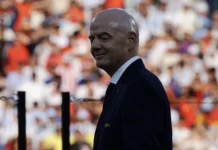
FIFA President Gianni Infantino asked member associations to support the proposal by September 19, 2026. Associations that declined would not receive access to the optional one-time funding of up to $20 million.
FIFA described participation in the Fast Forward mechanism as voluntary. UEFA criticized the deadline and withdrawal of the one-time offer, arguing that the arrangement pressured associations considering the wider proposal.
FIFA says control would remain
FIFA said outside investors would receive minority, noncontrolling interests in FIFA Forward Enterprise. FIFA would retain control of the subsidiary and exclusive authority over competitions, regulations, the match calendar, and sporting decisions.
The subsidiary would combine FIFA’s commercial rights and tournament operations, including broadcasting, sponsorship, ticketing, and licensing. FIFA said all net benefits generated by the structure would be returned to soccer development.
FIFA needs member approval
FIFA said the proposed structure requires support from a majority of its 211 member associations before FIFA Forward Enterprise can launch. Relevant approvals from the FIFA Council would also be required.
FIFA’s governance system generally gives each member association one vote at Congress. That arrangement provides every eligible member with equal formal voting weight, regardless of population, commercial value, or national team performance.

England’s FA questions process
England’s Football Association said on July 29, 2026, that it had been completely unaware of the proposal. The FA said it lacked substantive details about the offer and any attached conditions.
The organization expressed deep concern about the process, governance, substance, and principles involved. It said it would state its position after FIFA provided the proposal through the promised full and transparent review.
Concacaf criticizes consultation
Concacaf said it learned about FIFA Forward Enterprise through media reports and a later FIFA release. The confederation represents 41 member associations across North America, Central America, and the Caribbean.
Concacaf expressed deep concern about the lack of due process before detailed plans became public. Its statement called for good governance, robust procedures, and long-term stewardship in decisions affecting international soccer.
Asian federation requests more time
The Asian Football Confederation said FIFA had not consulted it before announcing the proposal. The AFC expressed disappointment that the issue entered public discussion before established governance channels could examine it.
The AFC called for sufficient information and adequate time to assess the proposal’s governance, legal, commercial, and strategic implications. Its response showed that concerns extended beyond Europe and North America.
UEFA organizes opposition to FIFA
UEFA said opposition to FIFA’s proposal was growing after discussions with soccer stakeholders. Europe’s governing body criticized the deadline and withdrawal of the one-time payment from associations that withheld support.
UEFA called an emergency meeting of its 55 member associations to coordinate a response. It argued that soccer’s growth should prioritize associations, clubs, leagues, players, and supporters rather than private financial interests.
France raises transparency concerns
The French Football Federation expressed strong concern about FIFA’s proposal to sell interests connected with World Cup commercial operations. It called for detailed information, consultation, and a fully transparent decision-making process.
The federation said those conditions had not been met. It planned to provide observations after receiving and reviewing the proposal’s full terms, structure, operating arrangements, and governance framework in detail.
World Cup boycott threat escalates
European associations discussed a possible boycott of future FIFA competitions as a response to the proposal. By July 30, 2026, UEFA’s 55 member associations had unanimously agreed not to participate in FIFA competitions if FIFA moved forward with the private-investment plan.
The immediate dispute centered on governance, consultation, private investment, and control over commercial operations related to FIFA competitions. UEFA said the boycott threat would remain unless the proposal was abandoned and binding assurances were given against private ownership of FIFA governance or competitions.
Robert Lewandowski’s assessment of Lamine Yamal raises questions about what limited the young star’s impact. Dive into the performance, expectations, and factors behind his blunt verdict.
FIFA proposal remains under review
FIFA’s proposal remained under consultation on July 30, 2026, with no final member vote completed. Majority support from FIFA’s 211 member associations and relevant approvals from the FIFA Council were required before implementation.
FIFA emphasized increased development funding and retained control. Opposing confederations and national associations demanded fuller disclosure, meaningful consultation, adequate review time, and stronger governance safeguards before any final decision was made.
Erling Haaland’s anger after Norway’s World Cup loss raised questions about what went wrong. Dive into the key moments, decisions, and frustrations behind his reaction.
Should FIFA accept private investment to expand development funding, or should member associations demand stronger safeguards first? Share your thoughts in the comments below!
This slideshow was made with AI assistance and human editing.
Read More From This Brand: