





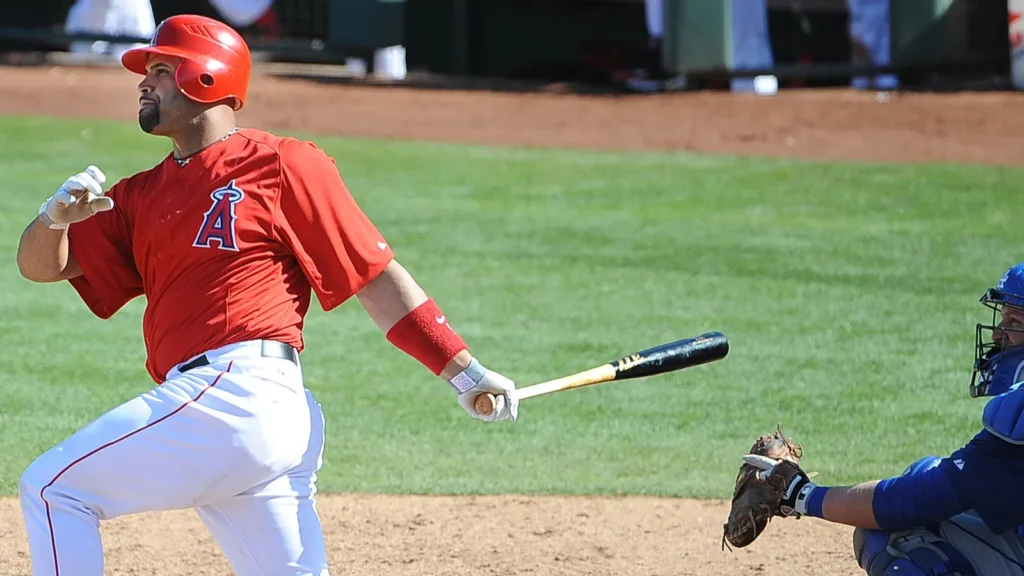
Pujols leaves Cardinals after contract talks fall through
Albert Pujols’ move after leaving the St. Louis Cardinals set off one of the most talked-about contract decisions in modern baseball. What followed wasn’t just a change of teams, but a shift that sparked debate across the league about money, legacy, and long-term risk.
As one of the game’s biggest stars entered a new chapter, expectations were sky-high, and the pressure was even higher. Let’s break down how it all unfolded and why it still matters in MLB conversations today.

Championship success defines Cardinals era
Pujols contributed to multiple postseason appearances with the Cardinals, including World Series championships in 2006 and 2011. His production in key moments helped stabilize the team’s lineup during playoff runs.
His role in championship seasons increased his national profile and contract value entering free agency. The Cardinals remained competitive throughout his tenure with him as a central offensive force.

Contract negotiations reach critical point
Before free agency, the Cardinals and Pujols discussed a long-term extension but did not reach an agreement. Both sides explored multi-year options but failed to finalize terms before the deadline.
This led to Pujols entering the free-agent market after the 2011 season. It marked the first time he was available to negotiate with all MLB teams.

Free agency attracts multiple MLB teams
After the 2011 season, several teams expressed strong interest in signing Pujols. The St. Louis Cardinals, Miami Marlins, and Los Angeles Angels were among the most serious contenders.
Each team evaluated his value as a franchise-level player capable of boosting offense and attendance. The competition made him the top free-agent target of that offseason.
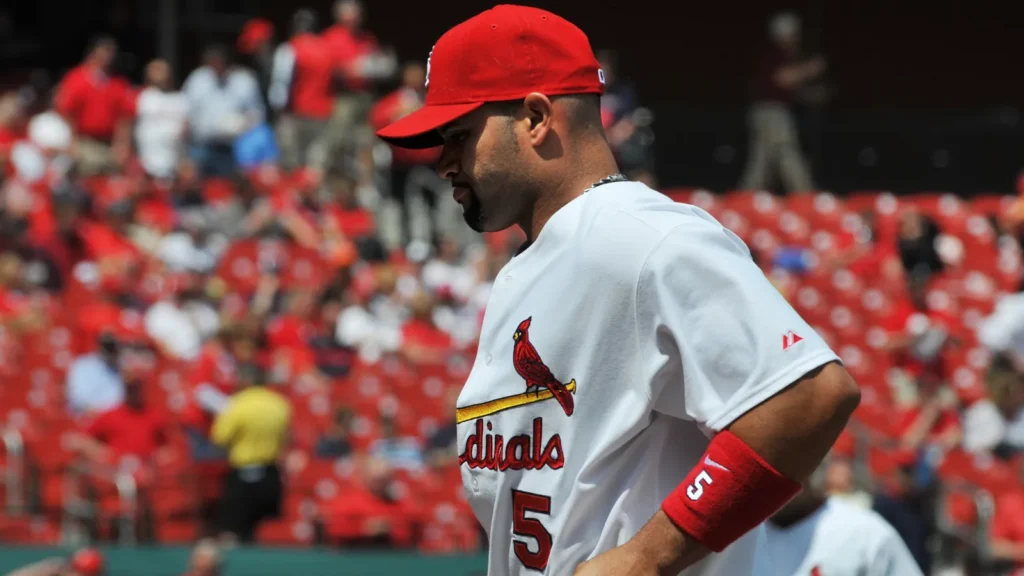
Angels sign Pujols to major contract
The Los Angeles Angels signed Albert Pujols in December 2011 to a 10-year contract. The deal was reported by multiple outlets, including ESPN and CBS Sports, as worth approximately $240 million in guaranteed money.
This agreement was one of the largest free-agent contracts in MLB history at the time. It immediately shifted expectations for the Angels’ competitive outlook in the American League.

Contract becomes landmark MLB agreement
The Angels’ agreement with Pujols represented a major financial commitment for a veteran player. It placed him among the highest-paid athletes in baseball history at the time of signing.
The contract was widely reported as a decade-long deal designed to secure long-term production. It also reflected increasing trends in MLB toward high-value superstar contracts.

Departure from St. Louis becomes official
Pujols left the Cardinals after the 2011 season when negotiations did not result in a new contract. He became a free agent and signed with the Los Angeles Angels shortly after.
This marked the end of his 11-season tenure in St. Louis. It also represented one of the most notable free-agent departures in franchise history.

Angels debut begins new chapter
Pujols joined the Angels in 2012 and immediately entered the lineup as a key offensive player. He was expected to continue producing at an elite level based on his prior career performance.
His early seasons with the team showed solid production, though not at his peak Cardinals level. He remained an important presence in the Angels’ batting order.

Performance adjusts in American League
During his time with the Angels, Pujols transitioned into a designated hitter role more frequently. This adjustment reflected both age and defensive considerations.
His offensive output remained productive in stretches but gradually declined compared to his early career. The change in role became more common in later seasons.
Interesting fact: Founded in 1882, the St. Louis Cardinals are the oldest major league franchise west of the Mississippi River.

Age-related decline becomes evident
As Pujols progressed through his contract, his statistical performance declined. Metrics such as batting average, on-base percentage, and defensive range showed downward trends.
This decline is consistent with typical aging curves for professional baseball players. He continued contributing as a veteran presence despite reduced production.
Interesting fact: Busch Stadium has been the St. Louis Cardinals’ home ballpark since the 2006 season, and the first official regular-season MLB game there was April 10, 2006.

Contract evaluated in MLB front offices
The long-term Angels contract became a frequent case study in MLB roster planning discussions. Analysts often referenced it when evaluating risk in extended deals for aging players.
It highlighted the balance teams attempt to strike between star power and long-term financial flexibility. The contract remained one of the most discussed agreements in baseball economics.

Angels released Pujols in 2021
The Los Angeles Angels released Albert Pujols in May 2021 before the final season of his contract. This move ended his tenure with the team after nearly a decade.
At the time of his release, he had played parts of 10 seasons with the Angels. The decision was based on roster direction and on-field performance considerations.
The internet is also talking about how Yogi Berra turned simple phrases into timeless wisdom for the New York Yankees.
Career legacy includes historic contract era
Pujols’ move from the Cardinals to the Angels remains a major reference point in MLB contract history. It is frequently cited in discussions about long-term risk in free-agent agreements.
His overall career is considered one of the most accomplished in modern baseball history. The Angels contract remains a key chapter in his professional legacy.
In other news, NFL media strategy evolves as streaming platforms take a larger role in sports broadcasting.
If you enjoyed learning about Albert Pujols’ journey and his historic contract move after leaving the Cardinals, take a moment to like this post and share your thoughts in the comments.
This slideshow was made with AI assistance and human editing.
Read More From This Brand:


