
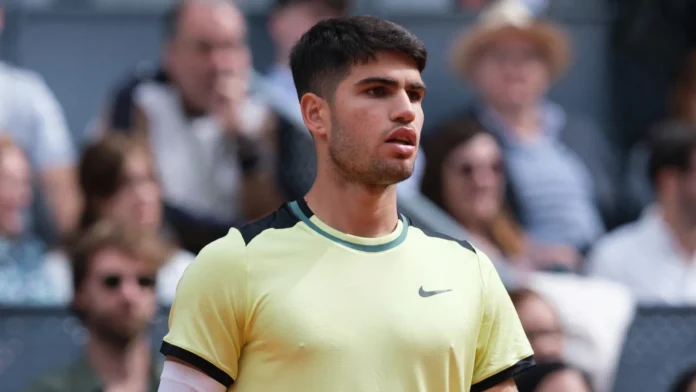
Carlos Alcaraz has called for changes to Grand Slam scheduling after his U.S. Open quarterfinal against Ben Shelton ended at 3:33 a.m., the latest finish in tournament history.
The Spaniard said late-night matches are “too much” and argued that tournaments should aim for a maximum finish time around 11 p.m. His comments followed a 4-hour, 28-minute match that drew renewed criticism of late-night scheduling at the U.S. Open.
A marathon finish in New York
Carlos Alcaraz walked off Arthur Ashe Stadium at 3:33 a.m. after a five-set battle against Ben Shelton. It was the latest finish in U.S. Open history.
Shelton won 6-7(5), 6-1, 6-3, 1-6, 7-6(7), claiming the deciding 10-point tiebreak after 4 hours and 28 minutes. The match featured major momentum swings before Shelton finally closed out the quarterfinal victory.
The 3:33 a.m. finish set a new U.S. Open record. The previous mark belonged to Alcaraz and Jannik Sinner, whose 2022 quarterfinal ended at 2:50 a.m. after an exhausting five-set battle in New York.
Alcaraz speaks out on scheduling
Alcaraz said late-night finishes are “too much” and that he would like Grand Slam schedules to have a maximum finish time around 11 p.m. He also explained that finishing after 3 a.m. can delay a player’s recovery well into the following morning.
Looking back on the quarterfinal, Alcaraz called the match a “gift” and said he “suffered” but also enjoyed the experience because he had missed that feeling during a 4½-month absence caused by a right wrist injury.
Earlier in 2026, Alcaraz made history by becoming the youngest man to complete a Career Grand Slam. He achieved the milestone at age 22 after winning the Australian Open, adding the final major title he needed.
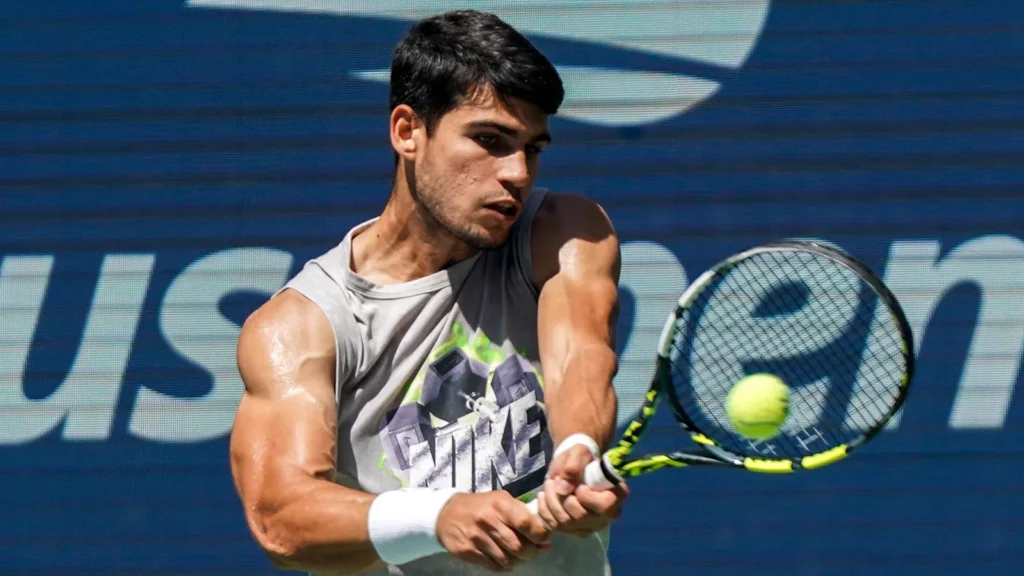
Why Wimbledon’s curfew works so well
Wimbledon follows an 11 p.m. local curfew each night. If a match is still underway when the cutoff arrives, play is suspended and resumes later, preventing competition from continuing deep into the early morning hours.
The cutoff exists largely out of consideration for local residents around the All England Club rather than as a universal tennis rule. That makes Wimbledon’s scheduling structure different from the U.S. Open’s late-night format.
The curfew prevents matches from continuing deep into the early morning, although suspended matches may resume on a later day depending on the tournament schedule.
The US Open’s late-night problem
Unlike Wimbledon, the U.S. Open does not operate under an 11 p.m. curfew. Its night sessions traditionally feature 2 matches in Arthur Ashe Stadium, which can lead to very late finishes when earlier matches run long.
Alcaraz said the Shelton match could have drawn a packed stadium if it had started earlier. He argued that many fans missed the finish because of the late hour and said a match ending around 11 p.m. would be more reasonable.
The 2026 tournament drew wider criticism for late scheduling, with several matches finishing after 2 a.m., while another began at 12:13 a.m.
Empty seats tell a bigger story
The late finish against Shelton renewed concerns about how scheduling affects spectators and television audiences. By the end of the match, Arthur Ashe Stadium was far from full, despite the quality of the contest.
Alcaraz said many people missed the match because of the time slot and argued that an earlier start time could have kept the stadium packed. Other players have also raised concerns about how late finishes affect recovery and the fan experience.
The debate is therefore about more than convenience. It involves how Grand Slam tournaments balance prime-time television, ticketed night sessions, audience engagement, and player recovery.
How other Slams handle late finishes
The Australian Open holds the record for the latest-finishing Grand Slam match. Lleyton Hewitt beat Marcos Baghdatis in a match that ended at 4:34 a.m. in 2008.
Roland Garros uses a different night-session model, scheduling 1 match on Court Philippe-Chatrier at 8:15 p.m. Wimbledon goes further by enforcing its 11 p.m. curfew.
The U.S. Open, therefore, sits at the center of a broader debate about late-night tennis, with different Grand Slam tournaments using different scheduling approaches.
Little-known fact: Alcaraz has said golf helps calm him away from tennis. At Wimbledon in 2025, actor Tom Holland visited his practice court, and the 2 discussed playing golf together.
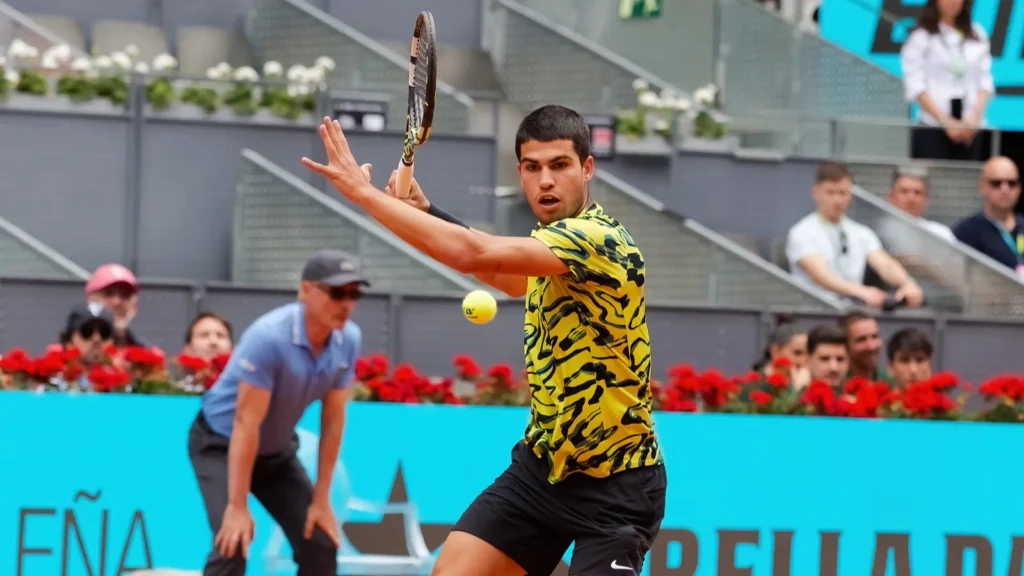
Can the U.S. Open actually change
Changing the U.S. Open schedule would involve several practical considerations, including separate day and night sessions and the logistics of getting spectators into Arthur Ashe Stadium for evening matches.
USTA CEO Craig Tiley has said he plans to keep the current format of 2 matches during the day and 2 at night in 2027. He acknowledged that nobody wants a match to finish at 3:30 a.m. but said the tournament values the amount of tennis each session offers fans.
That does not rule out every possible scheduling adjustment, but it does indicate that the core day-and-night session structure is expected to remain.
What this means for fans and the players
Alcaraz’s comments have added to an existing debate about player recovery, scheduling and working conditions in professional tennis. Several players raised concerns during the 2026 U.S. Open about matches starting or ending deep into the night.
Taylor Fritz and other top players have also been involved in broader discussions about the demands of the professional calendar and player working conditions.
For now, the Grand Slams are taking different approaches. Wimbledon uses an 11 p.m. curfew, Roland Garros limits its night session to 1 match, while the U.S. Open plans to retain its core day-and-night session format.
TL;DR
- Alcaraz’s U.S. Open quarterfinal against Ben Shelton ended at 3:33 a.m., the latest finish in tournament history.
- Alcaraz said he would like Grand Slam matches to have a maximum finish time around 11 p.m.
- Wimbledon operates under an 11 p.m. local curfew, while Roland Garros limits its night session to 1 match.
- The Australian Open holds the record for the latest Grand Slam finish, at 4:34 a.m. in 2008.
- Late finishes have raised concerns about fan attendance, audience engagement and player recovery.
- USTA CEO Craig Tiley said the U.S. Open plans to keep its core format of 2 matches during the day and 2 at night.
Read More From This Brand:
- Leylah Fernandez pulls back the curtain on Alexandra Eala’s life beyond tennis
- Alexander Zverev calls out Davis Cup officials after Germany reaches the Final 8
- John McEnroe recalled defying his wife’s warning before meeting Donald Trump at the US Open
This article was made with AI assistance and human editing.