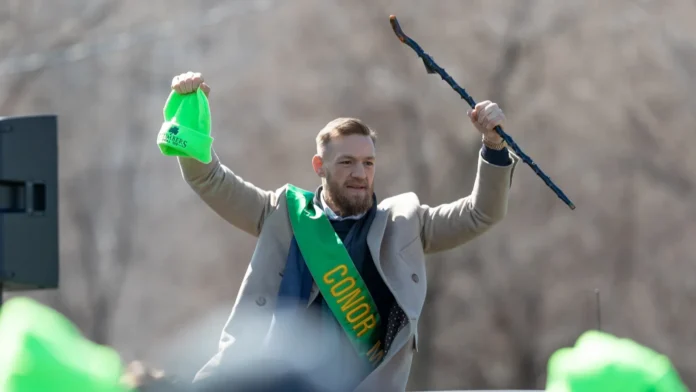
The UFC has grown into a global sports business that generates more than $1 billion in annual revenue and regularly stages major arena events. UFC 329, headlined by Conor McGregor and Max Holloway on July 11, 2026, reportedly generated a promotional-record live gate of approximately $25 million.
Fighter compensation includes several components that are not always visible to the public. One of them is the Promotional Guidelines Compliance program, which provides standardized payments for meeting the UFC’s outfitting and promotional requirements. Those payments are separate from contracted fight purses, bonuses, and other compensation.
McGregor received $11,000 in compliance pay
Conor McGregor received a reported $11,000 Promotional Guidelines Compliance payment for his UFC 329 bout against Max Holloway. That amount was not his full fight purse; compliance compensation is a separate payment linked to the UFC’s outfitting and promotional program.
Holloway received $21,000 through the same program. The difference reflected their respective positions in the UFC’s experience-based payment structure, not their popularity, ticket sales, or total compensation for the event.
What compliance pay means
The UFC’s Promotional Guidelines Compliance program administers payments tied to athletes’ compliance with the promotion’s outfitting and promotional requirements. Venum became the UFC’s exclusive global outfitting partner in 2021, succeeding Reebok, and the UFC introduced an increased compliance-pay scale when that partnership began.
Compliance compensation is separate from a fighter’s contracted purse, win bonus and performance bonuses. Reported UFC 329 payments totaled $275,000 among 28 athletes. Most non-title payments were determined by the number of eligible UFC, WEC and Strikeforce bouts credited to each athlete, while champions and title challengers received separate fixed amounts.

How the compliance-payment tiers work
For non-title bouts, the reported UFC compliance scale contains 6 experience tiers. Fighters credited with 1 to 3 eligible bouts receive $4,000; 4 to 5 bouts receive $4,500; 6 to 10 bouts receive $6,000; 11 to 15 bouts receive $11,000; 16 to 20 bouts receive $16,000; and fighters with at least 21 eligible bouts receive $21,000.
Champions receive $42,000, while title challengers receive $32,000. McGregor was paid at the $11,000 tier for UFC 329, while Holloway received $21,000. The calculation can include eligible appearances in UFC, WEC, and Strikeforce, not only an athlete’s UFC bouts.
Holloway received the larger compliance payment
Max Holloway defeated Conor McGregor by first-round technical knockout, 1 minute, 9 seconds into their UFC 329 main event, after McGregor injured his right knee. Holloway received $21,000 in Promotional Guidelines Compliance pay, while McGregor received $11,000.
Those figures represent only one component of each fighter’s compensation. McGregor’s total purse was not officially disclosed, and published amounts are estimates rather than confirmed final earnings. Holloway’s larger compliance payment reflected his placement in the highest non-title experience tier.
McGregor’s earnings extend beyond UFC compliance pay
Conor McGregor has earned substantial income from mixed martial arts, boxing, and business ventures, but precise estimates of his net worth and lifetime fight earnings vary because many of his contracts and revenue shares are private. He said his 2017 boxing match against Floyd Mayweather generated approximately $100 million for him, although the final amount was not officially disclosed.
In 2021, Proximo Spirits acquired the remaining majority stake in Proper No. Twelve Irish whiskey from McGregor and his business partners in a transaction valued at up to $600 million. That figure represented the potential value of the overall deal, not a $600 million personal payment to McGregor.
Interesting fact: McGregor also said he earned more than $5.5 million for his acting debut in the 2024 film “Road House.” The amount was based on McGregor’s own public claim and was not independently disclosed by the studio.
The wider debate over UFC fighter compensation
Analyses of financial records disclosed during UFC antitrust litigation found that fighter compensation represented approximately 19% to 20% of event-related revenue across much of the period examined. A separate UFC-commissioned comparison cited in unsealed court documents placed the promotion’s fighter share at 18.6% for the year studied.
That historical percentage was substantially lower than the approximately 50% of defined revenue distributed to players under collective bargaining agreements in the NBA and NFL.
The comparisons are not perfectly identical because each organization defines revenue and compensation differently, but they illustrate a major structural distinction: NBA and NFL players bargain collectively, while UFC fighters do not have a recognized union or collective bargaining agreement.
The antitrust settlement
In 2014, fighters including Cung Le and Nathan Quarry sued Zuffa, the UFC’s parent company at the time, alleging that it used anticompetitive practices to suppress fighter compensation. On February 6, 2025, a federal judge granted final approval to a $375 million settlement covering members of the Le class who competed in UFC-promoted bouts from December 16, 2010, through June 30, 2017.
The claims administrator later reported that 1,088 of 1,121 eligible class members submitted claims, a participation rate of approximately 97%. The distribution process continued later in 2025, and separate litigation concerning fighters whose claims fall outside the Le class remained unresolved.
Fun fact: Fighter Renato Moicano publicly declined his roughly $200,000 settlement check, saying the gesture was about principle rather than money.
Independent contractors with limited leverage
UFC fighters are legally classified as independent contractors rather than employees. That status means no employer-sponsored health insurance, no retirement plan, and no guaranteed offseason income between fights. It also means fighters cannot easily negotiate collectively for a bigger piece of revenue. There is currently no fighter’s union yet.
An attempt to form the Mixed Martial Arts Athletes Association surfaced back in 2016, but never gained real traction. Until fighters organize collectively, moments like McGregor’s modest $11,000 check will keep sparking debate about who truly benefits most from the sport’s massive growth. That question is not going away soon.

TL;DR
- Conor McGregor received $11,000 in Promotional Guidelines Compliance pay for UFC 329, while Max Holloway received $21,000. Those payments were separate from their fight purses and other compensation.
- For non-title bouts, compliance payments generally follow an experience-based scale that ranges from $4,000 for athletes with 1 to 3 eligible appearances to $21,000 for those with at least 21. Champions and title challengers receive separate fixed amounts.
- Reported compliance payments for UFC 329 totaled $275,000 among 28 athletes.
- Historical financial records examined in UFC antitrust litigation placed fighter compensation at approximately 19% to 20% of event-related revenue during much of the period studied.
- NBA and NFL players receive approximately half of the defined league revenue under collective bargaining agreements, although the accounting definitions differ.
If you liked this story, don’t forget to follow us for more exclusive content.
This article was made with AI assistance and human editing.
If you liked this, you might also like: