
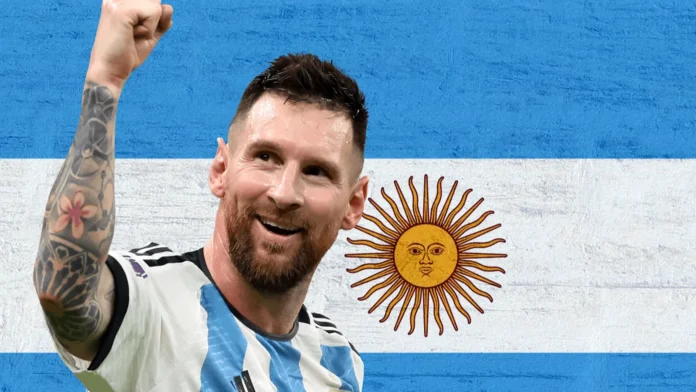
Lionel Messi is accustomed to making headlines for his goals. This week, however, a tense exchange with referee João Pinheiro also attracted attention. Broadcast footage captured Messi demanding that the official speak to him respectfully during Argentina’s World Cup quarterfinal against Switzerland.
The incident added to a growing debate over decisions involving Argentina during the tournament. Egypt criticized the officiating after its round-of-16 defeat, while Switzerland objected to the VAR intervention that led to Breel Embolo’s dismissal in the quarterfinal.
A tense night in Kansas City
Argentina beat Switzerland 3-1 after extra time in a physical World Cup quarterfinal at Arrowhead Stadium in Kansas City. The teams were level at the end of regulation before Argentina scored twice against 10-player Switzerland in extra time.
Approximately 3 minutes before halftime, a frustrated Messi approached Portuguese referee João Pinheiro. Broadcast audio captured the Argentina captain demanding that Pinheiro speak to him respectfully during the tense exchange.
What Messi actually said
Broadcast microphones picked up Messi’s exact words during the confrontation. He told Pinheiro, “Speak respectfully, don’t be disrespectful. Speak to me respectfully. I spoke to you respectfully.” His tone was firm but controlled throughout the brief exchange.
The confrontation quickly drew players from both teams, with the pair standing almost nose to nose. Despite the obvious tension, the referee kept his cards in his pocket, restoring order before restarting play without handing out any disciplinary action.
The VAR call that changed the game
Referee João Pinheiro initially awarded Switzerland a free kick and booked Argentina midfielder Leandro Paredes after Breel Embolo went down. A VAR review determined that Embolo had not been fouled and that Paredes had been incorrectly cautioned. Pinheiro rescinded Paredes’ yellow card and instead booked Embolo for simulation.
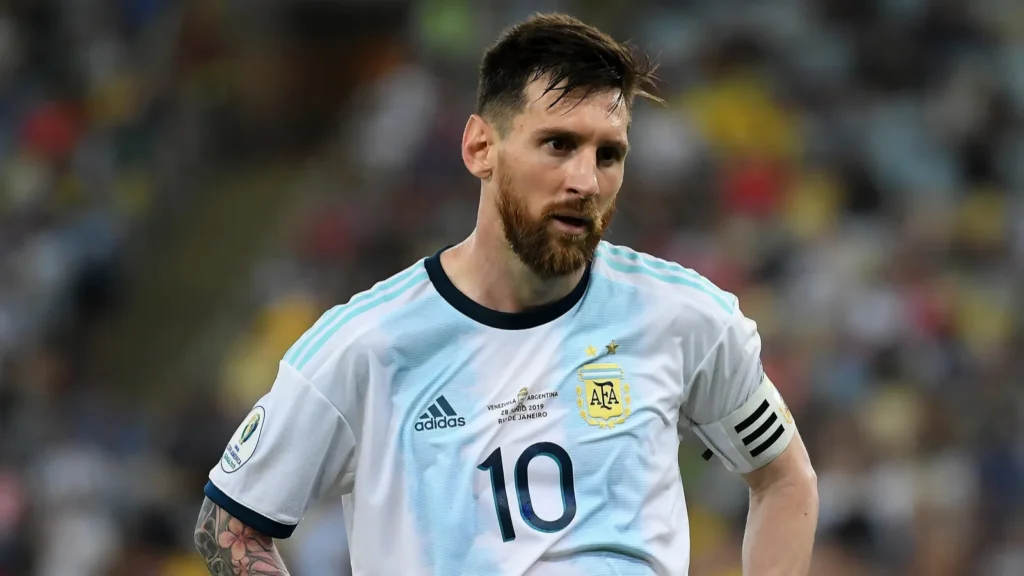
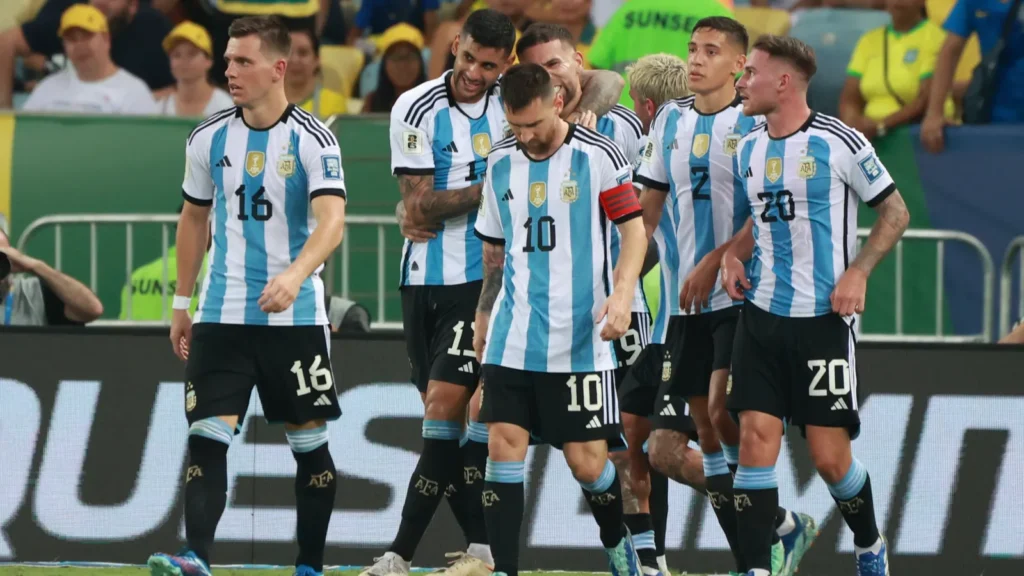
Because Embolo had already been cautioned, the decision resulted in a second yellow card and his dismissal in the 72nd minute. Argentina then capitalized against 10-player Switzerland in extra time, with Julián Álvarez and Lautaro Martínez scoring to complete a 3-1 victory.
Switzerland protests after the final whistle
Switzerland’s players and coaches openly expressed frustration after the match. Several members of the team questioned the VAR intervention that led to Breel Embolo’s dismissal while Switzerland was pushing for a second goal.
Manager Murat Yakin called the rule behind the decision “unacceptable” and said the intervention had unnecessarily punished his team. Midfielder Remo Freuler also said Switzerland wanted a formal explanation from FIFA about how the decision was reached.
Egypt’s earlier complaints add to the debate
This was not the first officiating controversy involving Argentina during the tournament. Egypt was eliminated after surrendering a 2-goal lead in a dramatic 3-2 round-of-16 defeat, with Enzo Fernández scoring the winner in stoppage time.
Egypt forward Mostafa Zico alleged that the tournament was “fixed,” while coach Hossam Hassan said his team had been treated unfairly and suggested that outside pressure may have favored Argentina and Messi. FIFA refereeing chief Pierluigi Collina rejected allegations of bias and defended the officials’ independence.
Little-known fact: Messi came on as a substitute against Hungary in 2005, and just after touching the ball for the first time, he was shown a straight red for an elbow following a shirt pull from a defender.
FIFA rejects the bias allegations
FIFA’s chief refereeing officer, Pierluigi Collina, firmly denied any bias surrounding Argentina’s controversial results in this tournament. He stated that nobody could question the integrity of World Cup officials, adding that unfounded allegations invite unnecessary hostility and even threats directed at referees and their families worldwide, repeatedly crossing a clear ethical line.
Collina also rejected suggestions that referees could be influenced by anyone, including FIFA’s own president. He explained that VAR interventions followed strict protocol, insisting officials made honest, independent calls regardless of which team, player, or storyline was involved throughout this tournament’s knockout stage so far.
Who is the referee behind the storm
Joao Pinheiro, a 38-year-old Portuguese official, reached the Primeira Liga in 2015 and earned his FIFA badge the following year. He rose quickly through Europe’s ranks, taking charge of the 2025 UEFA Super Cup and serving as the fourth official at that year’s Champions League final.
Pinheiro’s appointment ended a 12-year absence of Portuguese referees from World Cup knockout matches. He earlier took charge of Switzerland’s group-stage win over Bosnia before being entrusted with this high-stakes quarterfinal between Argentina and Switzerland in Kansas City on that historic night.
Pinheiro’s record draws extra scrutiny
Pinheiro has developed a reputation for using his cards regularly. Available career databases place his average at approximately 5 yellow cards per match, although totals vary depending on the competitions and seasons included.
Those figures provide context for his general officiating style, but they do not establish that any individual decision in the Argentina-Switzerland quarterfinal was correct or incorrect.
What this means for the England semifinal
Argentina now turns its attention to its World Cup semifinal against England on Wednesday, July 15, in Atlanta. The matchup carries deep historical significance, particularly because of the teams’ famous 1986 quarterfinal. It will also be Messi’s first senior international appearance against England.
Messi remains central to Argentina’s pursuit of a second consecutive World Cup title. With scrutiny already surrounding several refereeing decisions during the knockout stage, officiating is likely to come under close scrutiny throughout the semifinal, which kicks off at 3 p.m. ET.
Little-known fact: Messi’s familiar celebration of pointing toward the sky is widely understood as a tribute to his late grandmother, Celia, who supported his early interest in soccer.
Little-known fact: Messi points to the sky after scoring in honor of his grandmother Celia, who passed away when he was young and was one of his earliest and biggest supporters growing up in Rosario.
TL;DR
- Messi confronted referee João Pinheiro during Argentina’s 3-1 extra-time victory over Switzerland.
- Broadcast audio captured Messi telling Pinheiro to speak to him respectfully.
- A VAR review led to Breel Embolo’s second yellow card and dismissal in the 72nd minute.
- Switzerland coach Murat Yakin called the rule behind the decision “unacceptable” after the match.
- Egypt had previously accused officials of treating Argentina favorably following its round-of-16 elimination.
- Argentina faces England in the World Cup semifinal on Wednesday, July 15, at 3 p.m. ET in Atlanta.
If you liked this story, don’t forget to follow us for more exclusive content.
This article was made with AI assistance and human editing.
If you liked this, you might also like: