




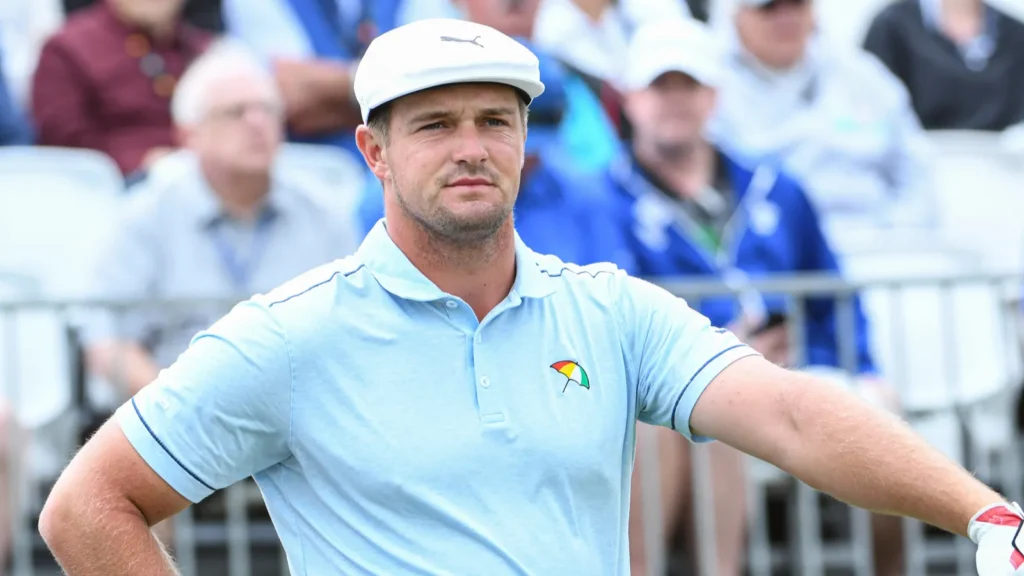
Bryson DeChambeau is facing one of the biggest crossroads of his career as LIV Golf prepares for life beyond Saudi Arabia’s Public Investment Fund backing. With LIV now seeking new investors after PIF’s planned funding exit following the 2026 season, the two-time U.S. Open champion has made it clear that his future may not depend only on traditional tournament golf.
Instead, DeChambeau is already looking toward the platform he controls directly: YouTube. The 32-year-old has said he would like to grow his channel significantly if LIV’s future becomes unstable, giving him a rare safety net in a sport where most players rely almost entirely on tour schedules, contracts and prize money.
For DeChambeau, the moment is about more than a possible return to the PGA Tour. It is about leverage, audience and independence in a golf world that remains divided. His major-championship résumé keeps him relevant on the course, but his digital reach may be what gives him options if LIV’s next chapter becomes uncertain.
How LIV is financed
LIV Golf launched in 2022 with deep backing from Saudi Arabia’s Public Investment Fund, a sovereign wealth fund that has invested across sports, technology, and infrastructure. The tour operates through LIV Golf Investments, and the scale of early spending reflected a startup model that prioritized rapid growth and star power. That approach helped LIV sign major champions and instantly change the economics of elite men’s golf.
The funding question matters because LIV is not just a schedule of tournaments. It is also a media product, a team-franchise concept, and a global events business that relies on long-term commitments from venues, broadcast partners, and sponsors. If any large backer were to step away in the future, the ripple effects would be felt well beyond a single season.
What fuels exit talk
Speculation about LIV’s finances tends to spike whenever the broader pro golf landscape looks stuck. In June 2023, the PGA Tour, the DP World Tour, and the PIF announced a framework agreement aimed at unifying commercial interests, but details have remained unresolved in public. When the sport sits in limbo, fans and agents naturally start gaming out alternative endings.
There is also a straightforward business reason people ask these questions. LIV has had to build an audience, secure distribution, and justify major costs while competing with a long-established incumbent in the PGA Tour. Even without any confirmed withdrawal, it is rational for observers to ask what the tour looks like if spending tightens, strategy shifts, or priorities change inside any large investment portfolio.

Little-known fact: The Official World Golf Ranking board said in October 2023 that it denied LIV Golf’s application for ranking points, citing issues including “limited fields” and promotion-relegation structure.
Players face contract math
The biggest immediate concern in any funding scare is whether players keep getting paid. Many LIV signings were widely reported to include multi-year guarantees, though the precise terms are private and vary by player. In most sports, guaranteed contracts are only as strong as the legal entity behind them and the specific language covering termination, force majeure, and restructuring.
If a tour ever had to scale back, the hard part would be less about one last paycheck and more about timing. Players plan seasons around majors, travel, practice blocks, and qualification pathways, and those plans are disrupted when schedules change late. Even in stable leagues, contract disputes can turn on details like payment dates, bonus definitions, and whether a competition is officially “held” or “canceled.”
Fun fact: The PGA Tour, DP World Tour, and the PIF announced a framework agreement in June 2023 aimed at unifying commercial operations, though it has not been finalized in public.
Routes back to golf
For players looking outside LIV, the routes are real but not always simple. The PGA Tour suspended members who played LIV events starting in 2022, and returning would require policy decisions by the Tour, including potential reinstatement terms. That process is not just a handshake, because it affects competitive balance, member sentiment, and precedent for future breakaway threats.
Players also have other competitive options that do not depend on a single tour’s permission. Major championships offer independent qualification categories, including exemptions tied to past wins and high finishes, and players can also qualify through open routes like U.S. Open local and final qualifying. Internationally, tours have their own membership rules and disciplinary processes, which can shape where LIV-affiliated players can tee it up week to week.
DeChambeau beyond leaderboards
No player illustrates the modern leverage equation better than Bryson DeChambeau. He is a two-time U.S. Open champion, winning at Winged Foot in 2020 and again at Pinehurst No. 2 in 2024, and his on-course identity is instantly recognizable. That combination matters because star power in 2026 is not just about trophies; it is also about reach.
DeChambeau’s YouTube presence has become a genuine platform, expanding his audience beyond traditional golf TV windows and creating value that follows him anywhere. A player with a major résumé and a direct-to-fan media channel has more options than most, from sponsor-driven exhibition golf to selective scheduling built around majors. If pro golf’s fractured ecosystem ever consolidates or contracts, he is one of the few stars positioned to stay culturally central either way.
DeChambeau pushed driver speed
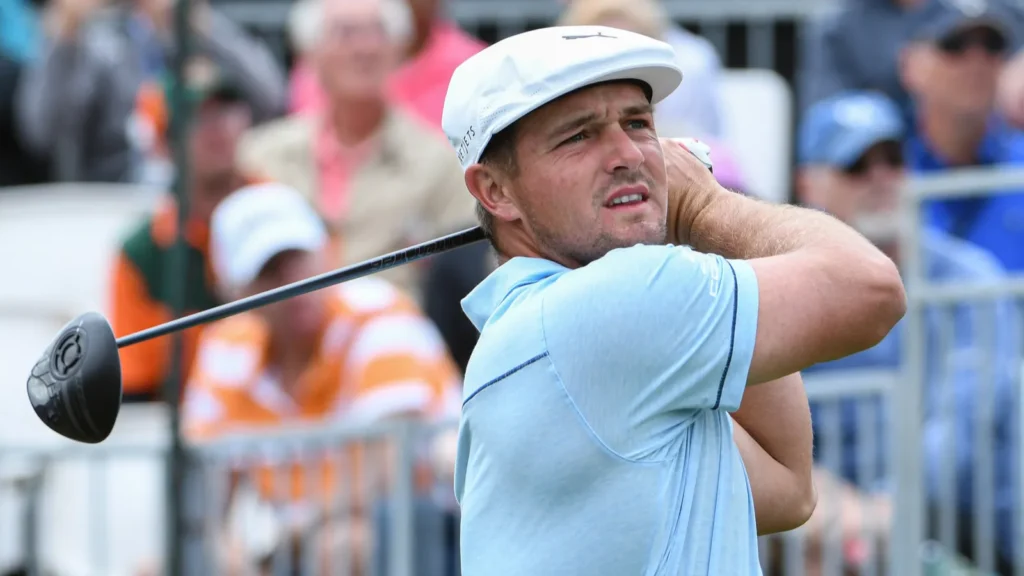
On the New Heights podcast, Rory McIlroy explained that the modern distance game has forced him to chase more speed off the tee. He specifically pointed to Bryson DeChambeau as a reference point for what elite power can look like. The takeaway was simple: keeping up now often means training for speed, not just tightening dispersion.
DeChambeau has made distance a defining edge, pairing high ball speed with a more technical, data-driven approach than most peers. Even when accuracy and iron play decide tournaments, the ability to hit short clubs into long holes changes scoring opportunities. McIlroy’s comments reflect how one player’s strengths can reshape the competitive baseline for everyone else.
Fun fact: Bryson DeChambeau’s 2024 U.S. Open win is recorded by the USGA, and that title carries multi-year major exemptions under each championship’s criteria.
Rivalry shaped by respect
McIlroy and DeChambeau have circled each other for years as two of golf’s most discussed drivers of the ball, even if their styles differ. McIlroy completed the career Grand Slam by winning the 2025 Masters and then defending the Masters in 2026. Their overlap at big events keeps the comparison alive because both can flip a leaderboard quickly.
The tension fans talk about often comes down to expectations around on-course interaction, especially in final-round pressure. Golf pairings can be quiet, and players handle focus differently, so a cold shoulder can get interpreted as personal when it’s just routine. But the competitive impact is clearer than the body language: distance standards keep rising, and both players are part of why.
TL;DR
- There is no verified public confirmation that the PIF is ending LIV funding at the end of 2026, despite online speculation.
- LIV’s model has relied on major upfront investment to sign stars and build a global events product fast.
- Any future funding shift would affect more than prize money, including scheduling, venues, sponsorships, and player planning.
- Returning to the PGA Tour is possible in theory, but it would depend on the Tour’s policy and reinstatement terms.
- Major championships remain independent pathways, with exemptions and open qualifying still available to many players.
- Bryson DeChambeau’s mix of major wins and a large YouTube audience gives him unusual leverage in any reshuffle.
If you liked this story, don’t forget to follow us for more exclusive content.
This article was made with AI assistance and human editing.
If you liked this, you might also like:


