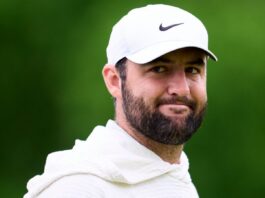


Thomas Pieters has made one part of golf’s uncertain future clear: a PGA Tour return is not in his plans. As questions grow around LIV Golf’s long-term backing beyond 2026, the Belgian has shut down speculation that he would simply move back to the U.S. circuit if the league’s future changed.
Pieters said he was unhappy during his PGA Tour years and would rather look toward the DP World Tour, where the schedule keeps him closer to home, than return to a lifestyle he no longer wants. His comments show that the LIV debate is not only about money or tour politics; for some players, it is also about control, family, travel, and choosing the kind of career they actually want.
Why the money question matters
LIV Golf depends on heavy, ongoing investment. Big purses, guaranteed deals, team costs, travel, and TV production burn cash long before media rights and sponsorships can cover the bills. If primary funding disappears after a season, the problem is not just smaller prizes; it is the ability to keep staging events at all.
Outside investors can step in, but they typically want predictable revenue and a path to profit. That means LIV would need stronger media income, more stable corporate sponsors, and a clearer plan for long-term fan growth. Without that, potential backers may see pro golf as a crowded market with limited upside.
A sudden funding gap also creates a credibility issue with partners. Courses, broadcasters, vendors, and sponsors negotiate based on expectations that events will be played and checks will clear. If those assumptions wobble, the league’s negotiating leverage can shrink quickly.
What triggers a sudden shutdown
If LIV shut down, players would need events to enter, a path back to tour status, and a way to replace tournament income. Most would try to return to established tours with full schedules and existing pathways.
For many U.S.-based players, the PGA Tour would be the first choice, but reentry would not be automatic. Players would likely need reinstatement approval, and past suspensions or membership status could affect eligibility.
Others would shift to the DP World Tour, the Asian Tour, or regional circuits to keep playing and rebuild eligibility. Some older players might retire or limit their schedules rather than start over.


The PGA Tour is not automatic
Even if most LIV players would prefer PGA Tour access, the relationship has been contentious since LIV launched in 2022. The PGA Tour suspended members who joined LIV without releases, and the split reshaped schedules, sponsorships, and player commitments. That history makes any mass return complicated in both policy and optics.
A player’s incentive to return is also personal, not just professional. The PGA Tour demands extensive travel, long seasons, and week-to-week pressure where only performance guarantees income. Some players thrive in that environment, while others view it as a lifestyle they do not want to resume.
Pieters was blunt in comments carried across the golf media. “I’m definitely never going back to the PGA Tour,” he said, adding that he tried it and “just wasn’t happy there.” He framed it as a quality-of-life decision, not a complaint about the Tour.
Fun fact: LIV Golf’s name comes from the Roman numerals for 54, reflecting its 54-hole format.
Europe offers a different life
For many European players, the DP World Tour offers a simpler schedule with less long-haul travel and more events closer to home. That can make it easier to balance golf with family and day-to-day life.
Pieters said if LIV folded, he’d likely go back to the DP World Tour, though he’s not sure what he’d do long term. His uncertainty shows how fast a shutdown can scramble careers.
He called it a money-and-lifestyle decision. If LIV purses fell to around $5 million but he could make about $3 million on the DP World Tour while staying closer to home, he said he’d seriously consider that move.
Contracts, releases, and eligibility
A LIV collapse would raise legal and administrative questions, not just competitive ones. Players sign contracts with obligations, and teams sign agreements with sponsors and hosts that may include termination clauses. Who owes what can depend on how a shutdown occurs and what the contract language says about force majeure, funding, or cancellation.
Competitively, players would also weigh major access and world ranking points. The four men’s majors are run independently of the PGA Tour, and LIV players can still qualify through exemptions or qualifying. LIV now receives limited OWGR points in 2026, but only top-10 finishers and ties receive points, so ranking access remains restricted compared with other tours.
That ranking issue has been one of LIV’s biggest structural challenges. Official World Golf Ranking points help determine entry into major championships and many elite tournaments. LIV has operated outside that system for much of its existence, which makes long-term planning harder for players who are not already exempt into big events.
Fun fact: The DP World Tour is the rebranded name of the European Tour, with the new title introduced in 2022.

What Pieters comments reveal
Pieters is an established European winner and a former Ryder Cup player. His stance matters because it shows the golf split isn’t only about money, it’s also about what kind of career a player wants.
His remarks also highlight the difference between financial security and professional identity. By publicly reported tallies from LIV event payouts, Pieters has already earned life-changing money on the circuit. That financial cushion can make a player more willing to prioritize location, schedule, and happiness over the highest-profile stage.
If LIV were to face an existential funding crisis after 2026, the outcomes would not be uniform. Some players would push hard to return to the PGA Tour, some would rebuild in Europe, and others might mix schedules or step away. Pieters put a human voice on that reality, and it is a reminder that golf’s future may be decided as much by lifestyle preferences as by boardroom deals.
Little-known fact: LIV first applied for OWGR recognition in July 2022, was rejected in October 2023, and formally withdrew the application in March 2024. LIV then received limited OWGR points for 2026.
TL;DR
- LIV Golf’s business depends heavily on sustained investment, not just ticket sales or sponsorships.
- A funding loss would threaten event operations, not merely reduce prize money.
- A PGA Tour return would be attractive for many players, but it would likely require reinstatement decisions.
- The DP World Tour could be a practical landing spot, especially for European players seeking less travel.
- Thomas Pieters says he does not want to return to the PGA Tour because he dislikes the lifestyle.
- Without stable ranking pathways, any disrupted schedule can make major-championship access harder for players.
If you liked this story, don’t forget to follow us for more exclusive content.
This article was made with AI assistance and human editing.
If you liked this, you might also like: