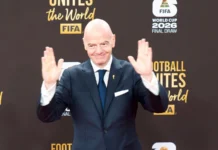
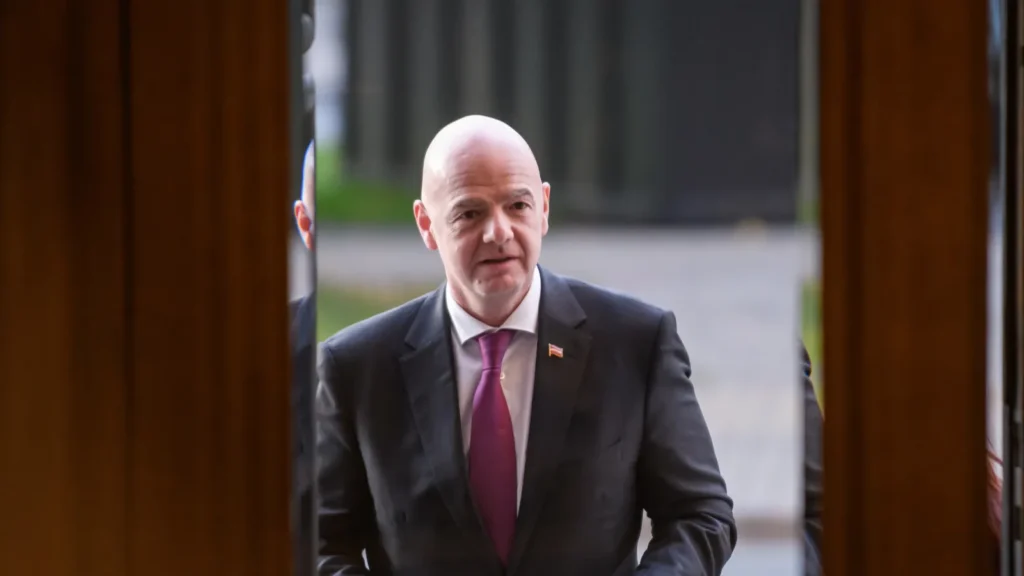
Football’s governing institutions are openly divided. UEFA, Concacaf, and the Asian Football Confederation have accused FIFA President Gianni Infantino of deception and described his handling of a proposed World Cup investment scheme as a fundamental breach of trust.
The dispute followed Infantino’s abandoned proposal to create a $20 billion FIFA commercial subsidiary and sell a minority stake to private investors. The plan quickly triggered opposition from major confederations and senior figures inside FIFA.
Senior adviser Carlos Cordeiro resigned in protest, FIFA Chief Operating Officer Kevin Lamour publicly criticized the proposal, and pressure on Infantino has continued even after the plan was withdrawn. The dispute has now developed into a broader debate about FIFA’s leadership and governance.
What sparked this explosive football standoff
On Aug. 10, UEFA, Concacaf, and the Asian Football Confederation published a joint open letter to the football family. The letter accused FIFA President Gianni Infantino of a fundamental breach of trust over the handling of the abandoned World Cup investment proposal.
The three confederations said trust had been broken through deception and argued that football leadership must serve the collective rather than place individual authority above it. They also called for greater accountability over how the proposal was developed.
UEFA governs European football, Concacaf oversees North and Central America and the Caribbean, and the AFC governs football across Asia. Their joint intervention represents a significant challenge from three of FIFA’s six continental confederations.
The billion-dollar plan behind the feud
The feud traces back to a bold plan that Infantino unveiled with little warning. FIFA wanted to launch a new commercial venture that would bring broadcasting, sponsorship, and ticketing rights under a single entity for outside investors to buy.
That new venture reportedly carried a staggering valuation of nearly $20 billion. FIFA hoped the eventual sale would raise close to $4 billion total from private outside investors.
Member associations were reportedly given a tight deadline to approve the sweeping proposal. Critics said the surrounding secrecy alone proved the plan was never meant for open scrutiny or honest collective decision-making at all.

Why are confederations calling it deception
The confederations did not simply object to the financial terms of the proposal. Their Aug. 10 letter accused FIFA’s leadership of advancing it without meaningful consultation and said trust had been broken through deception.
The letter rejected FIFA’s characterization of the controversy as primarily a communication failure. Instead, the three confederations described the attempt to sell an interest in the World Cup as a profound failure of judgment and called for a fully independent review.
AFC President Sheik Salman bin Ebrahim Al Khalifa has also said initiatives capable of affecting global football should be discussed with confederations, the FIFA Council, member associations, and other stakeholders in a timely, transparent, and meaningful way.
Infantino’s sudden reversal and public fallout
Infantino abandoned the proposal on July 31, only days after FIFA publicly unveiled it. He said the project had created divisions that were no longer compatible with its original objective and confirmed that the proposal would not proceed.
Infantino said his purpose had always been to unite and improve football. The withdrawal followed intense opposition from UEFA, Concacaf, the AFC, national associations, and senior figures within FIFA.
The reversal did not end the dispute. UEFA and Concacaf continued to criticize FIFA’s governance, several national associations withdrew support for Infantino, and demands for greater transparency and accountability persisted after the proposal was abandoned.
Senior FIFA figures break ranks
Senior FIFA figures publicly broke ranks over the proposal. Carlos Cordeiro, a senior adviser to Infantino, resigned with immediate effect on July 31, saying he could not stand by while FIFA considered selling a stake in the World Cup.
Cordeiro called the proposal a bad deal for FIFA’s member associations, football, and the game’s long-term future. He also questioned the need to raise $4.2 billion through a stake sale when FIFA already held substantial reserves and no debt.
FIFA Chief Operating Officer Kevin Lamour separately accused Infantino of deceiving staff about the proposal and described it as a one-person project. Lamour criticized the plan but did not announce his resignation.
UEFA’s boycott threat remains a major pressure point
UEFA and its 55 member associations unanimously rejected FIFA’s investment proposal and said their national teams would not participate in FIFA competitions while the plan remained alive. Their conditions also included binding assurances that FIFA would not open its competitions or governance to private ownership in the future.
FIFA abandoned the proposal on July 31 after widespread opposition, but UEFA subsequently said its boycott conditions had still not been fully met. As of Aug. 12, the dispute could affect the FIFA U-20 Women’s World Cup in Poland, which begins Sept. 5.
The investment proposal also drew political attention because FIFA said a vehicle founded by Joshua Kushner, whose brother Jared Kushner is President Donald Trump’s son-in-law, was expected to lead the proposed investor group.
Fun fact: Reports linked the well-known Kushner family to potential involvement as investors in the proposed venture, adding real political intrigue to an already tense and closely watched football governance controversy.
Confidence crisis deepens across football leadership
Even after the plan officially collapsed, confidence in FIFA leadership continued to erode across the football world. UEFA declared that it had lost confidence in the federation’s leadership despite Infantino formally withdrawing the proposal.
UEFA and other members of the football family openly criticized what they called shabby, back-room, and opaque decision-making occurring deep within FIFA’s highest levels of leadership, governance, and overall power structure.
Confederations now say they want lasting structural change, not merely another apology from leadership. They are demanding firm transparency guarantees so no similar proposal can ever again be conceived away from public view or oversight.
What comes next for FIFA’s future
UEFA, Concacaf, and the AFC have begun discussing a new framework for how world football could be governed if their dispute with FIFA remains unresolved. Preliminary discussions have also considered alternative competitions, although no breakaway tournament has been formally announced.
Debate over Infantino’s future remains active. Norway’s football federation has publicly called for him to resign, while FIFPRO Europe President David Terrier has argued that FIFA’s most urgent need is sweeping structural reform rather than simply replacing its president.
The dispute, therefore, now extends beyond the abandoned investment proposal to questions about FIFA’s governance, accountability, and distribution of power. Restoring institutional trust is likely to remain central as Infantino approaches the 2027 presidential election.
Little-known fact: Before running in 2016, Infantino said he would withdraw his own candidacy if Michel Platini’s football ban was overturned and Platini could run instead, calling it “a simple principle of loyalty.”
TL;DR
- UEFA, Concacaf, and the AFC accused FIFA’s leadership of deception and a fundamental breach of trust in a joint open letter.
- The dispute stems from FIFA’s abandoned plan to create a roughly $20 billion commercial subsidiary and to sell up to 20% of it to private investors.
- Senior adviser Carlos Cordeiro resigned in protest, while FIFA Chief Operating Officer Kevin Lamour publicly accused Infantino of deceiving staff over the proposal.
- UEFA’s 55 member associations backed a boycott of FIFA competitions unless the proposal was fully abandoned and binding assurances were provided against similar private ownership plans.
- Infantino scrapped the proposal within days, but the governance dispute and UEFA’s threat of a boycott remain unresolved.
If you liked this story, don’t forget to follow us for more exclusive content.
This article was made with AI assistance and human editing.
If you liked this, you might also like: