Sunday afternoons are supposed to be the NFL’s great equalizer, where every fan base gets the same camera angles and the same kickoff window. Prime time is different. That’s where the league’s talk of parity quietly gives way to a simpler goal: put the biggest possible audience in front of the biggest possible ads.
With the 2026 schedule on the horizon, the debate is less about who is “good” and more about who keeps getting booked. Some franchises routinely land the standalone spotlight because of brand, market size, or lingering hype, even when the on-field product has not matched the billing. If the NFL wants more prime-time games to feel earned, these are five teams that should not be automatic picks.
Prime time follows ratings
The NFL’s broadcast partners pay for certainty, not symmetry, and the schedule is built to deliver it. NFL prime-time windows include NBC’s Sunday Night Football, ESPN/ABC’s Monday Night Football, and Prime Video’s Thursday Night Football, so the league prioritizes matchups that can hold national attention. That naturally favors teams with massive followings, big-market reach, and recognizable stars.
Flex scheduling helps later in the season, but it does not fix the initial imbalance. Sunday Night Football has long had flex power, and Monday Night Football gained more flexibility in recent years, but networks still need early-season draws. In practice, that means some clubs start every year with multiple national windows while others rarely get more than one.
Dallas draws by default
Dallas remains one of the NFL’s most reliable national TV draws, and the numbers usually justify the attention. But “ratings reliable” is not the same as “every matchup is an event,” especially when prime time becomes a weekly obligation rather than a special stage. Dallas can be a contender and still be overused.
There’s also a competitive fairness angle for viewers, not teams. When one franchise becomes a recurring national default, the league narrows the stories it tells, even in seasons when other contenders are more innovative or more urgent. Cutting even one Cowboys prime-time slot in 2026 would create room for fresher matchups without meaningfully hurting the league’s ability to draw.
The Jets chase hype
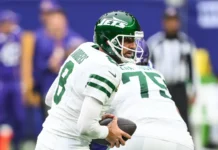
The Jets have become a schedule-maker’s swing-for-the-fences team, often booked like a contender because New York is a contender in attention. However, they had only two 2025 prime-time games.
The problem is that attention is not a substitute for stability, and recent Jets seasons have swung sharply based on quarterback availability and roster volatility. Prime-time games magnify that unpredictability, for better or worse.
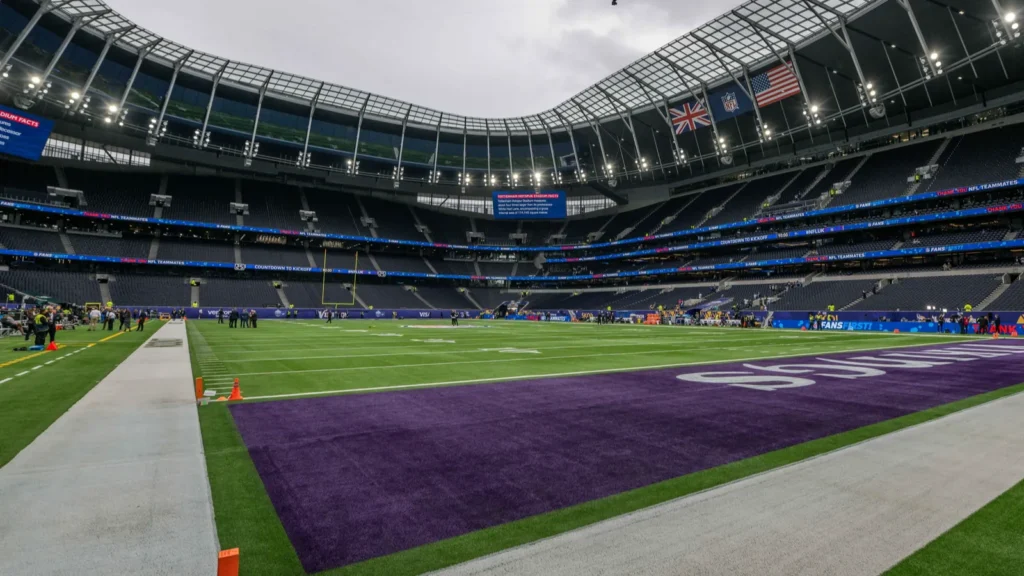
From the league’s perspective, the Jets are a classic bet on upside, but that bet has produced too many national clunkers when the offense stalls. When a team’s floor is low, stacking standalone windows turns routine struggles into national showcases. A lighter 2026 prime-time slate would still satisfy market demand while reducing the risk of unwatchable islands games.
Fun fact: The NFL’s current long-term media rights agreements run through the 2033 season and include packages for NBC, ESPN/ABC, CBS, Fox, and Amazon.
Giants get extra leeway
The Giants sit in the same market gravity as the Jets, but with an even longer history of getting the benefit of the doubt. Even when the roster is in transition, New York’s NFC team is treated as a plug-and-play national draw. That approach often ignores what viewers say they want most: meaningful games with coherent stakes.
On-field results matter here, and the Giants have not been a consistent playoff presence in the last decade. Prime time works best when it amplifies a real moment, like a breakout quarterback, a division race, or a genuine resurgence, not when it tries to manufacture one. The Giants can still appear in national windows in 2026, but they will have to earn multiple nights with sustained performance.
Little-known fact: Sunday Night Football has repeatedly finished as U.S. television’s top prime-time series in recent years, underscoring why that slot is treated as the league’s premium showcase.
Chicago stays on stage
The Bears are a pillar franchise in a massive market, and the NFL loves the idea of Chicago being relevant. But the league has also spent years scheduling the Bears like a finished product when they have frequently been rebuilding, reshuffling, or searching for offensive continuity. That mismatch shows up quickly under the brighter lights.
There’s a smarter middle ground than burying Chicago or force-feeding them to the country. Give the Bears one showcase game early if the roster is truly intriguing, then let performance dictate the rest through flex options. Prime time should reward progress, not merely anticipate it, and Chicago has been given too many “maybe this is the year” slots.
Denver still sells nostalgia
Denver’s recent performance supports national attention: the Broncos went 14-3 in 2025. Denver’s last Super Bowl title came in 2015, and the years since have been defined more by quarterback churn and coaching changes than by deep playoff runs. That is a tough foundation for repeated prime-time billing.
The AFC has also grown crowded with more reliably compelling teams, which raises the opportunity cost of putting Denver on an island. A Broncos game can absolutely deserve the spotlight when it has real stakes, a high-end quarterback duel, or a division swing. Based on 2025 results, Denver has a stronger prime-time case.
TL;DR
- The NFL’s prime-time schedule is built to maximize national audiences, so brand power often outweighs “fair” distribution.
- Flex scheduling can improve late-season matchups, but it does not prevent early overexposure.
- The Cowboys will always be a draw, yet routinely taking up multiple prime-time slots squeezes out better variety.
- The Jets and Giants benefit from New York market gravity, even when their week-to-week product is volatile.
- The Bears are frequently scheduled on projection, not performance, which can backfire in standalone windows.
- The Broncos still carry national recognition, but recent seasons have not consistently justified repeated prime-time placement.
If you liked this story, don’t forget to follow us for more exclusive content.
This article was made with AI assistance and human editing.
If you liked this, you might also like: