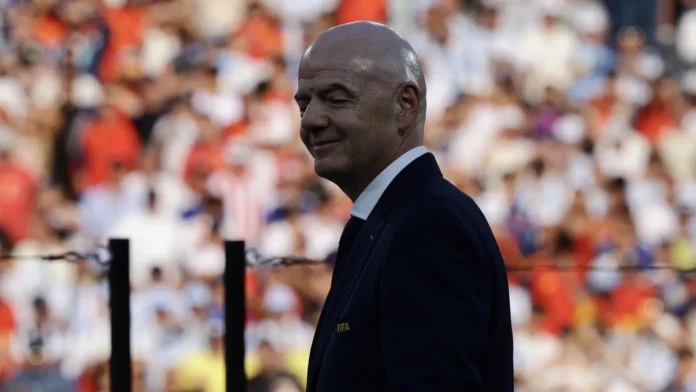
Gianni Infantino built his reputation as FIFA’s steady hand after taking charge during one of football’s darkest corruption crises. Today, that very same reputation now faces its toughest public test yet from a powerful critic.
A leading voice inside European football has openly broken ranks, calling FIFA a system rotten at its very core. That blunt assessment has quickly reignited long-simmering frustrations over how the sport is governed globally.
From hydration breaks to record revenues, this summer’s World Cup exposed deep cracks beneath FIFA’s polished surface. What follows explains exactly why one of soccer’s most powerful figures wants real accountability at the very top.
Tebas breaks ranks against FIFA’s boss
La Liga president Javier Tebas has publicly called on Gianni Infantino to step down as FIFA president. He described the entire organization as a system rotten at its very core, sparking fresh debate.
Infantino has led world soccer’s governing body since 2016, succeeding Sepp Blatter amid a major corruption crisis. Blatter’s dramatic resignation followed one of the biggest scandals in modern sports history worldwide.
Tebas made his blunt remarks shortly after Spain lifted the World Cup trophy this summer in America. His pointed comments quickly spread across global sports media, turning private frustration into rare, genuinely very public criticism.
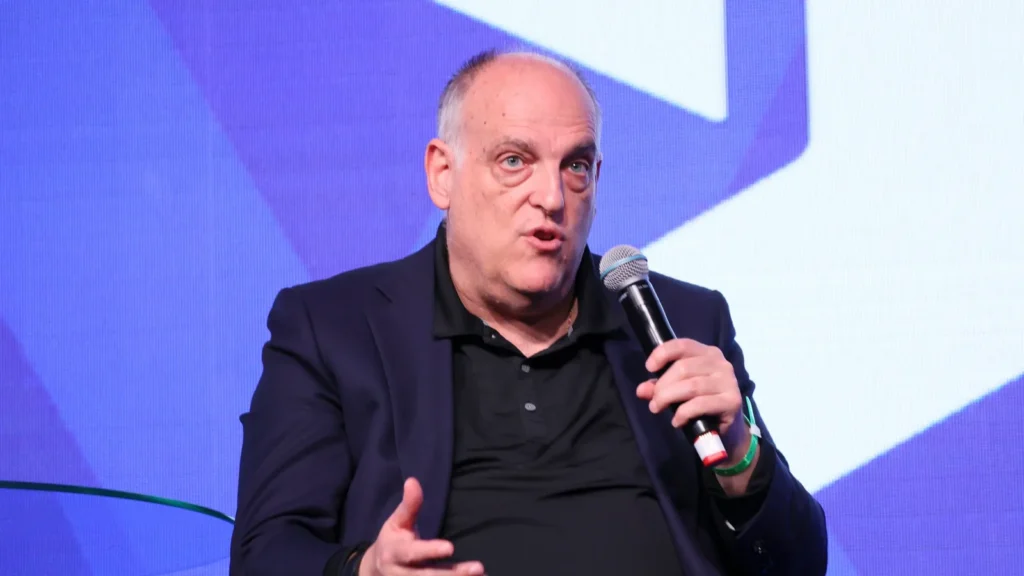
Inside the system, Tebas calls rotten
Speaking candidly to Gazzetta dello Sport, Tebas said plainly that Infantino’s time is finally, truly up now. He argued that the FIFA president survives only because federations remain silent rather than challenging him directly.
Tebas explained that no serious opposition candidate currently exists because nobody really wants to run just to lose badly. He called this entire arrangement a system rotten at its core, built purely to protect leadership.
He added that silence among critics may actually be far worse than open, visible support for Infantino himself. According to Tebas, many officials privately disagree with Infantino but refuse to act on those genuine concerns.
Hydration breaks draw sharp criticism
Tebas also strongly criticized the hydration breaks introduced during the 2026 World Cup, calling them a lie designed purely for advertising rather than genuine player safety. He noted that stadiums in Dallas, Los Angeles, and Atlanta already had air conditioning installed, yet breaks still happened anyway, undercutting FIFA’s stated justification for pausing play.
Critics beyond Tebas have also argued that the hydration breaks effectively turned matches into four separate quarters instead of two traditional halves, fueling ongoing debate about commercial influence over the sport’s traditional format. Researchers studying heat and sport have similarly noted that applying the breaks uniformly, regardless of actual conditions, risks undermining trust in genuine heat-safety measures.
The Balogun case adds more fuel
Tebas referenced the controversial Balogun case while discussing FIFA’s handling of controversies during this summer’s tournament. He suggested that such incidents reflect much deeper problems within FIFA’s overall decision-making structure today.
Beyond the hydration breaks, critics point to consistently high ticket prices as another sore point for fans this summer. Many supporters felt priced out entirely, despite record-breaking attendance figures and huge global television audiences.
Infantino’s close relationship with United States President Donald Trump has also drawn significant scrutiny from journalists and league rivals. Observers say the growing closeness between the two men raised questions about FIFA’s independence from politics.
Infantino’s grip on power remains strong
Despite mounting public criticism, Infantino remains highly likely to continue leading FIFA for an unprecedented fourth straight term. He first assumed power just over a decade ago,
in February 2016, and has steadily consolidated support since taking office. Infantino is set to stand for re-election on March 18, 2027, at the FIFA Congress in Rabat, Morocco, and no serious challenger has emerged to contest his position.
Candidates must be formally put forward by November 18 this year, according to FIFA’s published election timeline. So far, the path toward re-election appears largely uncontested and heavily favored toward the incumbent.
Fun fact: Infantino holds Swiss, Italian, and Lebanese citizenship, the last acquired through his family heritage rather than by birth.
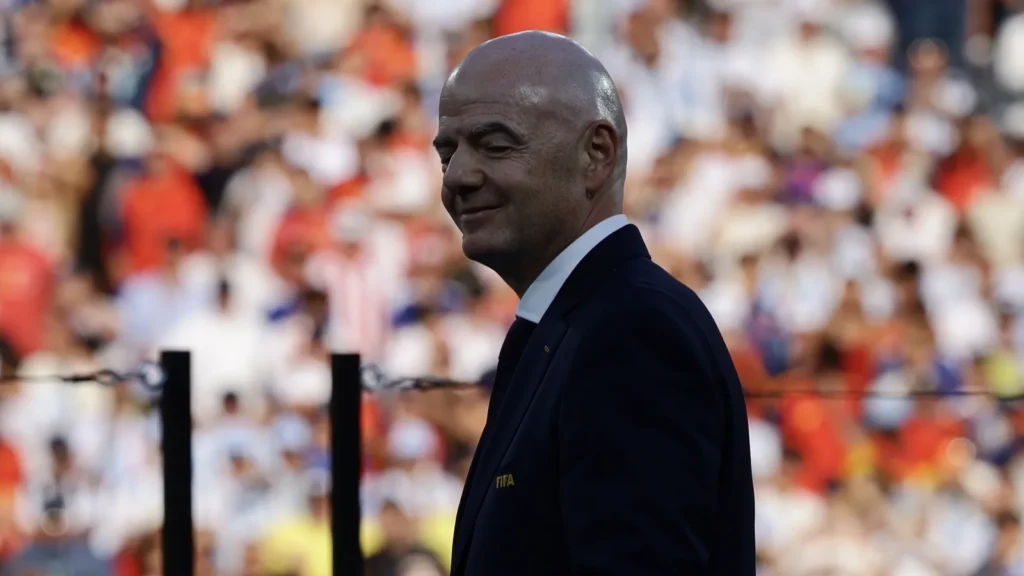
Federations split over re-election support
Infantino holds formal endorsement from more than 200 of the 211 total members. That level of support represents roughly 95% of the entire federation body. However, Germany’s DFB and Denmark’s DBU have both confirmed publicly that they have not signed the letter supporting Infantino’s continued leadership role, and their notable absence suggests cracks exist beneath the seemingly overwhelming show of unity.
UEFA chief Aleksander Ceferin boycotted the World Cup final entirely, following a serious breakdown in relations with FIFA over issues including the Balogun case and a barred referee. His absence clearly signaled deeper tension between European football leadership and Infantino’s administration.
Talk of expansion continues regardless
Infantino has also floated expanding the World Cup even further still, with a 64-team tournament mooted for 2030. Tebas firmly dismissed this idea, arguing it simply makes absolutely no real sense for football.
Tebas argued that domestic leagues, not the World Cup alone, actually sustain football as a global industry supporting tens of thousands of jobs worldwide. He warned that expansion could seriously damage national competitions over time.
He stressed that only a small minority of players actually participate in the tournament itself, despite the sport’s biggest stars regularly appearing there. National leagues, he said, clearly deserve far greater protection and recognition overall.
Little-known fact: Tebas began his career in football administration in 1993 when he was appointed president of Sociedad Deportiva Huesca, a position he held until 1998.
What this means for football’s future
The very public clash between Tebas and Infantino highlights growing tension between club football and FIFA’s global commercial ambitions. Many stakeholders feel that commercial interests increasingly overshadow the sport’s traditional competitive structure and spirit today.
Whether this criticism eventually leads to real, lasting change remains uncertain, given Infantino’s strong institutional support across most federations globally. History suggests that FIFA presidents rarely leave office without significant internal or external sustained pressure building.
For now, fans and officials alike will watch closely as the 2027 FIFA Congress approaches next March in Morocco. The eventual outcome could shape football’s direction for years, regardless of the ongoing public criticism today.
TL;DR
- La Liga president Javier Tebas publicly called for Gianni Infantino to leave his role as FIFA president.
- Tebas called FIFA “a system rotten at its core” and slammed hydration breaks as advertising, not safety measures.
- Infantino holds formal support from over 200 of 211 FIFA members, roughly 95%, ahead of the March 2027 elections.
- Germany, Denmark, and UEFA’s Aleksander Ceferin have distanced themselves from Infantino amid the controversy.
If you liked this, don’t forget to follow us for more exclusive content.
This article was made with AI assistance and human editing.
If you liked this, you might also like: