
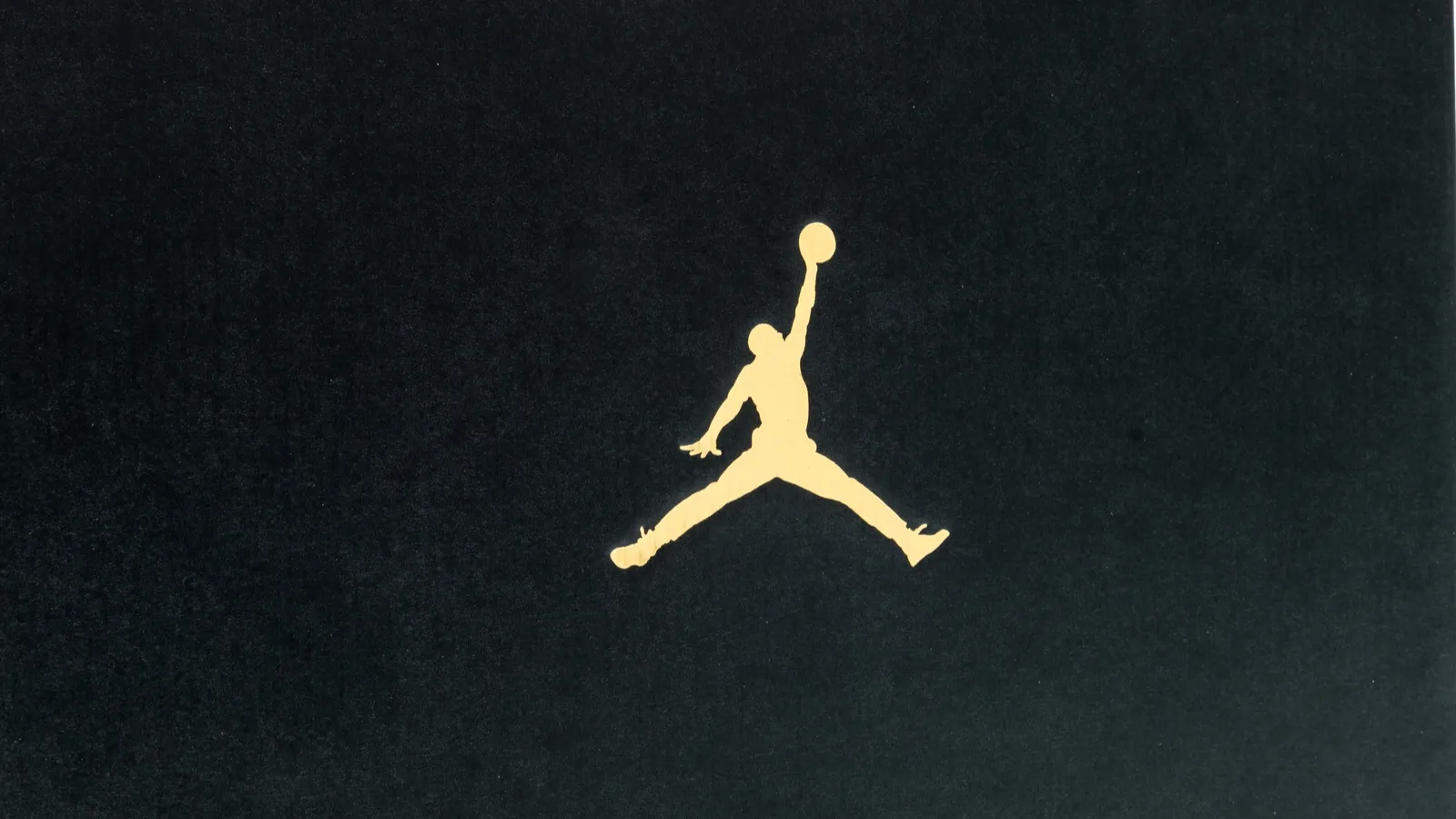
A shoe is just a shoe until the right person steps into it. Some athletes play the game. Others reshape it. Michael Jordan did more than dominate the NBA. He built a cultural empire that still generates billions long after he left the court. The Jumpman logo sits at the center of that empire, and its origin is more layered than many people realize.
It starts with a reluctant rookie, a basketball-footwear underdog, and a ballet-inspired pose that would become iconic. From a hillside photo shoot in North Carolina to a global sneaker business, this is the story of how one man’s silhouette became one of the most recognizable marks in sports.
Let’s get into it.
Nike gambled everything on an unproven rookie
Michael Jordan had just been drafted third overall by the Chicago Bulls. Adidas was his preferred brand coming out of college, but that deal never materialized. Converse already had Larry Bird and Magic Johnson, while Nike was still better known for running shoes than basketball. Nike chose to make an aggressive push anyway.
On October 26, 1984, Jordan signed a five-year, $2.5 million deal with Nike, which was three times more than any endorsement deal in the NBA at the time. Jordan’s mother, Deloris, played a key role in pushing him toward Nike. That reluctant handshake would soon become one of the most profitable decisions in sports history.

The Air Jordan 1 broke rules before it hit shelves
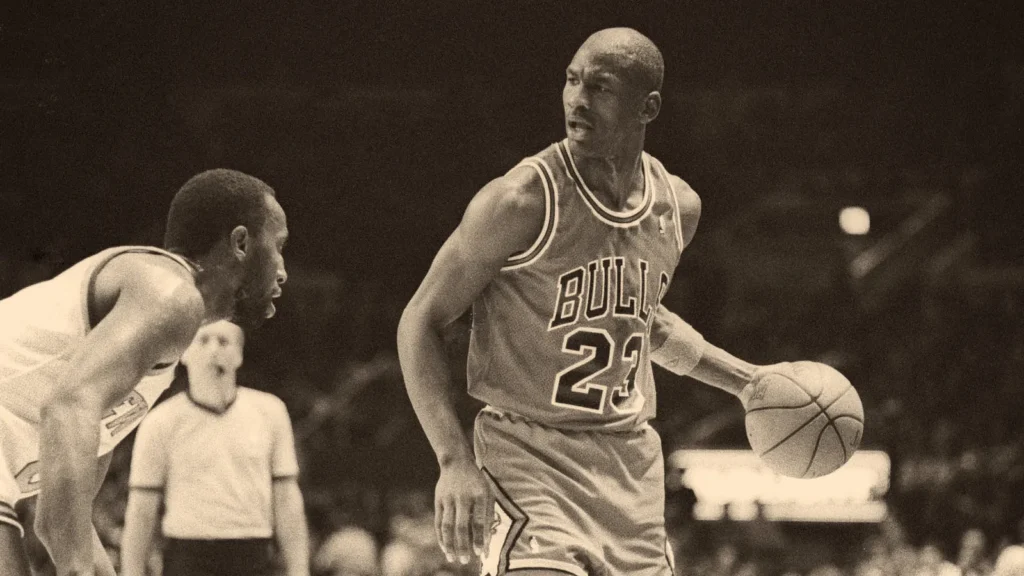
The Air Jordan 1 was released on April 1, 1985, at $65 a pair. Its black-and-red look clashed with NBA uniformity standards and quickly became central to Nike’s early marketing, even though the first shoe that drew league scrutiny was the Nike Air Ship.
Nike turned the controversy around Jordan’s black-and-red footwear into the now-famous “Banned” campaign. The strategy helped fuel extraordinary demand, with Air Jordans generating $126 million in their first year after Nike had originally projected $3 million over the first three years.
The Jumpman pose was never a basketball move
In early 1984, photographer Co Rentmeester shot Michael Jordan on a hillside at the University of North Carolina at Chapel Hill for a LIFE Magazine Olympic preview. He didn’t ask Jordan to dunk. He asked him to leap straight up, split his legs, and hold the ball in his left hand, mirroring the grand jeté ballet technique.
Jordan himself cleared this up in a 1997 HOOP Magazine interview: “I wasn’t even dunking on that one. I just stood on the floor, jumped up, and spread my legs, and they took the picture. Actually, it was a ballet move.” Nike designer Peter Moore spotted that LIFE image and had Jordan recreate it. That second photo, taken in Chicago with Jordan in his Bulls uniform, became the Jumpman silhouette.
Fun fact: Rentmeester sold Nike two slides from his original shoot for just $150, under a license for internal presentations only. He later saw the pose on a massive Nike highway billboard in Chicago and was reportedly left speechless with fury.
Tinker Hatfield saved the brand and locked in the logo
After the Air Jordan 2 failed to match the impact of the original, Jordan grew unhappy and seriously considered leaving Nike. Designer Tinker Hatfield helped change that with the Air Jordan 3 in 1988, a mid-cut model that brought visible Nike Air to the Jordan line and became a turning point for both Jordan and the company.
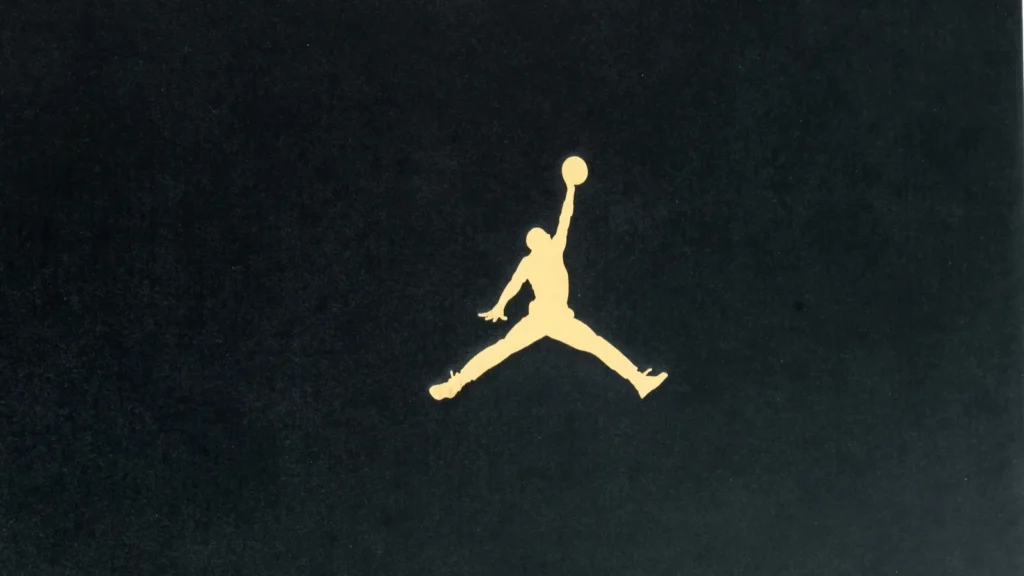
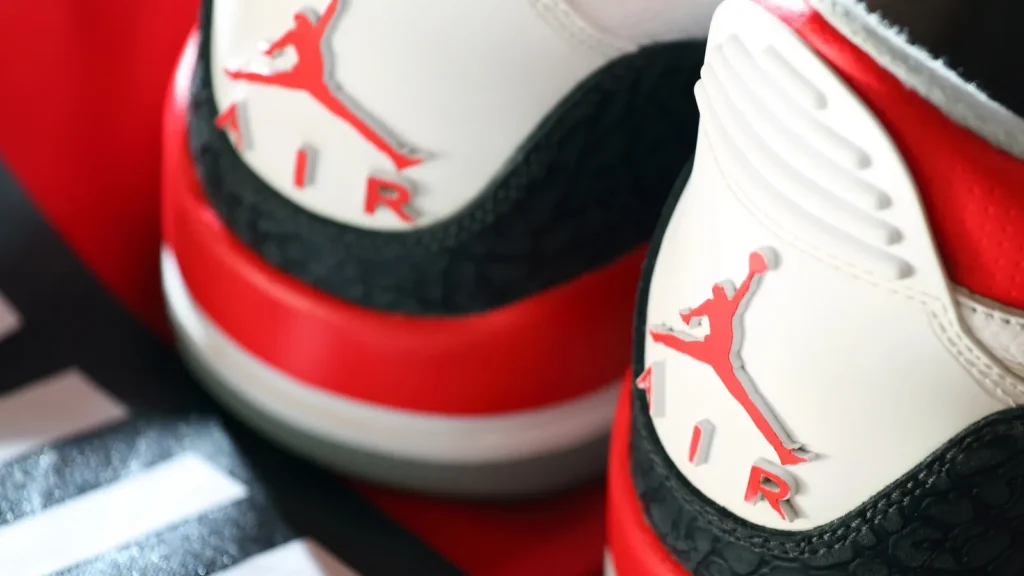
Hatfield also made a defining call. He placed the Jumpman silhouette on the tongue of the Air Jordan 3, officially introducing it as the shoe’s primary logo. The switch from the original Wings logo was permanent. The Jumpman has appeared on every Air Jordan since, anchoring one of the most consistent brand identities in sports history.
Fun fact: Drake and Future released a song called “Jumpman” in 2015 that peaked at number 12 on the Billboard Hot 100. The track is a direct tribute to the logo and Jordan’s legacy, showing that the Jumpman still inspires new generations of artists decades after the original photo was taken.
The NBA ban accidentally launched sneaker culture
Before Air Jordans, sneakers were athletic equipment. Kids wore them to play. The banned shoe campaign changed that relationship permanently. The shoes became a symbol of rebellion and individuality before Jordan had even won a single championship.
By the late 1980s, Air Jordans had moved beyond the court and into music, fashion, and streetwear. The line became a status symbol as sneaker culture grew, helping turn basketball shoes into lifestyle products with influence far beyond the sport.
Jordan Brand became its own empire in 1997
By 1997, Michael Jordan had won five championships, and Nike formally launched Jordan Brand as a distinct label built around his name and image. The company also signed its first class of Team Jordan athletes that year.
Jordan Brand has since grown into a multibillion-dollar business. Forbes has reported that Nike now pays Jordan nearly $300 million per year, underscoring how valuable the business remains long after his playing career ended.
The legacy lives beyond the man who inspired it
The Jumpman has outlasted Jordan’s playing career by more than two decades. Jordan played his final NBA game in 2003, and the logo has continued to expand ever since. It now appears on soccer kits for Paris Saint-Germain, on Jordan football and soccer products, and on NASCAR cars through 23XI Racing. Athletes from Aaron Judge to Luka Dončić carry the brand into their own sports.
The brand continues to sign new athletes, while retro releases remain a major driver of demand. Younger generations who never watched Jordan play still recognize the silhouette and associate it with one of the most influential legacies in sports.
TL;DR
- Michael Jordan signed with Nike in 1984 for $2.5 million, a record deal at the time.
- Nike turned the controversy around Jordan’s black-and-red footwear into the “Banned” campaign, even though the first shoe that drew league scrutiny was the Nike Air Ship rather than the retail Air Jordan 1.
- The Jumpman pose came from a 1984 LIFE Magazine photo shoot and was inspired by a ballet move, not a dunk.
- Tinker Hatfield introduced the Jumpman logo on the Air Jordan 3 in 1988.
If you liked this, don’t forget to follow us for more exclusive content.
This article was made with AI assistance and human editing.
If you liked this, you might also like: