

The 2004–05 NHL lockout wiped out an entire season and left fans furious. Owners dug in, and players were scrambling for contracts overseas. It was the first time in North American professional sports history that a full season was lost to a labor dispute.
But when the league came back in 2005, it looked nothing like the one that had left. The lockout forced a complete rethinking of how hockey operated on the ice, in the front office, and in the stands. Some changes were painful. Others turned out to be exactly what the sport needed.
Here is a look at the biggest ways the NHL transformed after that infamous lost year.
The salary cap finally arrived
The hardest-fought battle of the lockout gave owners exactly what they had been demanding for years.
Before the lockout, teams were spending an alarming share of their revenues on player salaries, with some franchises bleeding money season after season. The owners refused to resume play without a solution, and after months of deadlock, they got one. The new collective bargaining agreement introduced a hard salary cap set at $39 million for the 2005–06 season, with a floor of $21.5 million to keep small-market teams competitive.
No player could account for more than 20 percent of a team’s total payroll, and players under existing contracts saw their pay cut by 24 percent. It was a dramatic reshaping of the financial landscape, and it gave general managers an entirely new puzzle to solve every offseason.


Ties were eliminated, and the shootout was born
After 87 seasons and thousands of games that ended in a draw, the NHL decided every game needed a winner.
The league introduced the shootout starting in 2005–06, ensuring that no game would end in a tie. If teams were still level after overtime, skaters took turns on breakaways in a one-on-one showdown against the goaltender. The side that scored the most times won the game and the extra point in the standings.
The reaction from fans has been mixed ever since. Purists argued it was an unfair way to decide a team sport. Casual fans loved the drama. Either way, the shootout stuck, and a generation of hockey fans has now grown up knowing nothing else. The league later introduced 3-on-3 overtime in 2015–16 to reduce how often games reached the shootout in the first place.
The dead puck era ended for good
The lockout gave the NHL the perfect opportunity to strip out the clutching, grabbing, and interference that had slowed the game to a crawl.
Throughout the late 1990s and early 2000s, the league had become notorious for its defensive, grinding style of play. Coaches had figured out how to neutralize skill players through physical obstruction, and the rulebook was not doing enough to stop it. Scoring dropped, excitement faded, and casual fans tuned out.
When play resumed in 2005, referees were instructed to enforce obstruction rules far more strictly. Hooking, holding, and interference calls went up dramatically. Skilled players suddenly had room to operate again, and the game opened up almost overnight. It was a deliberate decision by the league, and it worked.
Competitive balance shifted across the league
Small-market teams that had spent years watching rich rivals buy championships finally had a real chance to compete.
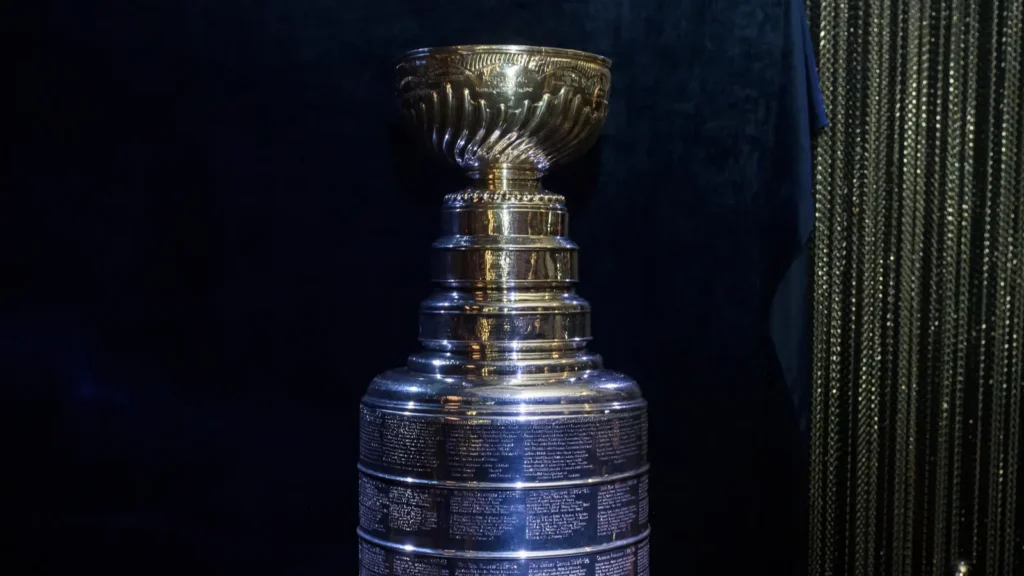
Before the salary cap, franchises like the Detroit Red Wings and the New York Rangers could simply outspend their competition. Detroit’s 2002 Stanley Cup team was famously loaded with expensive veteran stars. Once the cap arrived, that strategy became impossible. Every team was now working within the same financial ceiling.
The result was a wave of unexpected champions. The Carolina Hurricanes won the Cup in 2006. The Anaheim Ducks won in 2007. Teams from smaller markets could now build through the draft and keep their best players without worrying about being outbid by a richer rival.
Pittsburgh won the Sidney Crosby lottery
Because no season was played in 2004–05, the league had no standings to determine draft order, so they held a lottery instead.
Normally, draft order was based on regular-season standings, with the worst teams getting the highest picks, though a lottery could occasionally move another non-playoff team up to first overall. But with no games played, the NHL created a weighted lottery system based on playoff appearances and draft history over the previous three seasons. Teams that had struggled the most in recent years received better odds.
The Pittsburgh Penguins, who had missed the playoffs in all three prior seasons, came up lucky. They won the lottery and selected Sidney Crosby with the first overall pick. What followed was one of the most dominant runs by any franchise in the cap era, with Crosby leading Pittsburgh to three Stanley Cup championships.
The game got faster
With obstruction called more consistently and skilled players protected by the rulebook, the entire style of the sport evolved.
Teams could no longer rely on clutching and grabbing to neutralize opposing stars. Rosters shifted toward speed, skill, and skating ability. Over the following decade, the average size of an NHL player dropped noticeably as teams prioritized quickness over bulk. Players who would have been considered too small to survive in the pre-lockout era became stars.
The shift also changed how teams were built. Front offices began valuing agility, hockey sense, and offensive instinct over raw physicality. The game fans watch today, fast, open, and skill-driven, traces its roots directly back to the rules that came out in 2005.
TL;DR
- The 2004–05 NHL lockout forced sweeping changes to how the league operated both on and off the ice.
- A hard salary cap was introduced, leveling the playing field between big-market and small-market teams.
- Ties were abolished, and the shootout was brought in to guarantee a winner every game.
- Stricter enforcement of obstruction rules ended the defensive, low-scoring Dead Puck Era.
- The Pittsburgh Penguins won a special draft lottery and selected Sidney Crosby, kicking off a dynasty.
This article was made with AI assistance and human editing.
If you liked this, you might also like: