
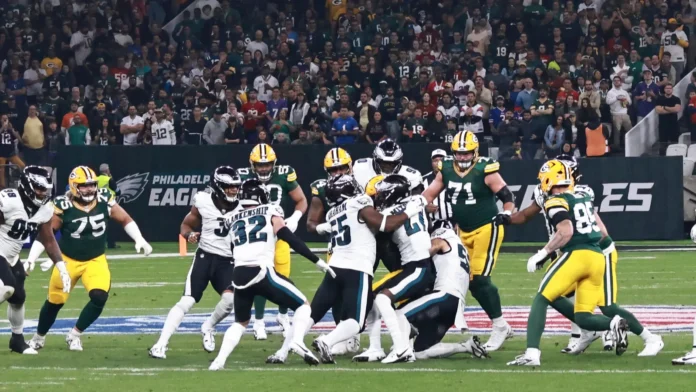
The Eagles turned a short-yardage quarterback sneak into one of the NFL’s most effective and most debated plays. What started as a clever situational design quickly became a nearly automatic weapon in key moments, with Jalen Hurts and Philadelphia’s powerful offensive line using legal forward assistance to win inches at the line of scrimmage. The play looked simple, but its success depended on timing, leverage, strength and execution, which made it difficult for defenses to copy or consistently stop.
The play sparked major debate over player safety, competitive balance, sportsmanship and whether the league should step in to ban it entirely. The controversy grew even louder after the Packers pushed for a rule change, but the proposed ban failed in May 2025, leaving the tush push legal heading into the next season.
What exactly is the tush push?
The play is essentially a modified quarterback sneak where multiple teammates line up directly behind the quarterback to legally push him forward.
Unlike a traditional sneak where the quarterback relies solely on his own lower-body power and the initial surge of his center, this design utilizes extra human trailers to create unstoppable forward momentum. The offensive line secures a low, aggressive leverage point while the backfield players apply immediate physical pressure to the quarterback’s lower back.
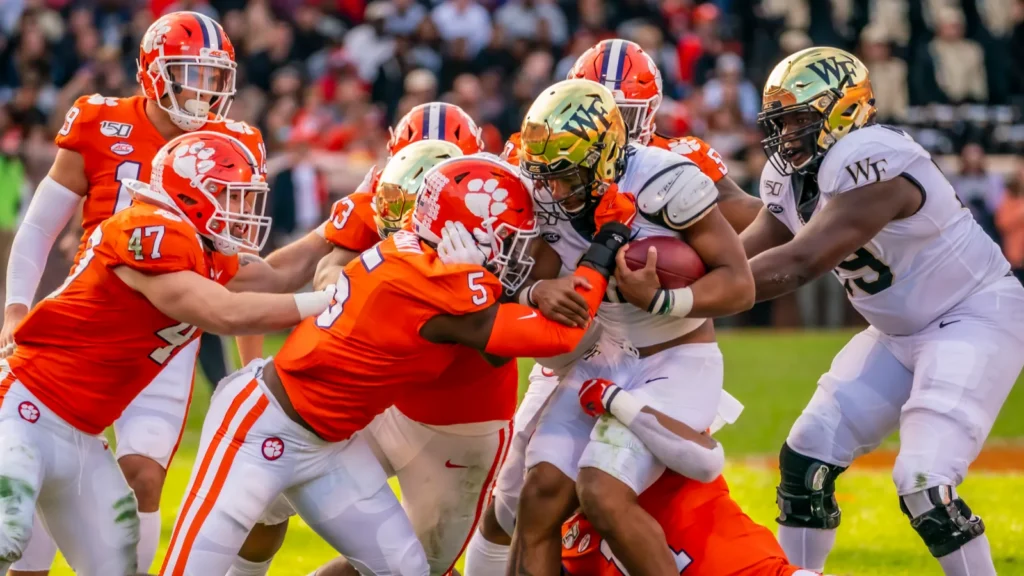
The mechanics of the play require perfect synchronization between the interior linemen and the pushing backs. If the guards and center fail to get underneath the defensive tackles, the entire pile collapses before the push can even begin. Philadelphia perfected this timing by using its elite rugby-style scrum mechanics to exploit the natural laws of physics against standard defensive fronts.
Why the Eagles mastered the design
The Eagles possessed the perfect combination of an elite interior offensive line and a uniquely powerful quarterback to make the play work. Hall of Fame center Jason Kelce mastered the art of getting lower than any defensive lineman, effectively creating a clean runway for the play to succeed.
Additionally, quarterback Jalen Hurts brought elite weight-room strength to the position, famously squatting over 600 pounds during his collegiate career. This rare combination of a dominant line and a powerhouse quarterback meant that the Eagles were uniquely built to execute this specific strategy at an unprecedented efficiency rate.
Other teams across the league routinely attempted to replicate the success of the Philadelphia design with varying and often disastrous degrees of success. Without the precise timing of an elite center and a physically imposing quarterback, many teams suffered costly fumbles or stopped short of the line to gain.
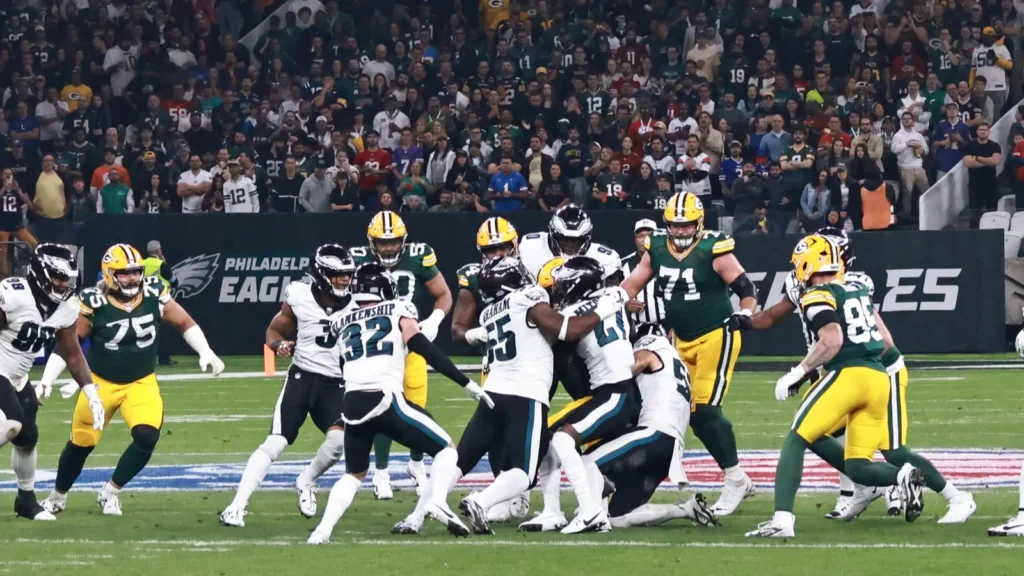
Fun fact: The NFL prohibited assisting/pushing the runner for much of its history before changing the rule in 2005 to allow pushing while still banning pulling
The fierce debate over competitive fairness
Critics across the National Football League argued that the play looked more like a rugby scrum than traditional American football. Defensive coordinators openly expressed frustration that the offense could essentially legally cheat by using artificial momentum to move the line of scrimmage forward.
Several head coaches publicly called for the competition committee to review the play, arguing that it took the skill out of crucial third and fourth-down situations. The overwhelming consensus among detractors was that football should remain a game of blocking and tackling rather than a test of collective mass pushing.
Supporters countered that the play was perfectly legal under the existing rules and that defenses simply needed to find a way to stop it. They argued that banning a play simply because one specific team executed it with flawless efficiency would set a dangerous precedent for the sport. The league ultimately chose not to outlaw the maneuver, deciding that the physical nature of the play did not violate the spirit of modern football.
Fun fact: During the height of its popularity, the play gained so much mainstream attention that the phrase “tush push” was officially submitted for a federal trademark.
Examining the injury risks and safety concerns
Player safety quickly became the primary talking point for executives who wanted to see the play banned from the game. Opponents pointed out that the massive accumulation of bodies collapsing into a single pile created a high-risk environment for serious lower-body injuries.
Linemen on both sides of the ball expressed concern over the sheer amount of weight pressing down on their necks and knees during the initial collision. The intense physical toll of the play raised red flags for player safety advocates who wanted to reduce high-impact pileups.
The competition committee closely monitored injury reports throughout multiple seasons to determine if the play posed a disproportionate threat to the athletes. Internal NFL data revealed a 0% injury rate for the “Tush Push” quarterback sneak, distinguishing it from the higher risks associated with standard kickoff returns. Due to these safety findings, the NFL Competition Committee did not ban the play, which contrasts with the significantly higher concussion rates found in traditional special teams plays.
TL;DR
- The “tush push” became the most unstoppable short-yardage play in the NFL due to the Philadelphia Eagles’ flawless execution.
- The play relies on legal pushing from behind, utilizing a rugby-style scrum mechanic to gain critical yardage.
- Critics complained that the play was unfair and demanded a ban, while supporters argued it was a legitimate display of power and technique.
- Extensive NFL safety reviews confirmed that the play did not cause an increase in player injuries, allowing it to remain legal in the playbook.
If you liked this story, don’t forget to follow us for more exclusive content.
This article was made with AI assistance and human editing.
If you liked this, you might also like: