


The title brought a sharper question
The New York Knicks won the championship, but the conversation quickly shifted toward Victor Wembanyama’s explanation for San Antonio’s Finals loss after Game 5 ended the series.
His comments drew attention because they echoed Kenny Atkinson’s earlier analytical defense of Cleveland, when another Knicks opponent framed defeat in terms of process rather than results.

The Knicks closed the series
New York beat San Antonio 94-90 in Game 5, finishing the NBA Finals with a 4-1 series win over the Spurs on Saturday night.
The result gave the Knicks their first championship since 1973, ending a 53-year wait and turning Jalen Brunson’s road performance into franchise history for New York.

Brunson carried the final push
Jalen Brunson scored 45 points in the clinching game, giving New York the late shot-making it needed during tense fourth-quarter possessions against San Antonio in Texas.
His performance also earned Finals MVP honors, making him the clear closer when San Antonio built leads but failed to finish the series against New York in June.

Wembanyama framed the loss differently
After the Finals ended, Wembanyama said San Antonio had stretches of absolute domination and believed the Spurs dominated most of the series against New York after Game 5.
That response stood out because the scoreboard said something else, with New York winning four games and completing another comeback in the final contest on Saturday night.

Atkinson had used similar logic
Earlier in the playoffs, Cleveland coach Kenny Atkinson said the Cavaliers had analytically won two out of three games despite trailing New York in the series before Game 4.
That comment became part of the Knicks’ postseason story because another opponent later leaned on process while New York kept advancing through each round against different opponents.

The pattern became hard to miss
The comparison was not about the same opponent, but about the same explanation style after New York defeated Cleveland and San Antonio in separate playoff rounds this postseason.
Atkinson pointed to expected results, while Wembanyama pointed to strong stretches, yet both comments came after the Knicks controlled the series outcome on the floor in elimination games.

New York punished every mistake
Wembanyama also admitted San Antonio’s mistakes were punished hard, which matched how New York survived repeated deficits throughout the Finals against the Spurs in close games under pressure.
That detail gave his comments balance, because he recognized the Spurs had strong stretches but still could not survive their costly downturns against New York late in Game 5.

The Spurs kept starting fast
San Antonio led by double digits in each Finals game, giving Wembanyama a real basis for describing stretches of control against New York before each comeback push.
The problem was closing. New York kept finding answers after falling behind, turning early Spurs control into another comeback chance for Brunson and his teammates in Texas.

Game 4 changed the mood
New York’s Game 4 comeback shaped the Finals conversation before the championship clincher arrived in San Antonio later that week, after a 29-point rally from New York.
The Knicks erased a 29-point deficit and won on OG Anunoby’s late tip-in, proving San Antonio could not relax with any lead in Game 4.

Game 5 finished the argument
San Antonio built a 16-point lead in Game 5, but New York stayed close enough to strike in the final quarter on the road in Texas.
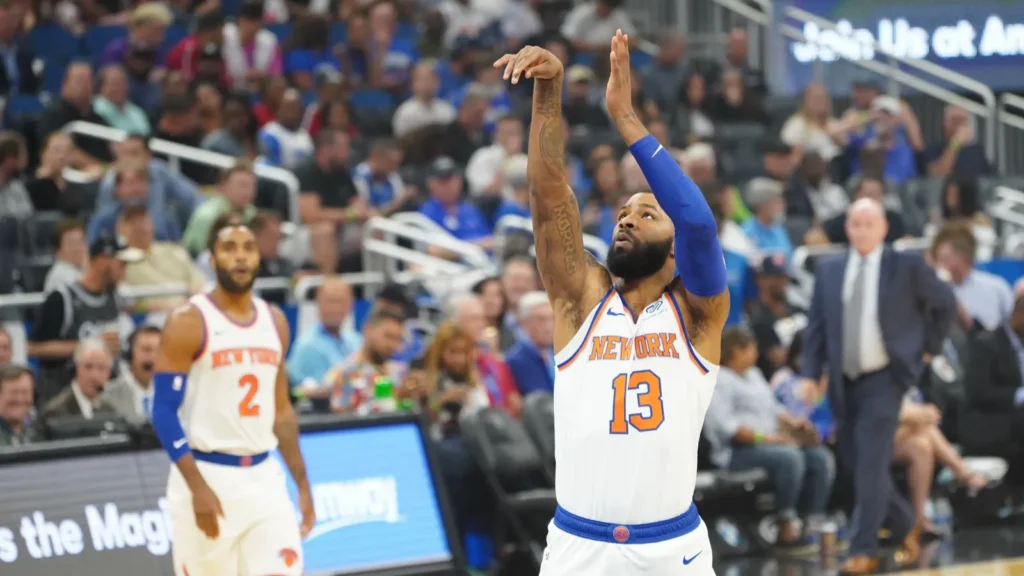
That rally weakened the idea that early control defined the series, because the Knicks again won the moments that mattered most on the road in Game 5.
The analytics debate stayed alive
The Knicks became a strange problem for opponents because advanced explanations often made losses sound more complicated than the final scores suggested during the playoffs against New York.
Atkinson and Wembanyama both found reasons for optimism, but New York kept turning those reasons into another layer of playoff noise after each Knicks victory on the court.

The numbers still favored New York
The simplest number was the series result: the Knicks beat the Spurs 4-1 and lifted the championship trophy after Game 5 in Texas.
New York also handled every closeout chance on the road, showing that the group managed pressure well away from Madison Square Garden during the postseason run in hostile buildings.
Butler’s Warriors chapter shows how one veteran can test a roster’s balance, but the deeper question is how Golden State handled depth and leadership around him. Dive into that challenge to explore more.

The takeaway stayed clear
Wembanyama’s comments added intrigue, but they did not erase what New York accomplished against San Antonio in the NBA Finals through five games and repeated comebacks.
The Knicks answered every challenge with results, leaving opponents to debate process while New York finished the postseason as champions after another comeback under pressure in Texas.
New York’s title run left opponents debating the details, but Milwaukee has its own leadership question. Explore why Giannis Antetokounmpo is stressing belief and discipline with the Bucks.
Did Wembanyama’s postgame comments sound like fair confidence, or did the Knicks’ 4 to 1 Finals win settle the argument? Share your thoughts in the comments below!
This slideshow was made with AI assistance and human editing.
Read More From This Brand: