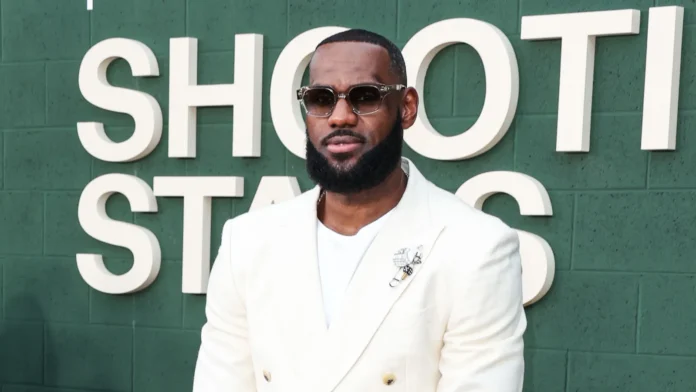
LeBron James didn’t simply walk away from a huge McDonald’s payday in 2015; he chose to focus on a business in which he already owned equity.
James had invested in Blaze Pizza in 2012 and later shifted his marketing focus toward the growing pizza chain rather than renewing his relationship with McDonald’s.
More than a decade later, the decision remains one of the clearest examples of James’s favoring ownership and long-term upside over a conventional endorsement paycheck.
The McDonald’s deal was real money
James began his McDonald’s endorsement relationship in 2010 and extended it in 2012. When he chose to leave the company in 2015, substantial guaranteed money was still available.
Forbes reported that Maverick Carter described the opportunity as roughly $14 million to $15 million over four years, while ESPN later reported that James had about $14 million remaining on the deal.
Walking away wasn’t symbolic. James was giving up a substantial, predictable income stream while already one of the NBA’s most marketable stars.
Blaze Pizza offered ownership
The answer was equity. James became an original investor in Blaze Pizza in 2012, before he could publicly promote it due to his relationship with McDonald’s.
He and business partner Maverick Carter later secured franchise rights in Chicago and South Florida. By 2015, James viewed Blaze as a company whose growth could directly increase the value of his investment.
ESPN reported that James owned more than 10% of Blaze at the time, separate from his franchise interests. That meant the upside was tied to the business itself, not only his promotional work.
James wanted more control
James explained his thinking during an episode of Maverick Carter’s “Kneading Dough” series. He said he believed the potential return from putting time and effort into Blaze could exceed what McDonald’s was prepared to guarantee him.
That fit a broader shift in how James and Carter approached endorsements. Instead of simply lending his name to a product, James increasingly pursued opportunities in which ownership allowed him to share in a company’s potential growth.
Fun fact: LeBron James made more than $30 million in cash and stock from Apple’s 2014 acquisition of Beats Electronics after holding a small stake in the company.
Blaze quickly became a major part of the story
The decision grew more significant as Blaze expanded. In 2017, ESPN reported that the original investment by James and his partners, made for less than $1 million, had grown to about $25 million. Including future Blaze endorsement payments tied to an undisclosed sales target, James’ interest was valued at roughly $35 million to $40 million. That estimate did not include his separate franchise partnership.
James had positioned himself to benefit directly from the restaurant company’s growth. Blaze also used his personality and audience beyond traditional advertising. One memorable campaign featured him working behind a Blaze counter as “Ron.”
Fun fact: LeBron became an original investor in Blaze Pizza’s parent company in 2012, but his McDonald’s partnership initially prevented him from publicly promoting the pizza chain.
The move fit his larger strategy
The McDonald’s decision makes more sense in light of James’ other ventures. He has repeatedly pursued opportunities where his name, audience, and business judgment could combine with ownership or long-term value.
Forbes has highlighted a preference for equity-based arrangements. James has built a portfolio well beyond conventional athlete endorsements, making Blaze an important early example. His approach reflected a willingness to think beyond his playing career. Basketball seasons end, while businesses can continue developing for years.
James is still thinking beyond basketball
James remains an NBA centerpiece even after the Lakers chapter of his career ended. In July 2026, he announced that he would join the Philadelphia 76ers for the 2026-27 season after strongly considering retirement.
That move adds another chapter to his playing career, but his business mindset operates on a different timeline. His basketball career can eventually end while his investments and partnerships continue.
By prioritizing ownership and equity, he ensures his financial influence will only expand after he hangs up his jersey. In doing so, he continues to set the benchmark for how modern athletes build lasting cultural and commercial empires.
Fun fact: LeBron James became the first player to appear in 23 NBA seasons in 2025-26. He also finished the campaign with an NBA record 1,236 combined regular-season and playoff wins.
Why the choice still stands out
The most important part of the story isn’t simply that James walked away from roughly $15 million in potential endorsement income. It’s that he understood what he was giving up and chose to focus on a business he already owned.
McDonald’s offered guaranteed endorsement income. Blaze gave James the opportunity to put his marketing power behind an existing investment and participate directly in the company’s potential growth. James and Maverick Carter believed the upside could exceed the money available from McDonald’s.
That did not eliminate the risk. Equity in a growing company is less predictable than guaranteed endorsement income, and not every young business succeeds. James decided that Blaze’s long-term potential was worth accepting that uncertainty.
More than 10 years later, the decision remains an example of James using his celebrity alongside business ownership rather than relying only on conventional endorsement checks.
TL;DR
- LeBron James declined to renew his McDonald’s endorsement in 2015, leaving an estimated $14 million to $15 million in guaranteed money over four years.
- He chose to focus on Blaze Pizza, where he was already an investor and later became a prominent ambassador and franchise owner.
- James and Maverick Carter believed ownership offered greater long-term upside than a traditional endorsement.
- ESPN later reported that James’ Blaze stake was worth about $35 million to $40 million in 2017.
- The decision became an early example of James building his career around equity and entrepreneurship.
If you liked this story, don’t forget to follow us for more exclusive content.
This article was made with AI assistance and human editing.
If you liked this, you might also like: