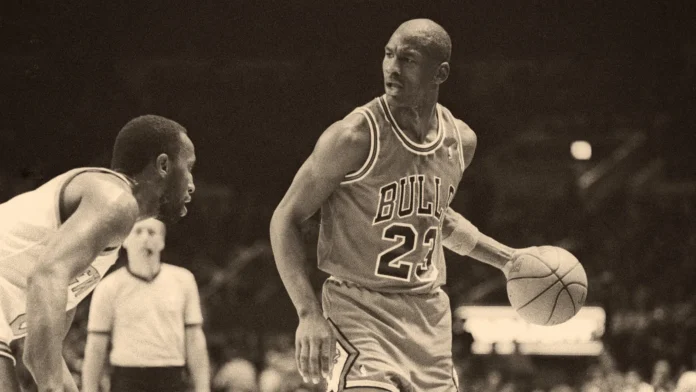
The 1984 NBA Draft became one of the most important moments in NBA history because of what Michael Jordan later became with the Chicago Bulls. Before Chicago selected him third overall, Jordan had spoken favorably about two established contenders: the Los Angeles Lakers and the Philadelphia 76ers.
Both teams represented winning basketball in the early 1980s, but the draft order sent Jordan to Chicago, where he built a dynasty of his own.
Which teams did Michael Jordan prefer in 1984?
Jordan said he would love to play for the Philadelphia 76ers or the Los Angeles Lakers. These two organizations represented the gold standard of the NBA in the early 1980s, consistently competing for championships and featuring legendary rosters. Jordan’s reasoning was rooted in his competitive nature and his admiration for the winning traditions these franchises had built over the years.
He felt that joining such established programs would be the ideal environment for a player coming off a successful collegiate career at North Carolina.

The allure of the Lakers was particularly strong for the young prospect because of their “Showtime” style and star-studded lineup. Jordan noted that the Lakers were well-known for their ability to win and their high-octane offensive approach, which resonated with his own playing style.
At the time, Los Angeles was led by Magic Johnson and Kareem Abdul-Jabbar, creating a basketball mecca that any ambitious rookie would find incredibly attractive.
Little-known fact: Michael Jordan was actually the third overall pick in the 1984 NBA Draft, trailing behind Hakeem Olajuwon and Sam Bowie. This decision by the Portland Trail Blazers to pass on Jordan remains one of the most debated moves in sports history.
Why did the 76ers appeal to the young star?
The Philadelphia 76ers were a premier destination for Jordan because of their status as recent NBA champions and their roster of legendary talent.
Just one year prior to the 1984 draft, the 76ers had completed a dominant run to the 1983 NBA title, famously led by Moses Malone and Julius Erving. Jordan grew up admiring Erving, whose high-flying style and graceful athleticism served as a blueprint for Jordan’s own development as a shooting guard.
Philadelphia’s front office was also reportedly very interested in acquiring Jordan, recognizing his immense potential even in a draft dominated by talk of big men. Former Bulls general manager Rod Thorn has since revealed that the 76ers made a strong push to trade up for the third pick to secure Jordan.
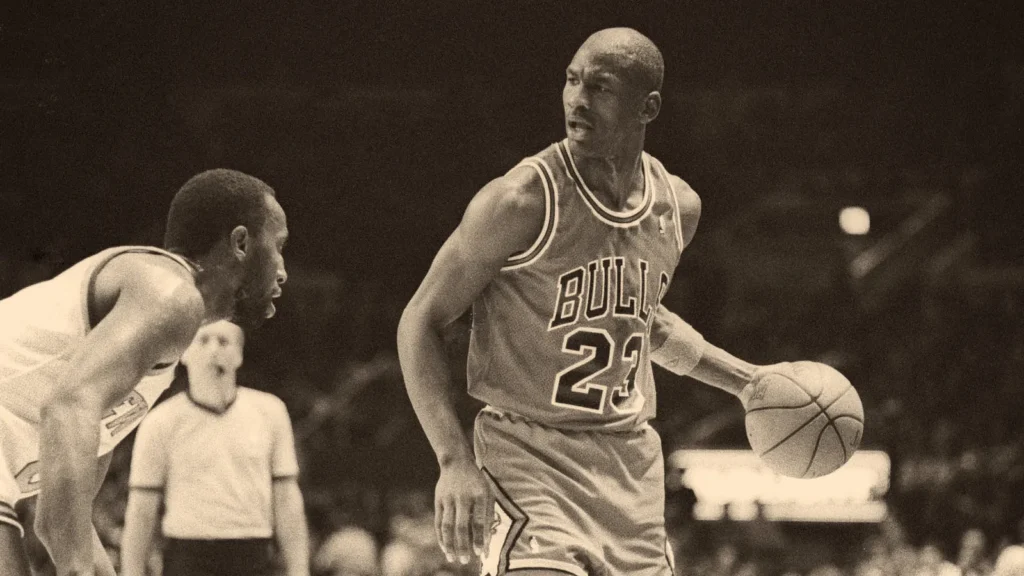
While a deal never materialized, the mutual interest between the player and the franchise highlights how highly Jordan was valued by winning organizations.
Little-known fact: Despite being known as the greatest of all time, Jordan didn’t make his high school’s varsity basketball team as a sophomore. He was not selected for being too short, standing at just 5 feet 10 inches at the time.
How did the Chicago Bulls win the Jordan sweepstakes?
The Chicago Bulls secured Michael Jordan simply by holding the third pick and refusing to trade it away despite several enticing offers. While Jordan had his preferences, the draft order dictated his destination, and the Bulls were in desperate need of a franchise-altering talent.
At the time, Chicago was a struggling organization that had seen dwindling attendance and a lack of postseason success. Rod Thorn, the Bulls’ general manager at the time, was convinced that Jordan was the best player available after Olajuwon was taken first by the Houston Rockets.
Even though Portland’s decision to draft Sam Bowie at number two is often criticized, it paved the way for Jordan to land in the Windy City. Jordan later reflected that while he admired the Lakers and 76ers, he was ultimately happy to land with a team where he could make an immediate and significant impact.
What was Jordan’s mindset regarding the Lakers?
Jordan’s interest in the Lakers was tempered by a humble realization that they were already a complete team without him. In early interviews after entering the league, he admitted that while he loved the Lakers’ talent, he wasn’t sure how much he could actually help them. “They won the world championship without me,” Jordan famously remarked when discussing his admiration for the Los Angeles squad.
Ultimately, playing for the Bulls allowed Jordan to build his own legacy rather than joining one that was already established. He would go on to face the Lakers in the 1991 NBA Finals, defeating the team he once admired to win his first championship.
This victory served as a symbolic passing of the torch from the established dynasties of the 80s to the new era of Bulls dominance. Jordan’s journey from a rookie with preferred destinations to the man who dismantled those same powerhouses is a testament to his unmatched drive.
TL;DR
- Michael Jordan’s top two preferred teams before the 1984 NBA Draft were the Los Angeles Lakers and the Philadelphia 76ers.
- He admired the Lakers for their winning tradition and the 76ers for their recent 1983 championship and the presence of Julius Erving.
- The 76ers made a strong trade push to move up to the third spot to draft Jordan, but the Chicago Bulls declined.
- Despite his preferences, Jordan was happy to land in Chicago, where he could immediately contribute to an underdog franchise.
- Jordan eventually defeated the Lakers in the 1991 NBA Finals to secure his first of six championships.
If you liked this story , don’t forget to follow us for more exclusive content.
This article was made with AI assistance and human editing.
If you liked this, you might also like: