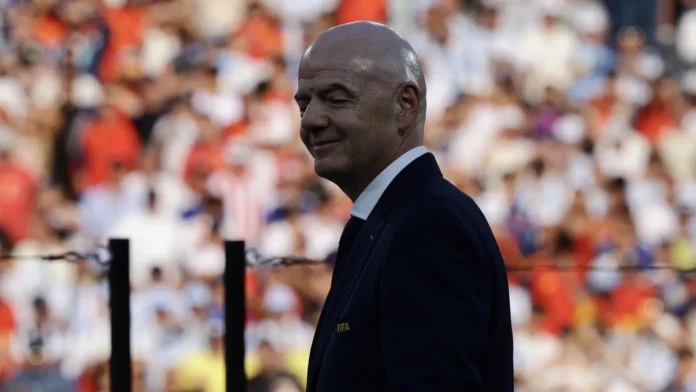
A single phone call has now stirred up one of the biggest ethics debates in modern soccer. FIFA president Gianni Infantino reportedly spoke directly with President Donald Trump about Folarin Balogun’s suspended red card at the World Cup.
The International Olympic Committee just weighed in on whether that private conversation crossed a serious ethical line. Its ruling closes one door on the controversy, yet it opens plenty of new questions about power and politics.
Human rights group FairSquare had already accused Infantino of breaching strict rules on political neutrality. Now the IOC has made its position known, and the football world is still reacting.
IOC clears Infantino of formal probe
The International Olympic Committee announced Friday it will not open a formal investigation into FIFA president Gianni Infantino over his call with President Donald Trump regarding star striker Folarin Balogun’s suspended World Cup red card.
The decision closes one loud chapter of a controversy that began during the 2026 World Cup round of 32, when Balogun was sent off for a tackle on defender Tarik Muharemovic during a heated match.
FIFA’s disciplinary committee later suspended that ban, freeing Balogun to face Belgium in the next round. The IOC ethics commission said the complaint did not concern Infantino’s personal relationship with the Olympic movement.
The Trump phone call explained
Trump reportedly worked closely with Commerce Secretary Howard Lutnick and White House aide Andrew Giuliani to quickly build a legal case against the suspension before personally calling Infantino directly to voice his own personal frustration.
He informed Infantino that an appeal had already been filed and openly shared his own personal opinion about the red card during that same private phone conversation between the two powerful men that same day.
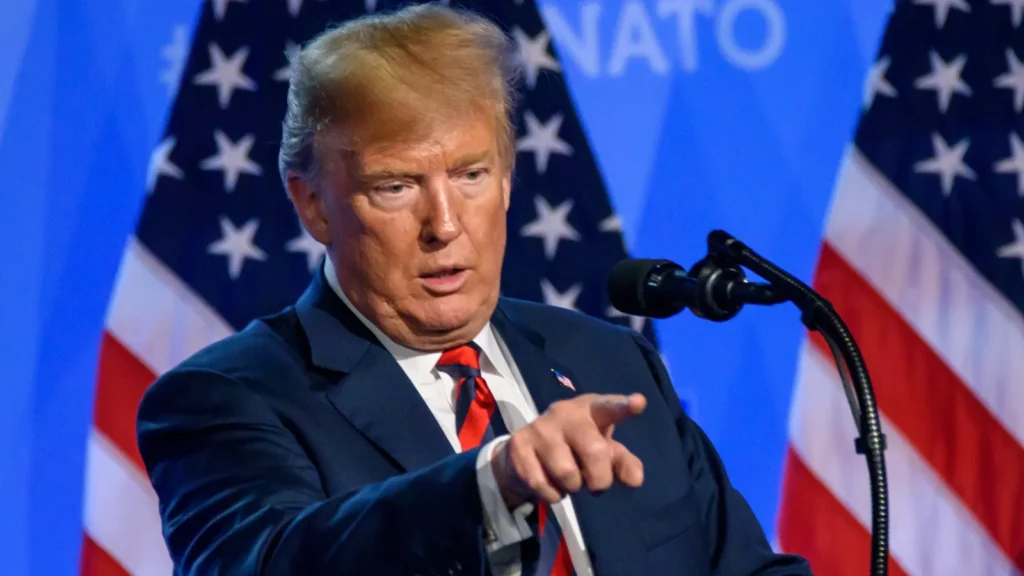
Infantino has maintained publicly that FIFA’s disciplinary committees operate entirely independently of outside voices. Still, the timing of the call and the sudden reversal quickly raised eyebrows among fans, officials, and human rights observers alike.
Fun fact: Of FIFA’s 18-member disciplinary committee, only chairman Mohammad Al Kamali was involved in the Balogun ruling — the other 17 members weren’t consulted at all.
FairSquare files formal ethics complaint
Shortly after news of the call became public, the human rights group FairSquare filed a formal complaint against Infantino with the IOC ethics commission, accusing him of clear political bias and outright favoritism toward Trump.
The complaint alleged five separate breaches of the IOC’s strict rules on political neutrality, plus what FairSquare called prima facie evidence pointing toward two more serious extra violations tied directly to Trump personally again.
One of those two extra violations directly concerned the reversal of the Balogun ban. FairSquare argued that Infantino had quietly acquiesced to political pressure that circumvented FIFA’s disciplinary process during the ongoing World Cup.
What the Olympic Charter demands
Every IOC member takes a formal oath upon first joining the organization. Infantino reportedly promised to fully respect the Olympic Charter and always follow the IOC Code of Ethics without exception or any real excuse.
Infantino became an official IOC member in January 2020, roughly 4 years after taking charge of FIFA as its president. That membership carries strict obligations around political neutrality separate from his regular job.
The Olympic Charter clearly states that national and international federations must always reject political, religious, or economic pressure that could compromise their governance decisions or seriously threaten their independence from any outside interference.
Why the IOC lacks jurisdiction
The IOC ethics commission ultimately said FairSquare’s complaint focused mainly on FIFA’s internal governance and rule enforcement, rather than specifically on Infantino’s relations with the Olympic body he formally and personally belongs to.
Its official statement explained that each international federation maintains full autonomy under the charter, meaning the commission cannot police decisions made solely within FIFA’s internal governing and disciplinary structure or processes.
Because the complaint never directly tied Infantino’s personal conduct to his specific duties as an IOC member, the commission concluded it fell entirely outside its jurisdiction and quickly closed the matter.
Trump defends his involvement publicly
Trump has publicly confirmed making the call himself, framing it simply as a request rather than outright pressure on FIFA officials. He insists he never actually told Infantino exactly how he should rule on it.
Speaking afterward, Trump said he only asked officials for a review because he personally did not believe Balogun’s tackle truly deserved a red card in the first place during that particular heated World Cup match.
He described the incident as two great athletes simply colliding rather than a deliberate foul, comparing it favorably to far more serious offenses, such as one player punching an opponent directly in the face.
A pattern of political ties
This was not FairSquare’s first complaint filed against Infantino. Back in December, the group had already accused him of breaching FIFA’s ethics code over the awarding of the FIFA Peace Prize to Trump personally.
That earlier complaint gained meaningful support from the Norwegian Football Federation and dozens of European lawmakers, who both formally urged FIFA to properly review Infantino’s overall conduct and his growing personal ties to Trump directly.
Human Rights Watch also weighed in publicly at the time, sharply criticizing the peace prize decision and calling Trump’s overall record on human rights very far from deserving of such official recognition or public honor.
What happens next for Infantino
Critics say this jurisdictional gap allows powerful officials to avoid meaningful accountability rather easily. FairSquare has not yet said publicly whether it plans to appeal the ruling or simply refile a narrower complaint soon.
FIFA has repeatedly declined to publicly explain why it reversed Balogun’s suspension, leaving many observers to openly speculate about whether outside political pressure genuinely influenced the disciplinary committee’s internal deliberations that particular week.
For now, Infantino avoids a formal IOC investigation, but the underlying questions about football governance, political neutrality, and outside influence remain unresolved heading into the tournament’s remaining knockout stage rounds.
Little-known fact: Infantino is a genuine polyglot, speaking Italian, French, German, English, Spanish, Portuguese, and Arabic, letting him address football federations worldwide without an interpreter.
TL;DR
- The IOC will not launch a formal investigation into Infantino’s call with Trump about Balogun.
- The IOC said the complaint concerned FIFA’s own governance, not Infantino’s Olympic duties.
- FairSquare alleged five breaches of IOC neutrality rules, as well as two more serious violations.
- Trump says he only asked for a review and never told Infantino how to rule.
If you liked this, don’t forget to follow us for more exclusive content.
This article was made with AI assistance and human editing.
If you liked this, you might also like: