




Justin Herbert threw for 204 yards with no touchdowns and 1 interception as the Los Angeles Chargers fell 22-6 to the Kansas City Chiefs on Oct. 18. The loss dropped Los Angeles to 0-6, intensifying questions about its offense and first-year coordinator Mike McDaniel.
Head coach Jim Harbaugh said the team would evaluate everything after another frustrating performance. Herbert also acknowledged the offense had not delivered, leaving the Chargers facing an urgent challenge during their upcoming bye week.
McDaniel arrived in Los Angeles with a reputation for building creative offenses, but the early results have fallen well short of expectations. Finding a workable plan for Herbert now may be central to the Chargers’ ability to turn their season around.
The Chargers’ offensive struggles have reached a critical point
Los Angeles has lost its first 6 games of the 2026 season, including a 22-6 defeat in Kansas City. The team has scored no touchdowns in its latest outing, highlighting the scale of its offensive problems.
The Chargers managed 259 total yards against the Chiefs and went 0-for-3 on fourth-down attempts. Their offense struggled to turn promising field position into points, even after a 57-yard completion moved the team near the goal line.
The disappointing start has placed greater scrutiny on the coaching staff, particularly McDaniel, who calls the offensive plays. Harbaugh has not guaranteed that the current approach will remain unchanged, saying the team needs to evaluate every part of its operation.
Mike McDaniel was hired to help unlock Herbert’s potential
McDaniel joined the Chargers as offensive coordinator in 2026 after serving as head coach of the Miami Dolphins. His arrival raised expectations that his system could help Herbert become more efficient and productive.
His offensive background includes experience with the San Francisco 49ers and the Miami Dolphins, where his work was influenced by the motion-heavy, timing-based principles associated with Kyle Shanahan’s coaching tree. The approach often seeks to create favorable matchups before the snap.
However, installing a new system takes time, and early struggles can expose problems with communication, execution and decision-making. McDaniel and Herbert have been reviewing game film together, looking for solutions rather than relying on the playbook alone.
Herbert’s numbers show why a reset is needed
Through 6 games, Herbert has completed 107 of 180 passes for 1,141 yards, with 5 touchdown passes and 8 interceptions. His 68.8 passer rating is a sharp drop from his previous seasons.

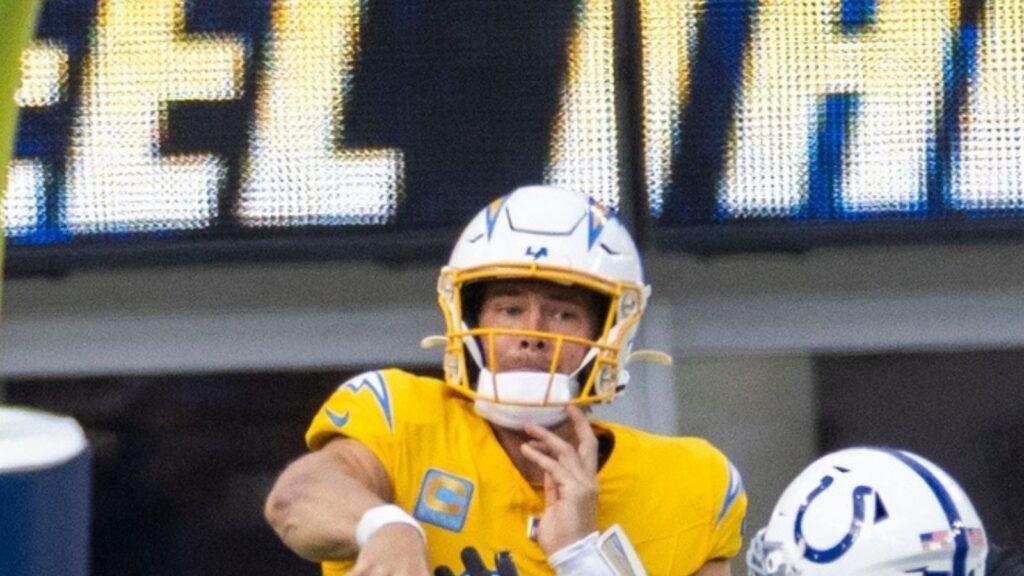
The turnover total has been especially damaging. Herbert threw 2 interceptions in the Sept. 20 loss to the Las Vegas Raiders and another 2 against Seattle on Oct. 4, leaving the offense with little margin for error.
Against Kansas City, Herbert completed 22 of 37 passes but failed to throw a touchdown. He was sacked 4 times, and the Chargers finished without an offensive touchdown, making it difficult to build momentum.
Better protection and simpler decisions could help
Herbert has been under pressure throughout the losing streak, and the offensive line has struggled to provide consistent pockets. Four sacks against Kansas City underscored how quickly drives can unravel when protection breaks down.
McDaniel can help by emphasizing quicker throws, designed movement and more reliable outlets when the first read is covered. Those adjustments would not solve every issue, but they could reduce the number of difficult decisions Herbert must make under pressure.
The quarterback also needs to balance his instinct to create explosive plays with the value of taking shorter completions. Avoiding unnecessary risks could help the Chargers sustain drives and keep the defense from facing repeated short possessions.
The running game must become a more dependable option
A productive ground attack can ease pressure on a quarterback by keeping defenses from focusing exclusively on the pass. The Chargers have struggled to find consistency, making it harder to control the tempo and create manageable third-down opportunities.
McDaniel’s scheme has traditionally used motion and varied formations to create favorable running lanes. For that approach to work in Los Angeles, the offensive line must execute its assignments and the backs must capitalize on available space.
A more balanced offense could also open up play-action opportunities for Herbert. Defenders who respect the run may hesitate before rushing forward, giving receivers extra time and creating cleaner passing windows downfield.

Injuries and availability have complicated the offense
The Chargers have also had to manage injuries at key offensive positions. Wide receiver Ladd McConkey suffered a concussion during the Chiefs game after returning from a foot injury, limiting his availability in the second half.
McConkey’s health matters because Herbert needs dependable targets who can separate quickly and convert short throws into productive gains. When key receivers are unavailable or limited, the quarterback’s reads become more complicated and the offense loses continuity.
The bye week offers time to assess the roster and improve coordination before the next game. Los Angeles will need to make the most of that break, particularly if it hopes to restore confidence across the offense.
Harbaugh and McDaniel face pressure to find answers
Harbaugh has publicly accepted responsibility for the team’s performance and said the coaching staff must examine its work. His comments leave room for adjustments to personnel, play-calling and the overall offensive approach.
McDaniel, meanwhile, faces the task of turning a promising coaching résumé into results with the Chargers. A strong reputation from previous stops does not guarantee success, and the team’s 0-6 start makes improvement essential.
The upcoming bye week could provide an opportunity for a reset without the immediate pressure of preparing for a Sunday game. Still, the Chargers will need to show visible progress when they return, especially in the red zone and on third down.
Herbert has already shown he can produce at an elite level
Herbert’s current struggles stand in contrast to the beginning of his NFL career. In 2020, he threw 31 touchdown passes as a rookie, setting the NFL record for most passing touchdowns by a first-year player.
That breakout season demonstrated his arm strength, accuracy and ability to handle a demanding role early in his career. His later seasons have also included high passing totals, making the current offensive slump a significant departure from his established potential.
Fun fact: Justin Herbert threw 31 touchdown passes as a rookie in 2020, setting an NFL record for the most passing touchdowns by a first-year player.
TL;DR
- The Chargers fell to 0-6 after a 22-6 loss to Kansas City on Oct. 18.
- Offensive coordinator Mike McDaniel is under scrutiny as the team searches for answers.
- Herbert has thrown 5 touchdowns and 8 interceptions through 6 games.
- Better protection, a more reliable running game and fewer turnovers could help the offense recover.
- Herbert set the NFL rookie record with 31 touchdown passes in 2020.
This article was made with AI assistance and human editing.
Read More From This Brand:


