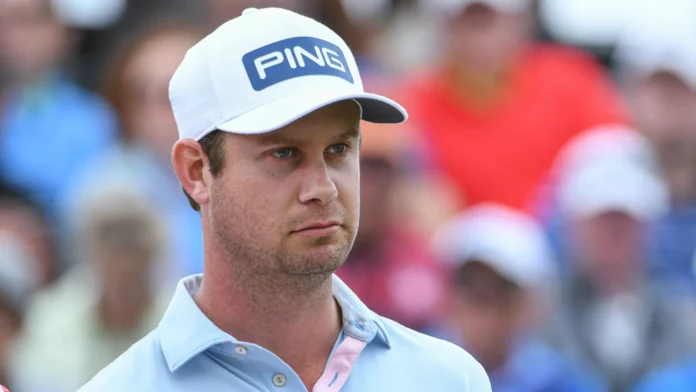
As LIV Golf loses its Saudi funding, its biggest stars face an uncomfortable truth. The PGA Tour holds all the cards now. Harris English says returning players should pay a steep price. The question is how steep is steep enough. Brooks Koepka set the benchmark when he came back earlier this year. He paid millions and gave up key privileges to rejoin.
Others passed on that same deal and now regret it. The rules have changed, and the Tour is not blinking. Find out what it will take to get back in.
The crisis that shook golf
Saudi Arabia’s Public Investment Fund (PIF) announced it would stop funding LIV Golf after the 2026 season. This created uncertainty across professional golf and left dozens of players facing an uncertain future. LIV Golf CEO Scott O’Neil vowed to continue the season but admitted the league would likely need to raise money going forward.
Reports from trusted outlets confirmed that PIF had reportedly spent over $5 billion operating the series since 2022. With that financial lifeline gone, LIV stars who once turned down PGA Tour money are now knocking on its door again. The power dynamic has shifted dramatically, and the PGA Tour knows it.
What Harris English actually said
PGA Tour veteran Harris English spoke out on Golf Channel with a firm stance on LIV players seeking a way back. He said the punishment for returning players should be at least as severe as what Brooks Koepka accepted, if not harsher. English pointed out that Koepka was the first to take the risk and therefore earned a better deal.
Harris English has publicly suggested LIV departures are part of a ‘dominoes’ effect and said some players may be realizing ‘the grass is not greener’ on LIV.
English made his reasoning plain. He said Koepka stuck his neck out when LIV was still operational and took on real consequences as a result. Those who waited and only chased a return because LIV collapsed, he argued, should not be rewarded with the same or lighter terms. The sentiment resonated with many players still on tour.
Brooks Koepka set the benchmark
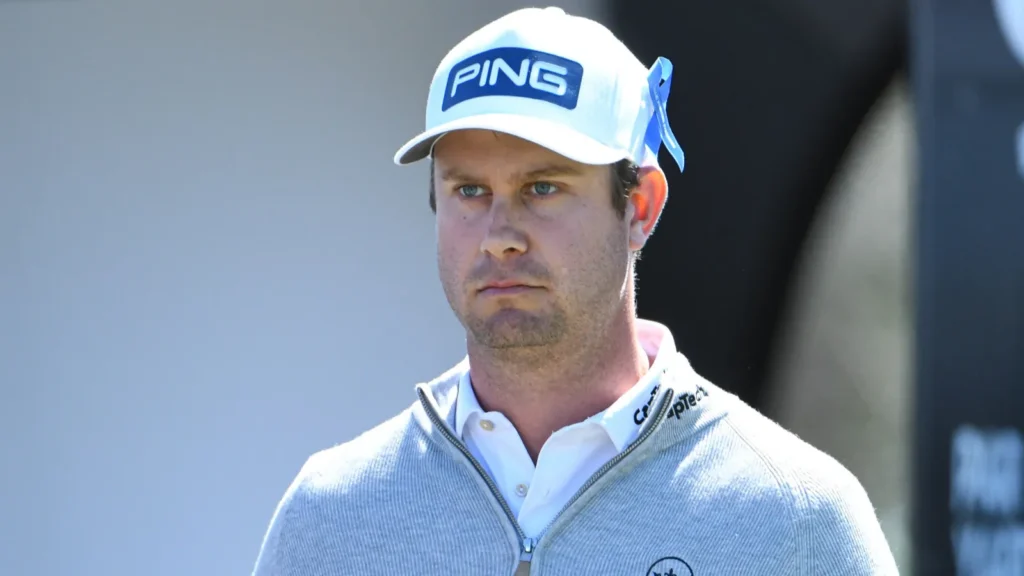
Brooks Koepka became the first LIV player to return to the PGA Tour when he rejoined in January via the Returning Member Program. The conditions were steep. He had to make a $5 million charitable donation and forfeited eligibility for the $100 million FedEx Cup bonus program for the season.
Koepka also gave up any player equity shares for five years and cannot accept sponsor invites to Signature Events. He must earn his way into those events through performance. As of today, he has not yet qualified for a single Signature Event since his return, spending time on the range as an alternate. His return was historic but came at a real cost.
The returning member program
The PGA Tour created its Returning Member Program as a one-time pathway for eligible LIV players. To qualify, a player had to stay away from the Tour for at least two years and win a major or the Players Championship between 2022 and 2025. Only four players met those criteria.
Those four were Brooks Koepka, Bryson DeChambeau, Jon Rahm, and Cameron Smith. Koepka was the only one to accept the offer before the February 2 deadline passed. PGA Tour CEO Brian Rolapp was explicit that the program was a one-time deal and has since stood firmly by that statement. The window closed and will not reopen under the same terms.
Fun Fact: LIV Golf switched to a 72-hole format in 2026 but kept its name, even though “LIV” no longer reflects the hole count.
Why some LIV players may have waited too long
DeChambeau, Rahm, and Smith each had a genuine opportunity to return under favorable terms and chose not to. At the time, LIV still had Saudi backing, and those players were under contract. DeChambeau’s management has since reached out to the PGA Tour to explore what a return pathway might look like.
The problem is that the context has changed completely. Returning now because their league is falling apart carries a very different meaning than returning by choice. The PGA Tour is aware of this distinction and has signaled that any new pathway will be considerably more restrictive. Players who passed on the earlier window will almost certainly face tougher terms.
Stuck without a way back
Not every LIV player will have a clear route back to the PGA Tour. Patrick Reed took a different path by not re-signing with LIV and instead spending the season on the DP World Tour. Patrick Reed did not renew with LIV and is eligible to return to the PGA Tour on Aug. 25 after a one-year ban. That approach works for some but requires patience and consistency.
Jon Rahm’s situation is particularly complicated. Jon Rahm has now reached a deal with the DP World Tour to retain membership and remain eligible for the 2027 Ryder Cup. The PGA Tour views Rahm’s move to LIV as one that prolonged the conflict at a critical moment. His path back, if it exists, may be the hardest of all.
Differing views on punishment
Not everyone agrees that punishment is fair or appropriate. ESPN commentator Stephen A. Smith argued loudly that the PGA Tour’s own negligence pushed players toward LIV in the first place. He said players were simply seeking better opportunities after being taken for granted by the Tour for years. His view represents a real segment of public opinion.
However, PGA Tour CEO Brian Rolapp has been firm on the other side. He told the Wall Street Journal that rules were broken and accountability must follow. Golf Digest reported that the Tour is concerned about setting a precedent that suggests its own framework can be revised under pressure. Rolapp’s credibility and authority depend on holding that line.
Little-known fact: Greg Norman attempted a PGA Tour rival as far back as 1994, partnering with Fox Sports on a proposed “World Golf Tour” before LIV ever existed.
The Tour plays it smart
The PGA Tour does not necessarily want every LIV player back. Commissioner Rolapp has said publicly that he only wants players who can help make the Tour better. Stars like DeChambeau and Rahm would be valuable additions, but they are not seen as game-changers. Lower-profile players may actually find more value in the Tour’s upcoming second-tier events.
One possible benefit for the Tour is placing returning LIV names in those second-tier events to boost their credibility. This keeps them out of marquee Signature Events initially while still using their name recognition strategically. The Tour has leverage it has never had before, and it appears intent on using every bit of it wisely.
TL;DR
- Harris English believes LIV players returning to the PGA Tour should face penalties equal to or tougher than what Brooks Koepka accepted.
- Saudi Arabia’s PIF confirmed it will stop funding LIV Golf after the 2026 season, putting the league’s future in serious doubt.
- Koepka paid a $5 million charitable donation, lost FedEx Cup bonus eligibility, and forfeited player equity to return to the Tour.
- The Returning Member Program was a one-time offer that only Koepka accepted. DeChambeau, Rahm, and Smith all passed.
- Any new return pathway is expected to be considerably more restrictive than what Koepka was offered.
If you liked this story, don’t forget to follow us for more exclusive content.
This article was made with AI assistance and human editing.
If you liked this, you might also like: