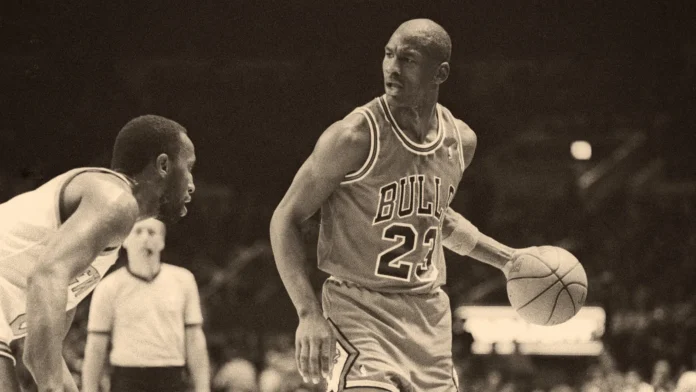
Michael Jordan is widely recognized as the ultimate competitor, but his financial legacy in the NBA is often defined by a surprising level of professional patience and contract loyalty.
While modern superstars frequently leverage their power to demand mid-contract renegotiations or trade requests, His Airness famously took a different path during his prime years with the Chicago Bulls. Despite being the clear engine behind the league’s global explosion in the late 1980s and early 1990s, Jordan spent much of that era playing on a long-term deal that eventually saw his salary fall well below his actual market value.
Instead of holding the franchise hostage for more money, Jordan chose to honor his signature, a move that remains a fascinating case study in sports business history.
Why did Jordan sign such a long contract?
The foundation of Michael Jordan’s early financial trajectory was an eight-year contract extension he signed in 1988 worth roughly $25 million.
At the time of the signing, this was considered a massive and secure commitment, but the NBA’s economic landscape shifted almost immediately afterward. As television deals grew and the salary cap rose, newer players and even bench contributors began signing deals that made Jordan’s annual salary look like a bargain.
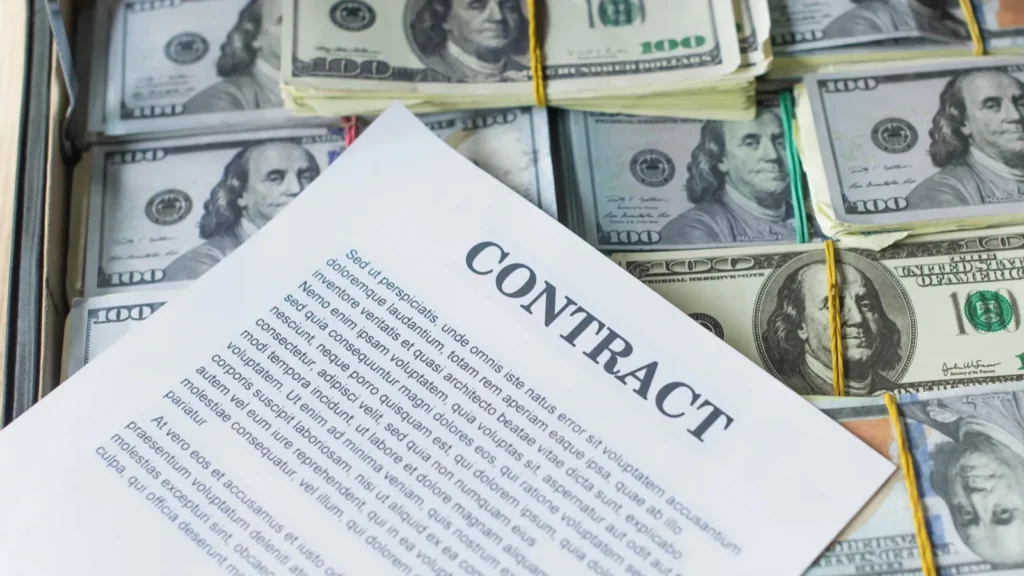
Jordan famously told Playboy in 1992 that while he knew he was underpaid compared to the new market, he didn’t feel it was fair to complain about a deal he had willingly signed. He noted that when he signed for three-and-a-quarter million, he was in the top three highest-paid players, but the market simply moved faster than his contract term.
Fun fact: Michael Jordan once turned down a $100 million offer for a single two-hour appearance because he felt the deal didn’t align with his personal interests.
Did Jordan ever pressure Jerry Reinsdorf for a raise?
While it is often reported that Jordan was unhappy with his pay, he remarkably refrained from using the press to attack Bulls owner Jerry Reinsdorf.
Jordan maintained a professional stance, stating that if his boss decided to give him a raise, he would accept it, but he wouldn’t start a public grievance campaign. This level of restraint is almost unheard of in today’s “player empowerment” era, where stars often sit out games to force a new deal.
Reinsdorf eventually acknowledged Jordan’s value by paying him massive one-year sums later on, but for the majority of the first “three-peat,” Jordan wasn’t even the highest-paid player on his own team at certain intervals. His focus remained strictly on the hardwood, trusting that the ultimate payday would come once the existing contract finally reached its expiration date.
How did the NBA market surpass Jordan’s deal?
The explosion of NBA salaries in the early 1990s was driven by a new wave of rookies and free agents who benefited from a rapidly growing league revenue pool.
By 1992, players like John Williams and Kevin McHale were earning more than Jordan, despite the Bulls guard being the reigning MVP and the most famous athlete on the planet. This disparity grew so large that it became a constant talking point for the media, even if Jordan himself stayed relatively quiet.
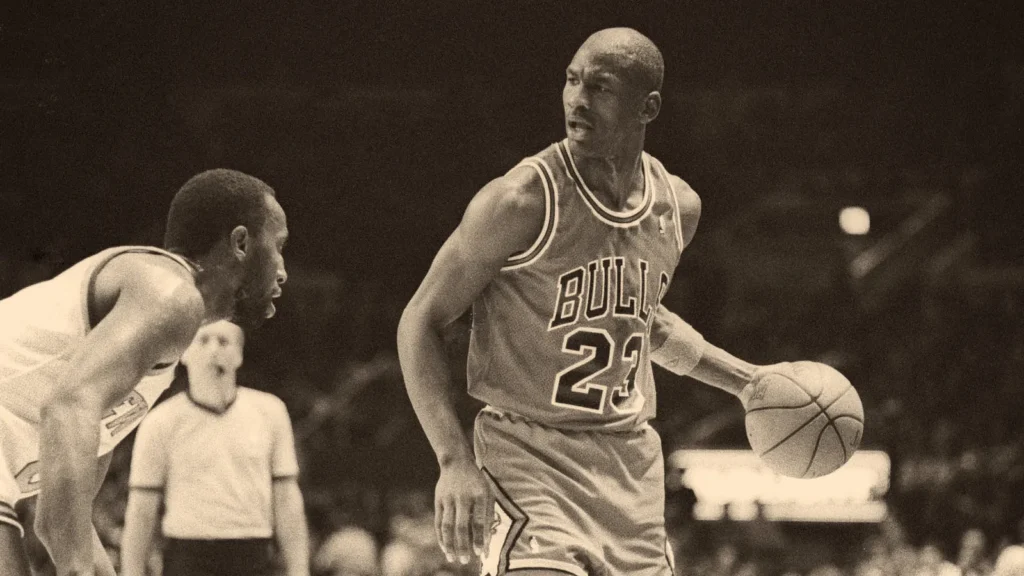
The lack of a “max salary” rule at the time meant that if Jordan had hit the open market, he could have commanded nearly any price. However, because he was locked into his 1988 extension, the Bulls were able to build a championship roster around him using the extra financial flexibility provided by his “discounted” salary.
What happened when Jordan’s contract finally expired?
When the eight-year deal finally concluded in 1996, the Bulls were forced to make up for years of underpayment with record-breaking numbers.
Jerry Reinsdorf signed Jordan to a one-year, $30 million deal for the 1996-97 season, followed by a $33.1 million deal for the 1997-98 campaign. These figures were astronomical at the time and served as a “thank you” for the years Jordan played while being significantly undervalued.
These two seasons alone accounted for a huge portion of Jordan’s career earnings from basketball. By waiting his turn and honoring his previous commitment, Jordan eventually became the highest-paid player in the history of the sport at that time, proving that his patience had a massive financial upside.
How does Jordan’s approach compare to modern stars?
Comparing Jordan’s contract philosophy to today’s NBA shows a massive shift in how athletes view their financial leverage.
Today, it is common for a player with three years left on a deal to request a trade or a restructuring if they feel their market value has increased. Jordan’s era was different, but even among his peers, his willingness to stay the course was considered an outlier.

Ultimately, Jordan’s “underpaid” years helped facilitate the most successful run in NBA history. By not demanding more when he had the leverage to do so, he ensured the Bulls had the resources to keep the championship window open as long as possible. His financial legacy is a mix of early-career loyalty and late-career dominance that paved the way for the massive contracts we see in the league today.
Fun fact: Michael Jordan is the first basketball player in history to reach billionaire status, largely due to his Nike partnership rather than his NBA salary.
TL;DR
- Michael Jordan played on an eight-year, $25 million contract for most of his prime, making him significantly underpaid.
- Despite knowing he deserved more, Jordan famously refused to gripe or demand a new deal until his contract expired.
- The Bulls benefited from Jordan’s loyalty, using the extra cap space to build a dynasty.
- Jordan was eventually rewarded with record-breaking $30 million-plus annual salaries in his final two Bulls seasons.
- His patience resulted in him becoming the highest-paid player in NBA history at the time of his second retirement.
If you liked this story, don’t forget to follow us for more exclusive content.
This article was made with AI assistance and human editing.
If you liked this, you might also like: