
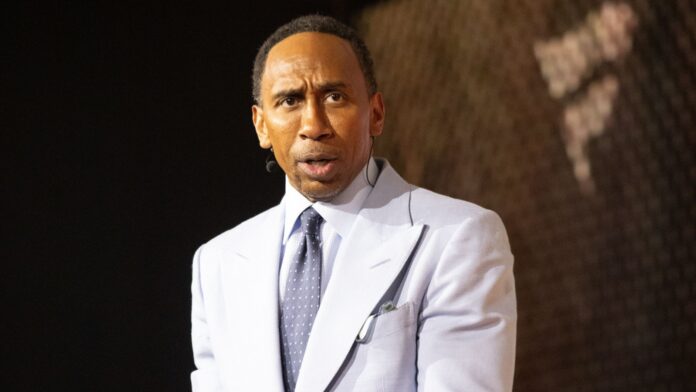
Stephen A. Smith has never been shy about telling viewers exactly what he thinks. Now the ESPN star is speaking just as bluntly about something much more personal: how much of a huge paycheck can disappear to taxes.
Smith recently discussed his frustration with high taxes during an appearance on The Culture Table, arguing that high earners in states such as California and New York can lose a substantial portion of their income. His comments have attracted attention because Smith is no longer simply a highly paid sports commentator. He is one of the biggest names in sports media, with an ESPN contract worth at least $100 million.
That kind of income makes taxes a much bigger issue than they are for the average worker. It also helps explain why Florida has become an increasingly attractive home for Smith.
Stephen A. Smith’s ESPN fortune changed the conversation
Smith’s rise at ESPN has turned him into one of the most recognizable personalities in sports television. He became a permanent part of First Take in 2012 and eventually developed into the show’s defining voice.
In March 2025, ESPN announced a five-year contract extension with Smith. The network did not disclose the financial terms, but a person familiar with the agreement told The Associated Press that the deal was worth at least $100 million. That made Smith ESPN’s highest-paid talent at the time.
The deal averages at least $20 million per year, although Smith has other sources of income beyond his ESPN salary.
His new agreement also expanded his role. He remained the featured personality and executive producer of First Take, while ESPN planned to give him a larger presence in NFL programming. The deal also allowed him to continue pursuing projects outside the network.
He has built a personal media operation, hosts his own shows, and has increasingly appeared outside traditional sports programming. In other words, the bigger his business becomes, the more important questions about where he lives and how his income is taxed become.
Why Smith is frustrated with California and New York
Smith recently explained his position in unusually direct terms. He said federal income taxes can approach 40% for people in his income range and pointed to California’s high state income-tax rate as another major burden. He argued that other taxes and payroll-related costs can push the overall burden even higher.
His comments should be understood as a discussion of marginal tax rates and his own perspective, rather than as a claim that exactly two-thirds of every dollar he earns disappears to taxes.
The top federal individual income-tax rate is 37%, while California’s highest individual income-tax rate is 13.3%. Those rates apply to the highest portions of taxable income rather than automatically applying to every dollar someone earns.
Still, the basic difference between California and Florida is significant for someone earning millions of dollars.
Florida does not impose an individual state income tax. For a high-income sports personality, that creates an obvious financial incentive to establish residency there.
Smith has previously complained about the tax burden associated with living in New York and Los Angeles. In 2024, he said he was looking for another home in Florida and specifically cited taxes as one reason.

Smith’s Florida move put the talk into action
Smith’s preference for Florida wasn’t merely something he discussed on television. Property reports have linked him to a $9.25 million estate in Pinecrest, a wealthy community in the Miami area. The property is reported to measure about 7,500 square feet and includes seven bedrooms and eight bathrooms.
The timing is particularly interesting when viewed alongside his growing sports-media fortune.
Smith already had plenty of reasons to spend time in Florida. The state offers warm weather, a major sports market, and a large population of professional athletes, entertainers, and wealthy business owners.
But the absence of a state individual income tax gives Florida another major advantage for someone in Smith’s financial position.
The contrast becomes even more noticeable when compared with California. California’s highest individual income tax rate is 13.3%, while Florida has no state income tax.
That doesn’t mean someone can simply buy a house in Florida and stop paying taxes elsewhere. Establishing genuine residency involves more than owning property. Where someone actually lives, works, and maintains their primary home can all matter.
For Smith, however, the move represents a clear shift from the high-tax states he has repeatedly criticized.
Smith is part of a bigger sports-money story
The most interesting part of Smith’s comments may be what they reveal about the business of sports media.
For decades, the biggest sports salaries were generally associated with athletes. A superstar NBA, NFL or MLB player could command tens of millions of dollars, while television personalities were usually paid considerably less.
That gap has narrowed for a handful of elite media personalities.
Smith’s ESPN agreement is a striking example. The Washington Post reported that his roughly $20 million annual ESPN salary put him in the neighborhood of the highest-paid athletes in professional sports.
Smith doesn’t have to score 30 points, throw a touchdown, or win a championship to generate enormous value for a sports network. His value comes from audience attention, personality, debate, and the ability to turn ordinary sports stories into national conversations.
Smith’s career shows how much money can now be attached to a powerful sports-media brand. His ESPN role, outside projects and growing public profile have made him a business in his own right.
And when income reaches that level, the business’s location can become a serious financial consideration.

Florida may be more than a tax decision
It would be too simple to say Smith moved to Florida only because of taxes.
People relocate for many reasons, including lifestyle, family, real estate, weather, and proximity to business opportunities. Smith has not suggested that taxes are the only factor in his decision.
But he has repeatedly identified taxes as an important consideration. His latest remarks simply bring that issue back into the spotlight at a time when his earning power is greater than ever. The ESPN deal is worth at least $100 million over five years, and Smith continues to build a career that extends beyond First Take.
For a typical worker, moving from one state to another to reduce a state income-tax bill might save some money. For someone earning millions of dollars annually, the potential difference can become much larger.
Smith’s argument is ultimately less about one television host and more about how America’s sports stars and media personalities think about their careers once their earnings reach extraordinary levels.
Florida gives Smith a combination of lifestyle and tax advantages that high earners have long found attractive.
Whether viewers agree with his politics or his complaints about taxes, one thing is difficult to miss: Stephen A. Smith has built a sports-media career large enough that where he lives can have a very real impact on his bottom line.
TL;DR
- Stephen A. Smith signed a five-year ESPN extension worth at least $100 million.
- His deal made him ESPN’s highest-paid talent, according to reporting at the time.
- Smith has criticized the tax burden facing high earners in California and New York.
- California’s top individual income tax rate is 13.3%, while Florida has no state income tax.
- Smith has purchased a reported $9.25 million home in Pinecrest, Florida.
- His move to Florida fits into a broader trend of wealthy sports figures considering taxes when choosing where to live.
- Smith’s growing income also shows how valuable top sports-media personalities have become.
If you liked this story, don’t forget to follow us for more exclusive content.
This article was made with AI assistance and human editing.
If you liked this, you might also like: