





Hockey is absolutely full of surprises, but nothing quite compares to watching a completely ordinary regular person step into an NHL game. The Emergency Backup Goalie rule makes that truly possible. It is one of the most unique rules in professional sports and has delivered unforgettable moments for fans everywhere.
These are not career athletes suiting up in the spotlight. They are accountants, Zamboni drivers, and weekend beer leaguers who keep their gear always ready just in case the call ever actually comes their way. Their stories remind us why hockey remains the most wonderfully unpredictable game on the planet.
Let’s take a closer look.
What exactly is an EBUG?
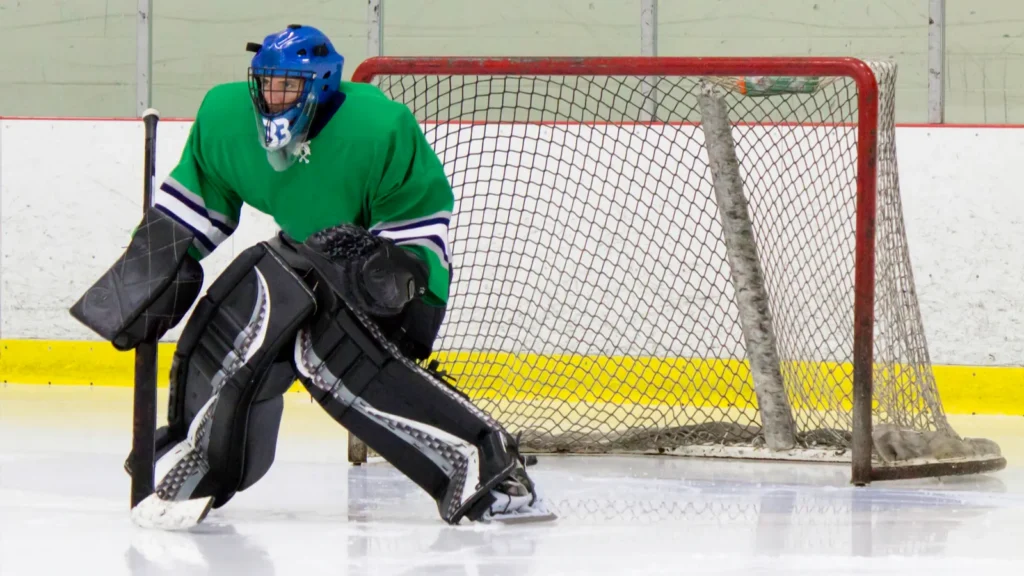
An Emergency Backup Goalie, known as an EBUG, is a non-roster goaltender who sits right in the stands at every single NHL home game. The rule ensures that games can continue safely if both of a team’s regular goaltenders are injured, ill, suspended, or otherwise unavailable during live play.
Rule 5.3 governs what happens if both listed goalies are incapacitated; league policy requires a home-arena EBUG to be available for either team. Current EBUGs cannot be under a professional goalie services contract and cannot be paid team employees; teams typically prefer goalies with at least college, junior, high-school, or other serious playing experience.

How the rule came to be
The current arena-based EBUG procedure was developed after the Panthers’ 2015 emergency-goalie scare and was in place by 2016-17. Before the current system, teams could end up relying on coaches or other team personnel in emergency situations.
The need for a proper system became clear as the game grew faster and the physical demands on goaltenders increased significantly over the years. Hockey had no reliable safety net in the modern era. The NHL stepped in to formalize what had been an informal arrangement with clear eligibility standards.
Life as the backup who rarely plays
For most EBUGs, the job is wonderfully uneventful. Most EBUGs wait in the stands and are paid an hourly minimum for being there; they sign an amateur or professional tryout contract only if activated. It is insurance that almost never gets used.
EBUGs receive very minimal pay just for being available and present at the arena. Those who sign a professional tryout agreement earn five hundred dollars per game. Those on amateur contracts receive nothing beyond their game-worn jersey. Most go their entire run as an EBUG without ever touching NHL ice.
The accountant who stunned the NHL
On March 29, 2018, Scott Foster was sitting at his desk in Chicago, working as an accountant. That same evening, he found himself in the net for the Chicago Blackhawks against the Winnipeg Jets. Three regular goaltenders had gone down to injury in succession, and Foster was the only option left.
Foster stopped all seven shots he faced in fourteen hard minutes of ice time and helped Chicago preserve a six-to-two victory. United Center fans chanted Foster’s name in the final minutes after he entered the game. He was named the first star and returned to his regular accounting job the very next morning.
Just how rare is an EBUG appearance?
The numbers tell the full story of just how rare an EBUG appearance truly is. Only six emergency backup goalies have logged actual ice time across more than thirteen thousand regular-season NHL games played over the past decade. That accounts for less than 0.0001% of all the goaltending time played.
The six EBUGs who have seen real game action are Jorge Alves, Scott Foster, Thomas Hodges, David Ayres, Matt Berlin, and Jett Alexander. Their combined total time on NHL ice during those six truly historic appearances added up to just over sixty-five minutes across the entire modern regular season era.
The Zamboni driver who made history
February 22, 2020, is a date forever carved deeply into NHL history. David Ayres was a 42-year-old Zamboni driver and building operations manager at Mattamy Athletic Centre who also worked as an extra/practice goalie around the Maple Leafs-Marlies setup. He was suddenly called into action for the Carolina Hurricanes after both their goaltenders were injured during a game against the Toronto Maple Leafs.
Ayres gave up two goals on his first two shots, but then stopped eight straight attempts to help Carolina win six to three. He became the first and only EBUG in NHL history credited with a win. His game-used goalie stick was later sent to the Hockey Hall of Fame.
Fun fact: David Ayres had a hockey career that was cut short by serious health issues. His record in the last competitive league he played before his NHL debut was zero wins and eight losses. He let in fifty-eight goals and had a .777 save percentage.
The conflict of interest nobody talks about
One of the strangest quirks of the EBUG rule is that an emergency goalie can actually be called on to play against the very team he regularly practices alongside. David Ayres practiced with the Toronto Maple Leafs organization, yet played against them the night he made NHL history in Toronto.
The NHL GMs held a meeting in Boca Raton in March 2020 specifically to address the situation. NHL deputy commissioner Bill Daly called it a complicated issue with no easy fixes. No formal rule change targeting the conflict was made at that time. The situation was simply absorbed as one of hockey’s most wonderfully strange and unresolved quirks.
Fun fact: When Ayres entered the game, he was still wearing a Toronto Maple Leafs T-shirt underneath his Carolina Hurricanes jersey. He did not take it off. He simply pulled the Hurricanes jersey right over the top of it before skating onto the ice.
The end of an era
The days of the Zamboni driver stepping into the NHL crease are officially numbered now. As part of a new collective bargaining agreement taking effect in the 2026 to 2027 NHL season, every team must employ a full-time traveling EBUG who practices regularly with the club throughout the entire year.
The new EBUG must not have played professional hockey in the past three years and cannot have more than eighty career professional games to their name. It is a smarter approach for competing teams. But for fans who loved the magic of an ordinary hero, something truly special ends here.

TL;DR
- An EBUG is a non-roster goaltender required to be present at every NHL home game in case both team goalies go down.
- The official EBUG rule only became formal in the 2016-2017 NHL season.
- Scott Foster, a Chicago accountant, stopped all seven shots he faced in 14 minutes for the Blackhawks in 2018.
- David Ayres, a Zamboni driver, became the first EBUG ever credited with an NHL win on February 22, 2020.
- Only six EBUGs have ever seen real ice time across more than thirteen thousand modern regular-season NHL games.
This article was made with AI assistance and human editing.
If you liked this, you might also like:


