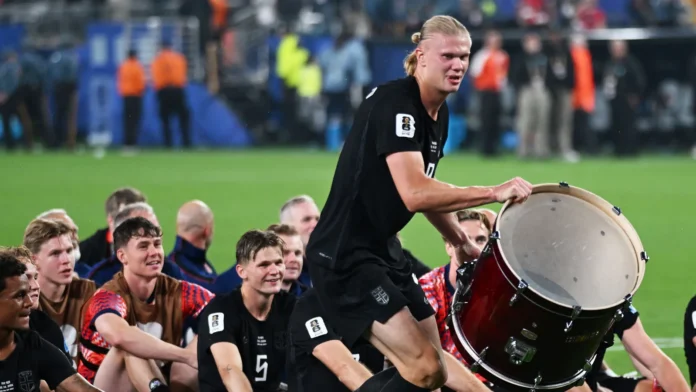
Norway has a population of approximately 5.6 million yet regularly produces elite athletes across soccer, winter sports, track and field, tennis, and golf. Erling Haaland is one of the most prominent examples, having developed through Bryne’s youth system before becoming an international star.
Norway’s organized sports model differs from many highly commercialized U.S. programs. Its national framework emphasizes enjoyment, broad participation, age-appropriate competition, and children’s influence over how much and which sports they play.
Norway’s 2026 World Cup quarterfinal run renewed interest in whether keeping more children active for longer can strengthen both public participation and elite development.
Haaland’s sporting childhood in Bryne
Haaland was born in Leeds, England, while his father, Alfie Haaland, was playing professional soccer there. He was raised in Bryne, a town in southwestern Norway with a population of roughly 13,000-14,000. His mother, Gry Marita Braut, competed in the heptathlon.
Haaland joined Bryne’s youth system as a child and played with a group that emphasized participation, varied activities, and long-term development. He also tried sports, including handball, skiing, and athletics, before concentrating more fully on soccer.
Research on his Byrne age group found that the club retained an unusually large proportion of players and produced several regional, youth-national, and professional players. The environment emphasized belonging and development rather than treating childhood results as reliable predictions of adult potential.
Norway prioritizes enjoyment and long-term participation
A central principle of Norwegian children’s sport is to help as many children as possible remain active for as long as possible. The national framework says children should feel safe, experience achievement, try new activities, and avoid being afraid of mistakes.
Norway still permits age-appropriate competition, but it restricts early rankings, long-distance travel, and national championships. The aim is not to eliminate winning but to prevent adult-style results from dominating children’s development.
A published case study of Bryne’s 1999 boys’ team found that its supportive environment helped retain most of the group into adolescence and adulthood. Several players reached high levels of competition, though the study does not prove that struggling at age 9 predicts later elite success.
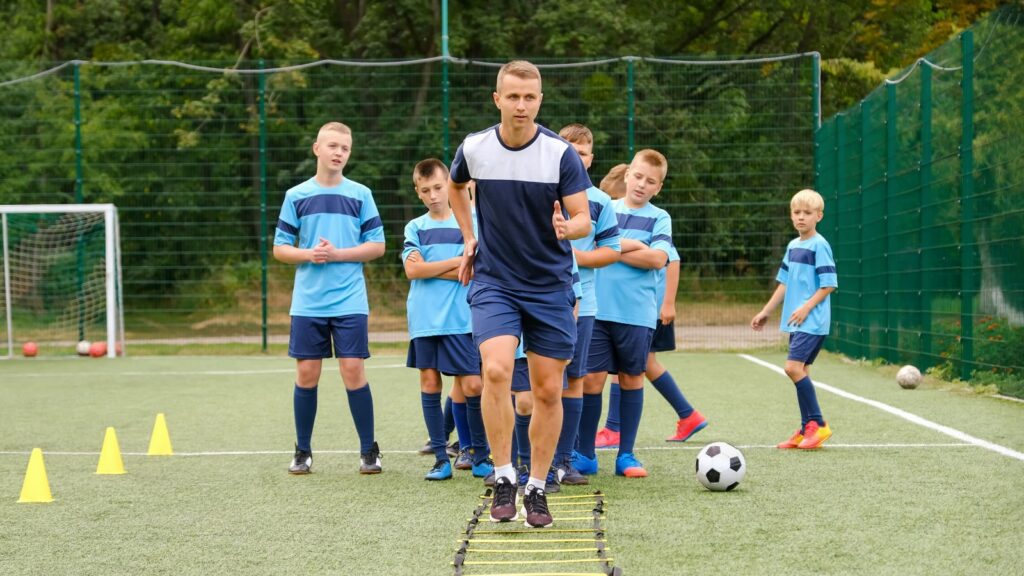
Norway has national rules protecting children in sport
Norway’s first guidelines for children’s sport were adopted in 1976. Its competition provisions were adopted in 1987, while the formal Children’s Rights in Sports framework was adopted in 2007 and revised in 2015 and 2019.
Under the current provisions, results lists, tables, and rankings may be used beginning in the year children turn 11 when appropriate. Children cannot participate in national, European, world, or equivalent championships until they turn 12.
The rights also allow children to choose which sports and how many sports they want to play, decide how much they want to practice, and compete for a new club once a transfer is completed. Sports federations must maintain sanctions for violations of the competition provisions.
Early results do not reliably identify every future star
Norway’s model is built partly on the view that childhood performance does not perfectly predict adult success. The system therefore emphasizes broad participation, varied movement skills, and age-appropriate development before intensive specialization.
Sports-medicine research warns that high training loads, frequent competition, and early single-sport specialization can contribute to overuse injury and burnout in young athletes. Multisport participation can offer broader physical and social experiences, though developmental paths differ by athlete and sport.
Haaland himself played several sports as a child before specializing more heavily in soccer. At the 2026 World Cup, he scored both goals as Norway defeated Brazil 2-1 in the round of 16 and advanced to its first quarterfinal.
Fun fact: Haaland scored twice as Norway beat Brazil 2-1, handing Brazil their earliest World Cup exit since 1990.
Broad participation accompanies elite success
Norway has produced internationally successful athletes across numerous sports, including Haaland in soccer, Casper Ruud in tennis, Viktor Hovland in golf, Jakob Ingebrigtsen in athletics, and Magnus Carlsen in chess.
The country has also achieved exceptional Winter Olympic results relative to its population. Norwegian sports officials credit a combination of broad childhood participation, access, collaboration among federations, and an emphasis on enjoyment before early performance pressure.
Norway’s sports federation says 93% of children and young people participate in organized sport at some point during childhood. It’s more current public summary says 9 out of 10 children ages 6-12 participate in 1 or more sports activities.
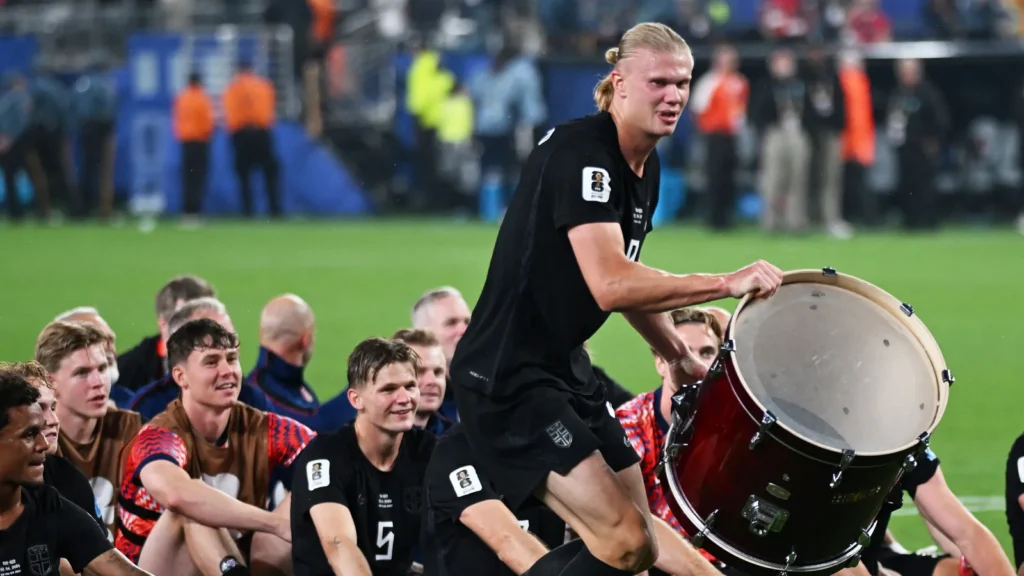
U.S. youth sports are often more commercialized
The United States does not have a single national youth-sports system. Experiences differ across school teams, community leagues, private clubs, and travel programs. However, many families encounter early competition, travel, rankings, private coaching, and substantial costs.
The Aspen Institute reported that the average U.S. sports family spent $1,016 on a child’s primary sport in 2024. Average annual spending exceeded $1,000 in sports such as soccer and basketball, while travel represented the largest average expense category.
The American Academy of Pediatrics cites a widely reported estimate that approximately 70% of youth athletes leave organized sports by age 13. Burnout, overtraining, injury, reduced enjoyment, and competing interests may contribute, although the figure should not be interpreted as showing that all children quit because of pressure.
Norway’s framework seeks to limit financial barriers
Norway’s children’s sports rules state that all children should be able to participate regardless of their families’ finances. Clubs are directed to keep costs reasonable, limit travel demands, and avoid pressure tied to expensive equipment.
Norwegian officials also point to an extensive secondhand-equipment market that helps families participate in costly sports. However, no verified official nationwide figure establishes that every Norwegian family spends less than $1,000 per child annually.
In the United States, youth sports increasingly include private clubs, travel teams, camps, and individual coaching. The Aspen Institute found that families spent an average of $1,016 on a child’s primary sport in 2024 and that wealthier households spent substantially more than lower-income families.
Lessons other nations could borrow
Norway does not claim its youth sports model works perfectly for every country. Its small population and cultural values help shape how the system operates. Even so, many of its ideas can be adapted elsewhere.
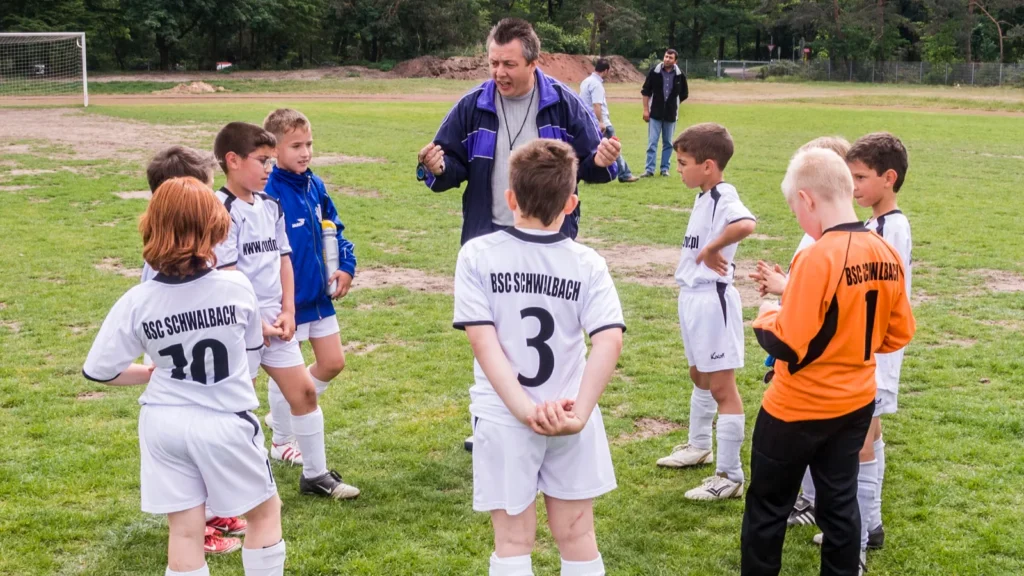
Delaying competition, lowering costs, and protecting playing time are approaches that could benefit young athletes in many countries. Coaches and sports organizations can adopt these changes without completely rebuilding their systems. The focus remains on long-term development instead of early results.
The biggest lesson may simply be patience. Talent often takes years to fully emerge, and systems built around trophies and rankings can lose children too soon. Norway kept more kids playing, and many eventually developed into world-class athletes.
Little-known fact: Norway’s child sports guidelines date back to 1976, years before the famous 1987 charter.
TL;DR
- Norway delays scorekeeping until kids turn 13 years old.
- A 1987 charter, Children’s Rights in Sport, guides youth clubs.
- Early specialization is discouraged, and multiple sports are encouraged.
- Low costs and equal playing time keep participation remarkably high.
- The system produced Haaland, Ruud, Hovland, Ingebrigtsen, and Carlsen.
If you liked this story, don’t forget to follow us for more exclusive content.
This article was made with AI assistance and human editing.
If you liked this, you might also like: