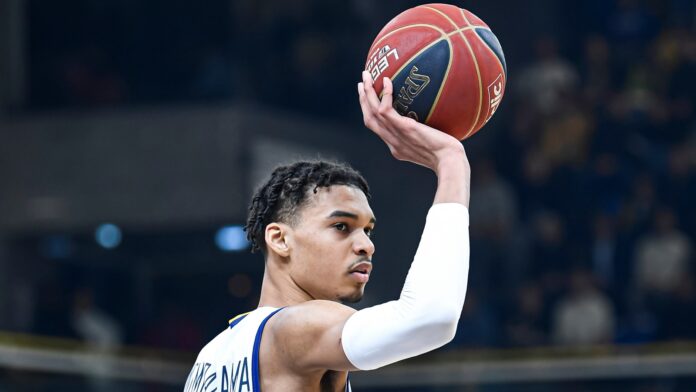
The Knicks are NBA champions, but the Victor Wembanyama controversy is still part of the Finals story. New York closed the series with a 94–90 Game 5 win over San Antonio, yet the earlier no-call on Wembanyama’s shove against Jalen Brunson continues to fuel debate.
The NBA admitted officials missed a foul in Game 3, but the league did not upgrade the play to a Flagrant 1. That decision kept Wembanyama available and reopened a bigger question around playoff physicality, star treatment, and how consistently the NBA handles contact when the stakes are highest.
What Wembanyama did in Game 3
Victor Wembanyama shoved Jalen Brunson to the floor with his hand near the back of Brunson’s head and neck. The play happened with about five minutes left in the first quarter. There was no foul call made on the court. The San Antonio Spurs went on to win Game 3 by a score of 115 to 111.
Brunson immediately got up and walked directly toward Wembanyama to confront him. Wembanyama reportedly smiled and turned back to the game. The MSG crowd erupted. Replays showed the contact was clear, and the clip went viral within minutes of it happening on national television.
The NBA admitted the miss
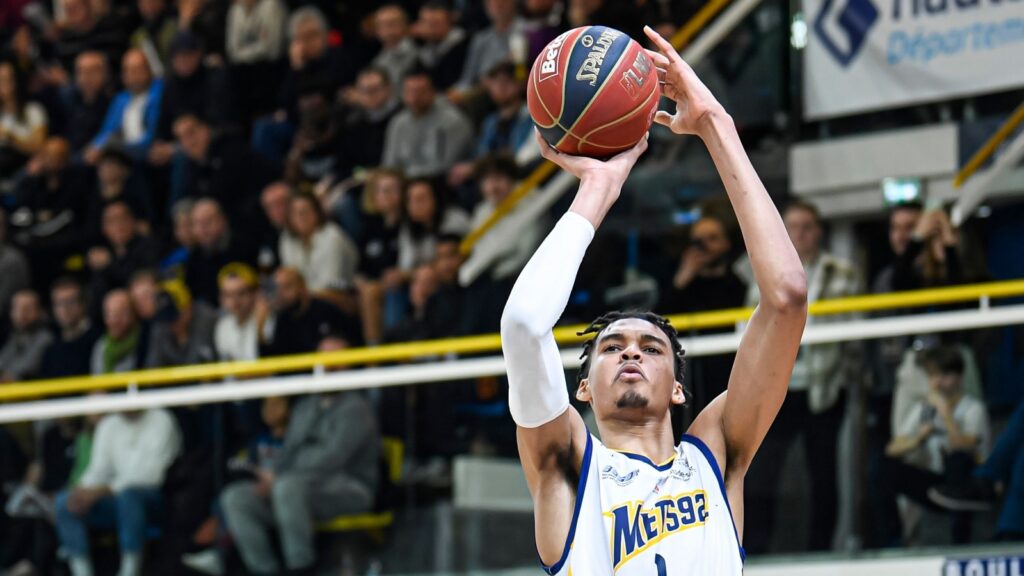
The league did not stay quiet. Monty McCutchen, the NBA’s Senior Vice President of Referee Development and Training, appeared on ESPN’s NBA Today. He acknowledged the error openly and directly. “I think we can all agree that a foul was missed on that play,” McCutchen told ESPN.
McCutchen explained the breakdown in referee positioning. Two officials were focused on the ball. Nobody was watching the off-ball action between Wembanyama and Brunson. He called it a fundamental breakdown and said the league takes that seriously. Still, admitting the mistake did not mean punishment was coming.
The final decision and what it means
By Tuesday night, the NBA confirmed it would not upgrade the play to a flagrant foul. ESPN’s Shams Charania reported that Wembanyama would stay at two flagrant foul points for the postseason. The league determined the shove was a missed foul. It was not a missed flagrant.
That distinction mattered enormously. A flagrant 1 upgrade would have pushed Wembanyama to three postseason flagrant points. Under NBA rules, four flagrant points in a single postseason trigger an automatic one-game suspension. The Spurs avoided losing Wembanyama for Game 4, but the controversy followed him through the rest of the series, especially after he picked up another Flagrant 1 against Karl-Anthony Towns.
Interesting fact: In the NBA’s postseason discipline system, a Flagrant 1 foul earns one penalty point. A Flagrant 2 earns two. Any player who reaches four points during a single postseason is automatically suspended for one game.
Wembanyama’s postseason flagrant history
This was not the first time Wembanyama’s physicality made headlines in the 2026 playoffs. Earlier in the second round against the Minnesota Timberwolves, he elbowed Naz Reid in the jaw. He was assessed a Flagrant 2 foul and ejected from that game. That incident put him at two flagrant points entering the Finals.
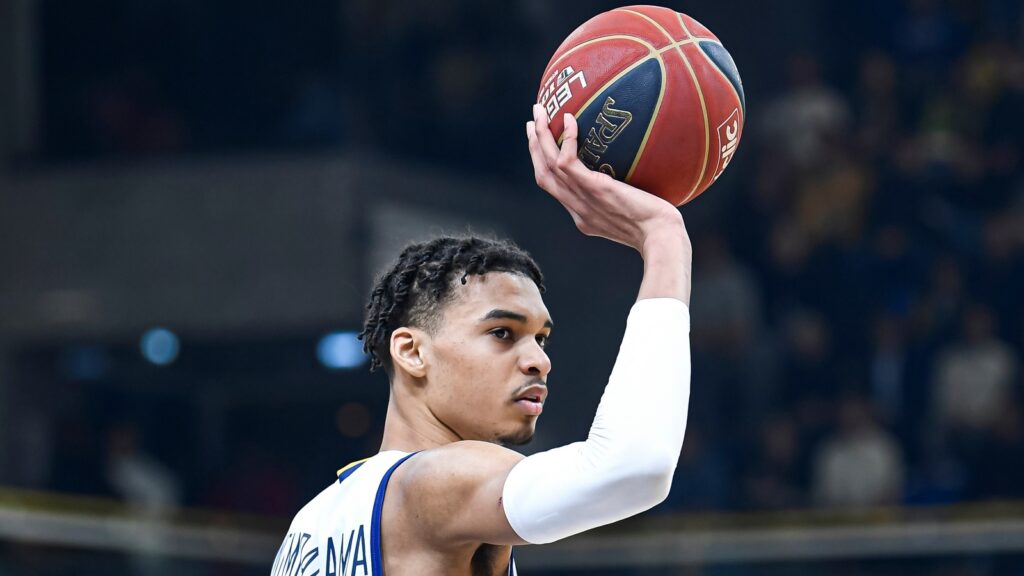
Spurs coach Mitch Johnson addressed the ongoing scrutiny of his star player. He said Wembanyama deals with physical contact on every single possession. “At some level, you have to protect yourself,” Johnson said. That argument resonated with some fans and analysts. Others pointed to the Brunson shove as something different entirely.
Interesting fact: Wembanyama became the first unanimous Defensive Player of the Year in NBA history at just 22 years old, making him the youngest player ever to win the award.
Officiating was already under the microscope in 2026
The Wembanyama ruling did not happen in a vacuum. Foul calls were already a hot-button issue throughout the 2026 playoffs. According to ABC News reporting on NBA referee data, referees called approximately 11% more personal fouls per game in the 2026 playoffs compared to the regular season. That number is on pace to be one of the largest differentials in modern NBA history.
McCutchen addressed that spike directly. He called it an expected product of postseason intensity. Critics were not satisfied with that answer. Players around the league voiced frustration throughout the postseason. The foul rate data gave those complaints a statistical backbone that was hard to dismiss.
Brunson’s side of the story and the series imbalance
Brunson kept his postgame answer short. “Whatever you saw is what you saw,” he told reporters when asked about the shove. He pointed to turnovers as the bigger problem for the Knicks. Teammate Jose Alvarado was less restrained. He told the New York Post, “I think that’s not basketball. He got away with one. That’ll be the last one.”
Brunson also ended up in foul trouble in Game 3. In the third quarter, he stepped into Julian Champagnie’s landing space on a three-point attempt and was assessed a Flagrant 1 upon review.
He finished with 32 points on 11-of-25 shooting as the Knicks shot only 22 free throws to the Spurs’ 32. Coach Mike Brown was furious about the second-half gap where San Antonio outshot New York 24 to eight from the line.
The bigger question about playoff physicality
The Wembanyama ruling sparked a conversation that goes well beyond one shove in one game. The NBA has long allowed more physical play in the postseason. Stars have historically navigated that line differently depending on their size and reputation. Steve Nash recently argued that the league needs to commit to a consistent standard.
LeBron James also weighed in during the postseason. He said if the NBA is going to let the game get physical in the playoffs, it should apply the same standard in the regular season.
That argument is not new. But the Wembanyama situation gave it renewed urgency. A 7-foot-4 star using his size in ways smaller players simply cannot creates a structural officiating challenge the league has not fully addressed.
TL;DR
- Victor Wembanyama shoved Jalen Brunson to the floor in Game 3 of the 2026 NBA Finals, and no foul was called during live play.
- The NBA later acknowledged that officials missed a foul, but the league did not upgrade the play to a Flagrant 1.
- Wembanyama later reached three postseason flagrant points after a Game 4 Flagrant 1 against Karl-Anthony Towns, leaving him one point from an automatic one-game suspension.
- The Knicks ultimately won the championship, beating the Spurs 94–90 in Game 5 and taking the series 4–1.
If you liked this story, don’t forget to follow us for more exclusive content.
This article was made with AI assistance and human editing.
If you liked this, you might also like: