U.S. host cities are pressing FIFA for payments they say were promised after they helped stage the 2026 World Cup, adding fresh scrutiny around soccer’s governing body. The dispute centers on $1 million legacy contributions that several city committees say FIFA management repeatedly assured them they would receive.
Those payments have not been made, and some host committees are already winding down. FIFA has not publicly confirmed that the World Cup cities were entitled to the money.
The dispute centers on a $1 million promise
The issue involves the 11 U.S. cities that hosted 2026 World Cup matches: Atlanta, Boston, Dallas, Houston, Kansas City, Los Angeles, Miami, New York/New Jersey, Philadelphia, San Francisco Bay Area, and Seattle.
According to The Athletic, four executives from U.S. host city committees said FIFA senior management verbally assured them that each city would receive a $1 million legacy contribution. The executives said the commitment was discussed repeatedly, but no payments have arrived.
That distinction matters. FIFA formally announced $1 million in contributions for each of the 11 U.S. cities that hosted the 2025 Club World Cup, but did not make a similar public announcement for the 2026 World Cup host cities.
FIFA has already used the same model
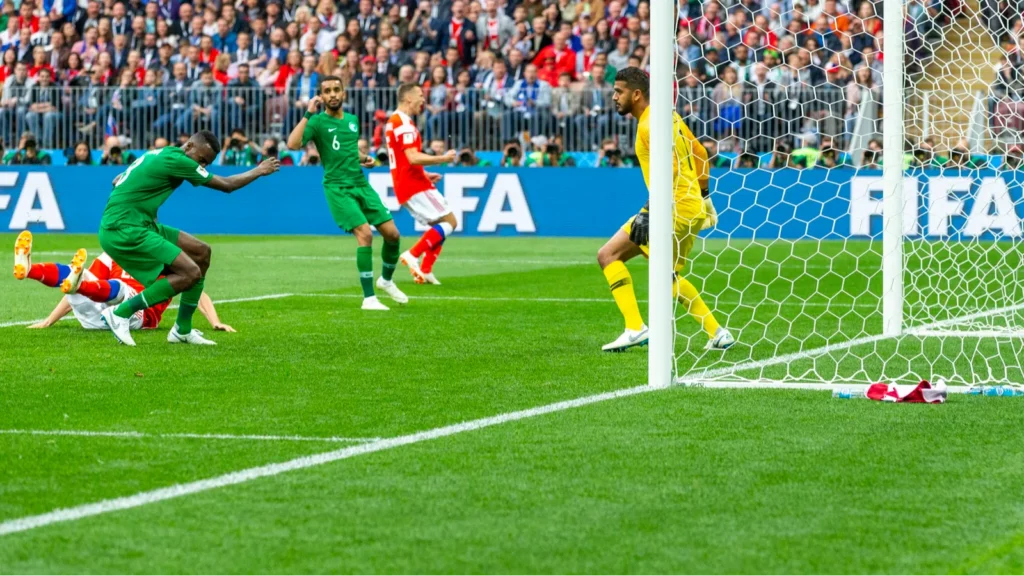
FIFA’s 2025 Club World Cup commitment provides the clearest comparison. In April 2025, FIFA announced that Atlanta, Charlotte, Cincinnati, Los Angeles, Miami, Nashville, New York/New Jersey, Orlando, Philadelphia, Seattle and Washington, D.C., would each receive $1 million in legacy funding.
FIFA said the money would be used to build mini-pitches and support social projects, including soccer activities for children in communities where additional facilities are most needed. The organization presented the funding as a way to extend the tournament’s local impact beyond the competition itself.
Why is the timing becoming a problem?
The World Cup ended July 19, but the payment question has not disappeared. Instead, it has become more complicated because some host committees are now winding down, leaving uncertainty over which organizations would receive or administer any future funds.
Some cities also need to finalize financial reports for local authorities. Without clarity from FIFA, executives told The Athletic that they don’t know whether the expected payments should be included in those reports.
The sums are small compared with the tournament’s scale. FIFA said its 2023-26 revenue cycle was expected to top $15 billion, while the disputed payments across 11 cities would total $11 million if honored.
Host cities carried major responsibilities
The 2026 World Cup was played across 16 host cities in the United States, Canada, and Mexico, with 48 teams competing in 104 matches. For the U.S. cities, hosting required coordination around transportation, security, public services, and fan activity.
The cities also faced high public costs while FIFA controlled major tournament revenue streams. Local officials aren’t simply asking about a donation; they’re seeking clarity on a contribution they say was presented as part of the tournament’s local legacy.
Fun fact: Kansas City’s World Cup hosting involved nearly $200 million in state and local government spending, while federal security and transportation grants added nearly $80 million more. That provides useful context for why even a disputed $1 million FIFA contribution matters to host cities after the tournament.
FIFA has not confirmed the 2026 commitment
The key caveat is that FIFA did not publicly announce the reported $1 million World Cup payments as it did for the 2025 Club World Cup.
The Athletic reported that FIFA declined to comment on the 2026 host-city payments. That leaves a gap between what several city executives say they were told privately and what FIFA has formally documented publicly.
Until FIFA clarifies the matter, the reported commitments should be described as verbal assurances from senior management rather than confirmed contractual payments.
The controversy lands during a wider FIFA debate
The host city dispute arrives at a sensitive moment for FIFA President Gianni Infantino. FIFA recently abandoned a proposed commercial venture that would have raised billions from private investors to manage World Cup-related commercial assets after strong opposition from UEFA and other soccer stakeholders.
The proposal was separate from the host city payments, but it has added to questions about FIFA’s transparency and governance. UEFA has threatened legal action, while several football leaders have questioned Infantino’s leadership.
That broader context doesn’t establish any connection between the two issues. It does, however, explain why even a relatively modest financial dispute is receiving heightened attention.
Fun fact: The 2026 World Cup final was played at MetLife Stadium in the New York/New Jersey host market on July 19, closing a tournament that began June 11 in Mexico City.
Pressure on FIFA grows as confederations demand an independent review
Pressure on FIFA has intensified since the host-city payment dispute surfaced. On August 10, UEFA, the Asian Football Confederation, and CONCACAF jointly criticized FIFA President Gianni Infantino over the abandoned plan to sell a stake in World Cup commercial rights. The confederations accused FIFA leadership of damaging trust and called for a fully independent review of how the proposal was developed and handled.
The development is separate from the reported $1 million in host-city promises, but it places the payment dispute in an increasingly contentious governance environment. U.S. Soccer and Canada Soccer have also backed calls for governance reforms, adding North American pressure at a time when U.S. host committees are still seeking clarity over their reported legacy funding.
What happens next for the cities
For now, the next step is straightforward: FIFA needs to clarify whether the reported legacy contributions exist and, if so, when they will be paid.
The host cities also need to determine how any money would be handled as local committees close or transition their responsibilities. A clear response from FIFA would settle the immediate financial question and remove uncertainty for municipalities preparing their final tournament accounting.
The dispute may ultimately prove to be an administrative delay rather than a deeper conflict. But until FIFA addresses the reported commitments directly, the questions from the cities are unlikely to fade.
TL;DR
- U.S. host-city executives say FIFA management verbally promised $1 million in legacy contributions after the 2026 World Cup.
- The reported payments have not been made, and some host committees are winding down.
- FIFA announced the same $1 million-per-city model for the 2025 Club World Cup, but not for the 2026 World Cup.
- FIFA declined to comment to The Athletic about the reported 2026 payments.
- The dispute adds to broader questions about FIFA governance and transparency surrounding Infantino’s leadership.
If you liked this story, don’t forget to follow us for more exclusive content.
This article was made with AI assistance and human editing.
If you liked this, you might also like: