


The Michael Jordan versus LeBron James debate has followed the NBA for more than a decade. Fans argue about championships, scoring records, and longevity. Yet some of the most interesting opinions come from players who shared a locker room with James. Former Miami Heat guard Mario Chalmers recently reopened the conversation with a blunt answer.
He named Jordan the greatest of all time for one specific reason. His explanation focuses on mindset rather than statistics, and it echoes what other James teammates have said before him.
Why the GOAT debate refuses to fade away
The Michael Jordan-LeBron James GOAT debate remains one of basketball’s most persistent discussions because their careers offer very different cases for greatness. Every new generation compares its brightest stars to the legends who played long before them. Jordan and James remain the 2 names that dominate this discussion more than any other pair of athletes.
Jordan won 6 NBA championships with the Chicago Bulls and went 6-0 in the NBA Finals series. He also earned 6 Finals MVP awards and 5 regular-season MVP awards. Both careers offer more than enough evidence to support strong arguments on either side.
James has completed a record 23 NBA seasons, won 4 championships and 4 regular-season MVP awards, and became the league’s all-time leading scorer. He is now set to begin a record-extending 24th season with the Philadelphia 76ers. This is exactly why opinions from former teammates carry extra weight in the ongoing conversation.
Mario Chalmers explains his simple criterion for greatness
Mario Chalmers played alongside LeBron James in Miami from 2010 to 2014 and won NBA championships with him in 2012 and 2013. Despite that experience, Chalmers still chooses Michael Jordan as his GOAT.
During a conversation with BBALLBREAKDOWN co-host Andrew Salop, Chalmers said he wants his GOAT to take the last-second shot regardless of the situation. He acknowledged that there is nothing wrong with making the correct basketball play but said his personal GOAT criterion favors the player willing to take that shot.
The explanation reflects Chalmers’ personal definition of greatness rather than an objective statistical measure separating Jordan from James. He simply values a different quality above efficiency. For him, greatness means wanting the pressure of the final possession every time.
Chalmers has also emphasized Jordan’s fear factor
Chalmers has previously explained his preference for Jordan in different terms. In 2023, he argued that opponents did not approach James with the same fear that he believed surrounded Jordan.
Shaquille O’Neal later said he understood Chalmers’ point, recalling that he had heard players describe themselves as fearing Jordan and Kobe Bryant but rarely heard opponents speak that way about James.
Brendan Haywood, one of only 4 NBA players who were teammates with both Jordan and James, has drawn a related distinction. Haywood described Jordan as more ruthless and ferocious on the court, while portraying James as a different, more diplomatic type of leader.

The final-shot argument is more complicated than it sounds
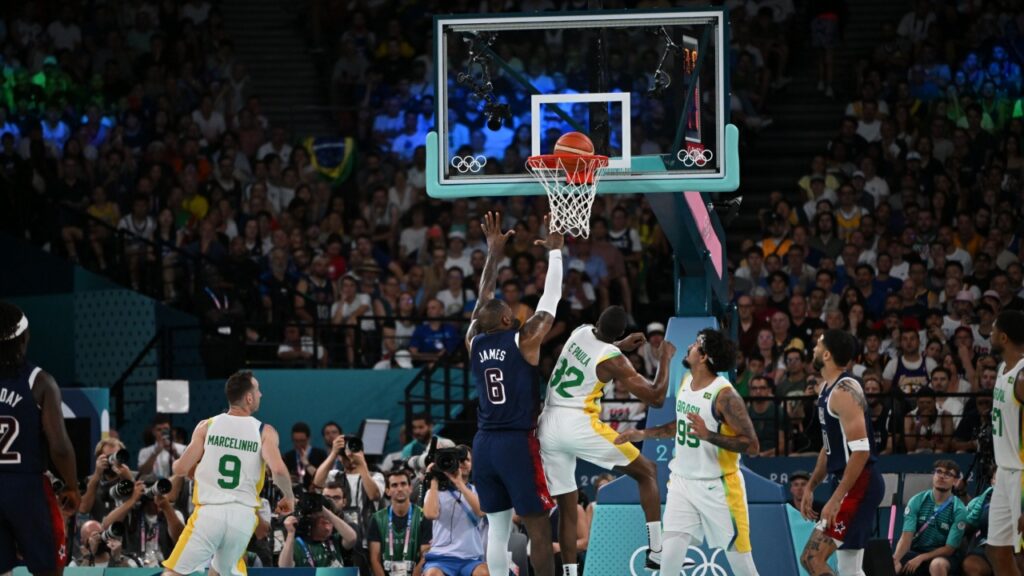
James has repeatedly taken important late-game shots and passed when he believes a teammate has a better opportunity. NBA.com credits him with 70 career field goals that put his team ahead in the final minute of the 4th quarter or overtime across the regular season, Play-In Tournament, and playoffs combined. That is the most in 30 seasons of available play-by-play data.
Jordan built his own extraordinary reputation for late-game shot-making, including his championship-clinching jumper against Utah in the 1998 NBA Finals. However, he did not always insist on taking the final shot himself.
In Game 6 of the 1997 NBA Finals, Jordan found Steve Kerr for the championship-winning jumper. Four years earlier, John Paxson hit Chicago’s title-clinching 3-pointer in Game 6 of the 1993 Finals. Chalmers’ argument, therefore, reflects his view of Jordan’s mentality rather than a rule that Jordan always took the last shot.
Iman Shumpert praises LeBron but still picks Jordan
Iman Shumpert, who won the 2016 championship while playing alongside James in Cleveland, has also chosen Jordan as his personal GOAT. During a 2026 discussion, Shumpert praised James’ extraordinary basketball knowledge and called him the “ChatGPT of the NBA.”
Shumpert nevertheless said he prefers Jordan because that was the style of basketball he grew up admiring. He also cited Jordan’s 6-0 NBA Finals record and said he preferred Jordan’s tendency to defer less often.
Shumpert framed much of his preference in terms of childhood experience and personal taste, arguing that Jordan’s achievements shaped how he came to view greatness in basketball. Both viewpoints remain valid according to Shumpert.
Fun fact: Jordan was left off his high school varsity roster as a sophomore, fueling his later drive.
What the career numbers reveal about their legacies
Jordan finished his NBA career with 6 championships, 6 Finals MVP awards, and 5 regular-season MVP awards across 15 seasons. His career scoring average of 30.1 points per game remains the highest in NBA history. James has appeared in 10 NBA Finals, winning 4 championships and 4 Finals MVP awards.
He has also won 4 regular-season MVP awards and is the NBA’s all-time leading scorer. James has now completed a record 23 seasons and owns the NBA record for regular-season games played. He is set to begin a record-extending 24th season with the Philadelphia 76ers in 2026-27.
The statistics show different advantages rather than an objective GOAT verdict. Jordan has more championships and a 6-0 Finals series record, while James holds major longevity and cumulative-production records.

Why do former teammates offer a unique lens
Former teammates can compare aspects of basketball that do not appear directly in box scores, including communication and leadership styles. This gives them insight that statistics alone cannot capture. Brendan Haywood is one of the handful of NBA players who were teammates with both Jordan and James.
Haywood played with Jordan in Washington and later with James in Cleveland. He has described Jordan as more confrontational with teammates who were not meeting expectations and James as more diplomatic in trying to bring teammates along.
Haywood personally ranks Jordan ahead of James, but players who were teammates with both stars have not reached a unanimous verdict. Scott Williams has also favored Jordan, while Larry Hughes and Jerry Stackhouse have been more reluctant to make a direct choice.
What this debate says about different definitions of greatness
The Jordan-James comparison often reflects different definitions of greatness. Jordan supporters frequently emphasize his concentrated championship success and 6-0 Finals record, while James’ case includes unprecedented longevity and cumulative production.
Chalmers and Shumpert have both selected Jordan despite praising James. Chalmers’ latest explanation centers on his desire for his GOAT to take the final shot, while Shumpert has cited Jordan’s style, championship record, and the influence Jordan had on him growing up.
Those are personal criteria rather than objective measures capable of settling the debate. James is now entering the final chapter of his career with Philadelphia, where he is set to play a record-extending 24th NBA season.
Little-known fact: Jordan retired from the NBA in October 1993 and spent the 1994 season playing minor league baseball with the Double-A Birmingham Barons.
TL;DR
- Mario Chalmers recently picked Michael Jordan as his GOAT because he wants his greatest player to take the final shot.
- Chalmers, Iman Shumpert, and some other former James teammates have favored Jordan, but former teammates are not unanimous.
- Jordan finished 6-0 in the NBA Finals series and won 6 championships, while James has won 4 titles in 10 Finals appearances.
- James is the NBA’s all-time leading scorer and holds the league record for regular-season games played.
- James also owns the most go-ahead field goals in the final minute of the 4th quarter or overtime across 30 seasons of available play-by-play data.
If you liked this story, don’t forget to follow us for more exclusive content.
This article was made with AI assistance and human editing.
If you liked this, you might also like: